
by Charlotte Meijer, VU Amsterdam, the Netherlands
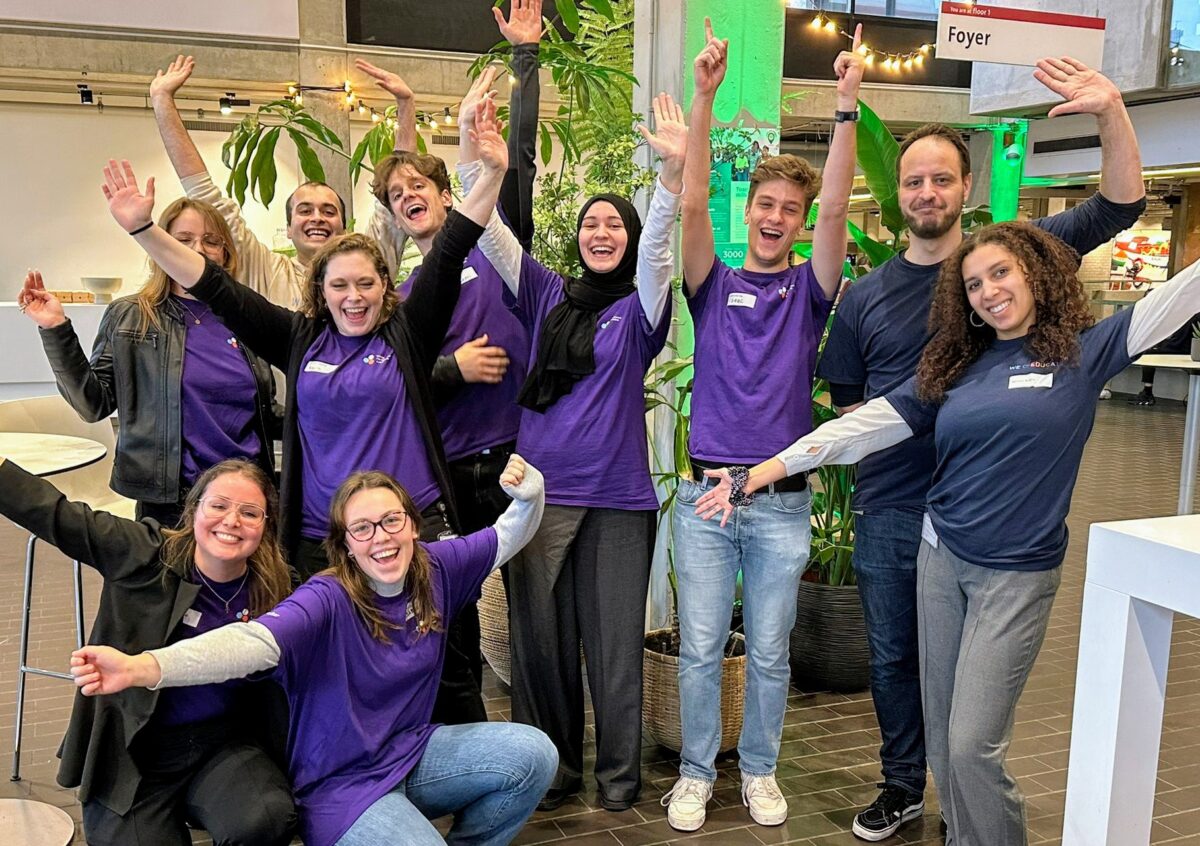
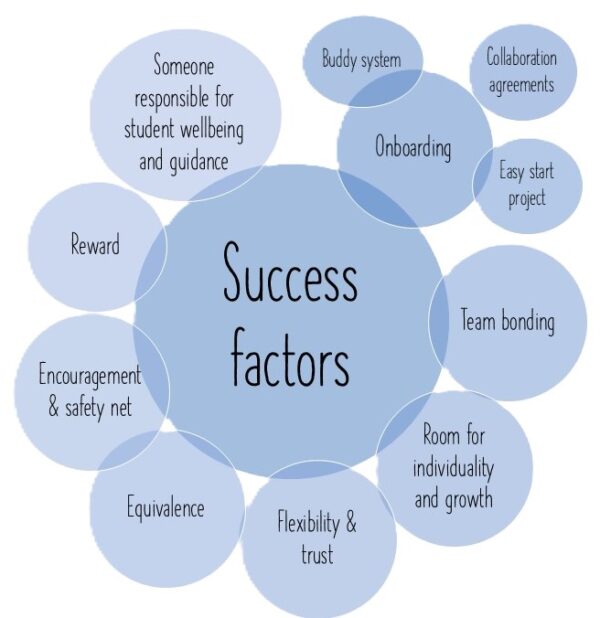
The Centre for Teaching and Learning in the Vrije University of Amsterdam has worked together with students as partners since it was founded seven years ago. Admittedly, it hasn’t always been a smooth ride. We have made many mistakes from which we have learned a lot. But now we can say we have become a thriving CTL that specialises in working with students as partners with currently 20 students working for us. Many other CTLs are looking at us as an example and want to learn how we’ve done it and what they can do to work with students as partners too. So, let’s dive into that. In this article I’ll share the 8 success factors that have worked for us.
- A good onboarding is half the work
Just like with any new job you start, a good onboarding process makes all the difference. We work with a buddy system: every new student that starts is linked to one of our students that has already worked with us for a while and usually does the same type of work the new student is going to do. This way, there is someone they feel equal to that helps them get started and to get familiar with our way of working and there is always someone available to answer their questions.
And speaking of getting familiar with the way we work – we also often revisit this. There is never a static approach: what works for one group of students doesn’t work for another group. Some like to work with Outlook, others rather communicate via Whatsapp. How often are you expected to check your work email? How do we like to collaborate with one another? What language do we use on the work floor? We discuss this often as a team and see if new agreements would work better for everyone involved.
Our students have also let us know that when they start working, they mostly enjoy an easy assignment with clear boundaries. This way they have something to do that is clear to them and they can sink their teeth into, while still having the head space left to look around, talk to the team and get to know the place.
- Someone responsible for student wellbeing and guidance
But probably our biggest success factor is Nadia. Nadia is our team lead responsible for everything that has to do with our students. I think many of us would describe her as our mom. She cares about us, makes sure everyone is okay, is someone safe to talk to about anything, even and maybe especially about very personal life problems, and someone that sticks up for us. She has many 1-on-1 conversations with everyone, formal and informal ones, during which she checks how everything is going, if workload is still okay, if work is still being enjoyed, or if there are things going on in our lives that affect us. She gives excellent advice and the wellbeing of the students is her number one priority.
- Flexibility and trust
Most students don’t have experience working in a formal workspace. They don’t know what’s the norm, what’s expected of them and how much ownership they have over the work they do. We have cultivated a work culture where we are very flexible and trust everyone working with us completely. Students don’t have to work when it’s exam time, when they have big deadlines coming up or when they are dealing with personal stuff. We are very flexible in the way we collaborate together and revisit this constantly based on everyone’s needs. But most of all, we trust everyone’s areas of expertise and find all different perspectives very important.
- Room for individuality and growth
Building onto that trust and flexibility, we make sure everyone working at our CTL gets to choose what they want to work on. This is not always possible of course; some things just need to be done. But most of the time it is. Our students do get hired for specific projects. We ask for AI students, communication and marketing or video experts. And they do start in these teams. But when they let us know, mostly in talks with Nadia, that they would like to explore different projects or want to develop specific skills, we always look for possibilities to make that a reality. It has also happened many times that students come up with good ideas for new projects and we realise those as well, often with them in charge. They get complete ownership, we are there for advice and give them the resources they need, but it’s their project.
- Encouragement & a safety net
As mentioned, with many of our projects, the students are in charge. It’s really their project and they can turn it into whatever they want. We help, so they understand the consequences of certain choices or add another perspective, but they make the decisions. We encourage this independence and ownership. But at the same time, they are not responsible when mistakes are made or it doesn’t go as planned. We make sure there is always a safety net. This ensures that they feel safe doing the work, not having to deal with higher-ups that are not used to working with students and we have created a culture in which mistakes are there to be learned from, not being punished for them.
- Equivalence
We see the value of everyone’s participation. We all have our areas of expertise and everyone’s input is worth the same. Maybe the student perspective is even the most important one of all, since our main goal is to create the best possible education for our students. We learn from collaborating with each other, trying to make teams as diverse as possible. Everyone is encouraged to speak up and give their perspectives. When we notice that newer students still feel a bit uncomfortable and are not sure if speaking up is appreciated, we make sure they feel welcome, they know their opinion is appreciated no matter how controversial it might be, and they only have to contribute when they feel ready and confident.
- Reward
When everyone’s participation is worth the same, you can’t expect students to do the work voluntarily when everyone else is getting paid for their time. All our students have a student assistant contract. This means they work a max of 16 hours a week for us, but if busy weeks are coming up for their studies, they can choose to work less and work more again when they have time again. We don’t check if they make their hours, we trust them completely, and actually need to make sure they don’t overwork themselves. They get very enthusiastic when they work on their projects, so we need to make sure their work-life balance is okay.
- Team bonding
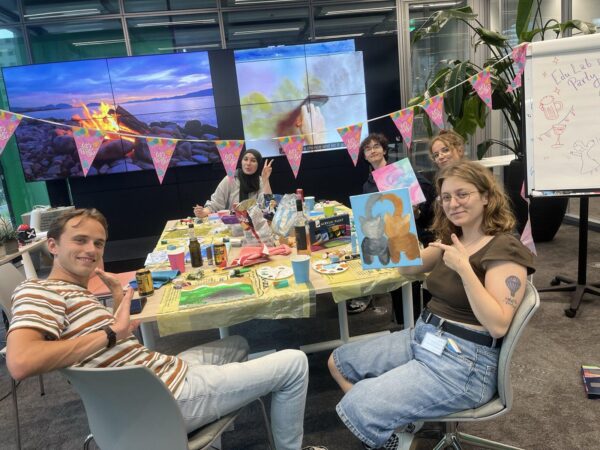
And the last success factor is that we make lots of time free for team bonding. We want our students, but also everyone else, to really be a close-knit team. We have a whole team dedicated to organising fun activities. Students are in charge of this and get a budget. They plan game nights, have dinner dates, do potlucks, do cultural stuff to get to know each other’s heritage, do sip & paints, but also bigger things like going to a climbing park, going on a boat ride, and many more things. The result is that the team has become so close that we get invited to each other’s birthday parties, many students go out together, exercise together and we even have a few CTL relationships.
Want to know more or want to see our CTL in action during a(n online) tour? We are always open to that: onderwijswerkplaats@vu.nl.
Author:.jpg)
Charlotte Meijer started working as a student-colleague right away when the CTL at VU Amsterdam was established 7 years ago. After graduating she stayed working at the CTL as an educational advisor and project leader. This is a perfect match because of her studies in Education & Innovation and her expertise in blended learning, educational tools, didactics and working on innovation projects.