
by Dr Sandra Kučina Softić, University of Zagreb University Computing Centre SRCE, Croatia
This article is part of the “Centres for Teaching and Learning” series, a collection of interviews and articles exploring the diverse roles and innovative practices of CTLs, presented by the Media and Learning CTL Special Interest Group. In this series, we invite one of our members each month to introduce their CTL, describe the work they do and to highlight some of the challenges they face.
Who we are and our story
The E-learning Centre is part of the University of Zagreb University Computing Centre (SRCE), the national e-infrastructure institution for higher education and scientific institutions in Croatia. The institution’s abbreviation is SRCE (heart in English); therefore, our motto is that SRCE is at the heart of the digital transformation of science and higher education. This year, SRCE celebrated its 55th anniversary. It was founded in 1971 within the University of Zagreb, the only Croatian university at the time, to enhance the implementation of information technologies in the academic community and in Croatia in general. Today, SRCE is a central infrastructure institution that plans, develops, and improves e-infrastructure and digital services for Croatia’s academic and scientific community and supports their use.
SRCE is also the competence centre for information and communication technologies as well as the centre for education and support in the area of ICT application. SRCE has about 170 employees.
The E-learning Centre at SRCE (ELC) was established in 2007 by decision of the SRCE Management Board and is one of the results of the international Tempus project, Education Quality Improvement by E-learning Technologies (EQIBELT), which SRCE led for the University of Zagreb.
When we established it, we built ELC from scratch, as e-learning in Croatia existed mostly through individual teacher efforts or was used by several faculties that used digital technologies by vocation. This project was the first attempt to implement e-learning systematically at Croatian universities. The project also gave us the opportunity to review e-learning centres at project partners’ European universities, so we took what we thought would suit us best and adapted it to our needs.
When established, the E-learning Centre at SRCE aimed to support the University of Zagreb’s faculties and academies, teachers, and students in implementing e-learning in the educational process. With only two employees, the work was challenging, as the University of Zagreb has 34 faculties and academies and about 6000 teaching staff. We had to explain what we were doing and that we weren’t selling anything; we wanted to support teaching staff and help them implement e-learning in teaching and learning, and we wouldn’t take their jobs 😊. It wasn’t easy. Many teaching staff said we wouldn’t last long and shut the door. But we were patient, taking small steps, building community, finding those who wanted to learn, and converting those who resisted. Those teachers became our best allies. As we slowly gained recognition, we expanded the network and brought the community together to discuss best practices and exchange ideas and problems.
Following the Bates (Tony Bates) coordinated decentralised model with a central unit at the university level, the E-learning Centre is conceived as the focal point for a range of university e-learning activities.
Within the Centre, we provide multidisciplinary support and recognise our users’ specific needs. Therefore, we communicate with University of Zagreb faculty and academy representatives about ways and possibilities to implement e-learning at the institutional level. The Centre is very active in organising events, workshops, and lectures to disseminate information about e-learning and raise the awareness of teaching staff of its advantages and available support.
One of our first rules was to work with teaching staff, not for them, and that became crucial. We also decided to avoid saying no and instead try to find better solutions to their ideas.
Initially, the E-learning Centre established a Moodle based e-learning platform and gradually built out the e-learning environment. At the same time, the ELC team focused on supporting teaching staff in using e-learning tools and technologies and designing e-learning courses. Another key part of the ELC’s work was organising training activities to help teaching staff build digital competencies.
From university centre to national centre for e-learning in higher education
Our service was, and still is, available and free of charge to all higher education institutions and teaching staff. They decide whether to use our services. No national strategy or document stated that higher education institutions or teaching staff should use our service, or that they needed an e-course. Therefore, we had to prove our commitment and set high-quality standards.
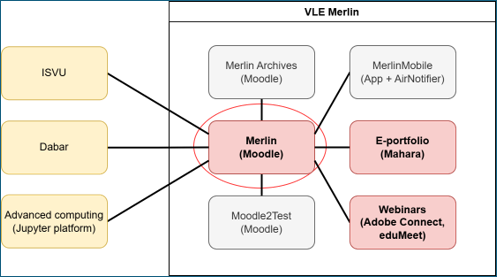
The e-learning platform Merlin (merlin.srce.hr), based on Moodle, was one of our first services. We connected it to the Information System of Higher Education, then added the e-portfolio system and a videoconferencing system. We developed additional plugins and modules teaching staff requested, along with manuals, animations, and quick-help documents. We fixed bugs and translated everything into Croatian. For every feature the e-learning platform has, we provide support to users. We built a modern e-learning platform available 24/7/365 and fully supported by the ELC team. We organised support through a helpdesk and consultations, often working with teaching staff who brought their curricula and asked how to get started. Many institutions recognised our work and asked to join and use our services. Even institutions that used their e-learning platforms joined Merlin because they found our services high-quality and reliable. As a result, the ELC became the national centre for implementing e-learning in higher education and is used by all 10 public universities as well as universities of applied sciences and some private higher education institutions. We collaborate with the support units at the institutions, with the institutional administrators of the institutions on the Merlin e-learning platform, and the e-learning representatives at the institutions.
Today, the virtual learning environment is also connected to the Croatian Digital Academic Archives and Repositories (Dabar), so teaching staff can store their Open Educational Resources directly there. teaching staff can request access to the Advanced Computing service through their e-courses in Merlin, making it easier to use the Jupyter platform for teaching and learning.
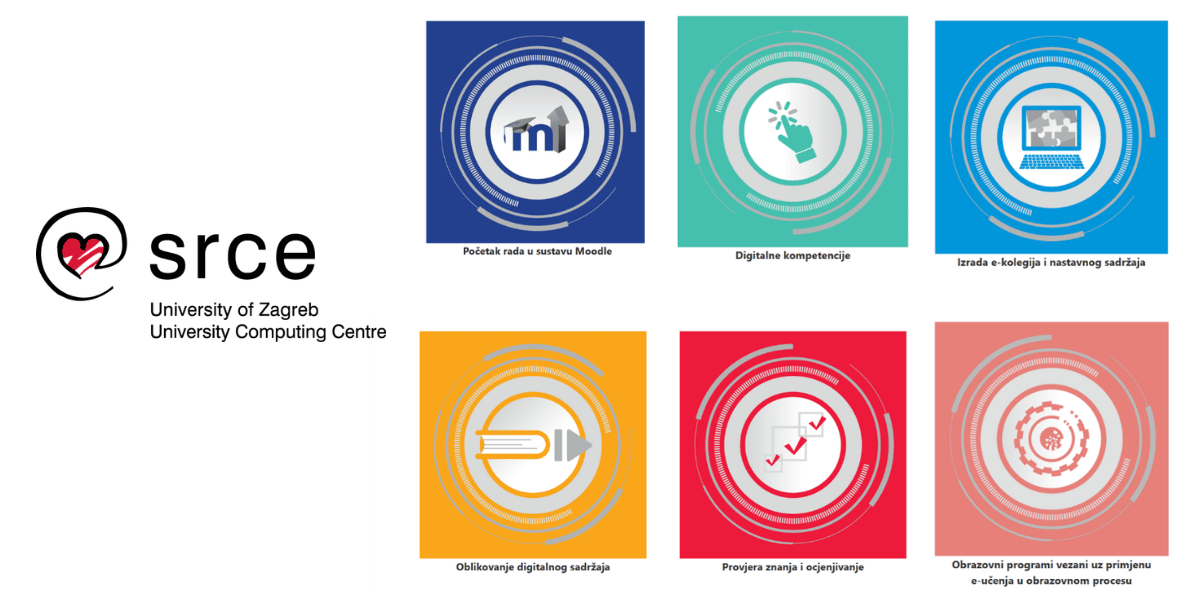
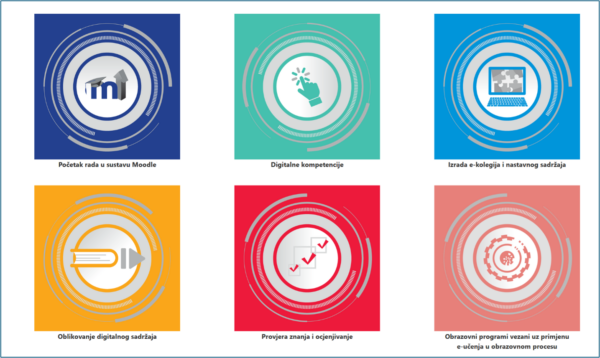
We provide a number of training courses and workshops. Each course is designed to inspire teaching staff and serve as an example of good practice, from visuals to the use of different resources and activities. That way, in addition to learning the content, they also get suggestions and ideas for their course. We divide them into packages to help teaching staff understand their needs and choose the right training activities. The idea behind the packages is to recognise teaching staff who invest a lot of effort in mastering many courses, while also showing how all areas connect. Sometimes teaching staff do not recognise from the course title that it is what they need, and in this way, they also learn what they initially did not think they needed. The reactions are extremely positive. We offer packages on getting started with Moodle, Digital competencies, E-course and learning materials development, Design of digital resources, Assessment and grading, and training programs related to e-learning applications in the educational process. All courses align with the areas and levels of digital competences defined by the Digital Competence Framework for Educators (DigCompEdu), ensuring a structured, high-quality approach to developing digital competences (Redecker, 2017).
We also designed an e-course template to help teaching staff get started by setting guidelines for e-course quality, its basic elements, and how to organise teaching content. We also provide a self-assessment application for e-courses that enables teaching staff to critically review e-courses and learn how to improve them. Each criterion in the application is described in detail, and these descriptions give teaching staff concrete guidance on what they should do to reach a higher level.
We also designed a self-evaluation application to help teaching staff reflect and improve. Along with consultations and daily helpdesk support, we provide teaching staff with complete, tailor-made support for working in an online environment.
Everything we have achieved is based on the quality, accessibility, and ease of use of our work. We listen closely to our users and shape our support and services to their needs. At the same time, we take the ELC team’s expertise seriously and continuously invest in their professional development to keep them at the forefront of their field. This is how we became a national centre… even today, our service is not mandatory for any higher education institution; they use it because they want to!
Pandemic and how we suddenly became quite known
The COVID-19 pandemic in March 2020 caused huge disruption and moved everything online. Soon after that, the earthquake hit Zagreb. Many buildings, including educational institutions, were severely damaged. teaching staff and students faced a number of challenges – from technical ones like a stable and strong internet connection and having a computer/laptop, to finding premises where they could work and study, then a lack of digital skills and not knowing which tools and technologies to use; for teaching staff, a lack of pedagogical skills to work in a virtual environment and for students, a lack of learning in a virtual environment.
At that time, many teaching staff and higher education institutions turned to the SRCE and the ELC for support in moving courses online. It was especially challenging to explain over the phone what the e-learning platform Merlin is and what an e-course should look like, especially for teaching staff who had not encountered these concepts before. Often, neither teaching staff nor students knew how to formulate a question or problem in their inquiries, so the support staff’s expertise and knowledge were essential. The E-learning Centre is unique in that it supports users from higher education institutions all over Croatia. Pit team members were practically constantly on the “quiz”, with their knowledge and skills tested, as they did not know what question/problem would come next or who would ask it. This was not easy and was quite stressful, especially when a user question required reflection and engagement from more team members and sometimes took even a few days. Another challenge was the first online exams in April 2020, especially with large groups of students (400 to 700). From the beginning of the lockdown in Croatia (mid-March) until the end of 2020, the Centre received about 15,000 user inquiries. But we ensured that teaching and learning continued online. It was a major test of our work and preparedness and we passed. We are very proud of it.
Celebrating 20 years of work in 2027
Today, the E-learning Centre team has 12 full-time staff members. Our virtual environment hosts about 35.000 e-courses per academic year, led by about 9000 teaching staff and more than 90.000 students. In addition to maintaining the virtual learning environment, supporting users, organising teacher training activities, and supporting dissemination activities, the ELC also undertakes development tasks that will further enhance the quality of its services.
We recognise that AI will have a major impact on our future, so we are adapting and introducing new features teaching staff will need—from training to implementing AI chatbots and assistants.
Three online courses on AI are available to teaching staff: AI basics, using gen AI in scientific research, and using gen AI in course development. These courses are designed to respond to real needs of the academic and scientific community. The content is designed from the perspective of teaching staff and researchers and reflects the challenges and tasks they face in their daily work. The courses also contain concrete examples showing how to apply AI in teaching and learning, research and other professional activities.
Another breakthrough we are working on is implementing a chatbot on the e-learning platform Merlin. Once we finalise this step, the next step will be an AI assistant for teaching staff and students. In November, we will start an online survey for teaching staff to ask about their use of AI in teaching and learning, which will give us better insight into what further tasks we should take in the future. This year, we organised the 16th Moodlemoot Croatia, the 15th E-learning Centre Week, and the 19th University of Zagreb E-learning Day. We are also very active in open education and promote it in our academic community. We are a national distribution and user support centre for antiplagiarism software for public higher education institutions.
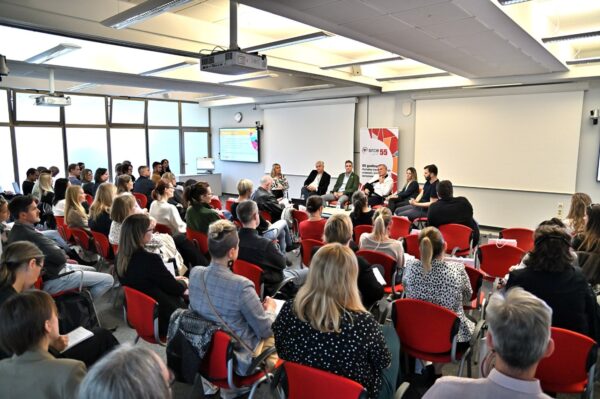
An important part of our work is participating in national and international projects; they enable collaboration, exchange, and the development of new initiatives. We are active in European associations like EDEN DLE, EUNIS and the Media and Learning Association.
How do we see our role in the future? I believe we will become even more important, as teaching staff sorely need high-quality, accessible support. AI will make human support and expertise even more important. We will give some tasks to AI, but more complex ones, like working with teaching staff to design and deliver their courses to improve students’ learning experience, will stay in human hands. What we find challenging is the lack of human and financial resources. But I’m an optimist. We have managed so far; I’m sure we will manage well in future.
Author

Dr Sandra Kučina Softić,
Dr Sandra Kučina Softić is the Assistant Director at the University of Zagreb University Computing Centre SRCE (Croatia). She is also the Head of the E-learning Centre at SRCE. She has 30 years of experience working in higher education. Her work focuses on monitoring and fostering e-learning in Croatian higher education, supporting and guiding institutions, teaching staff, and students in implementing new technologies in teaching and learning.
Her interests include strategic decision-making related to implementing digital education in higher education and enhancing teaching staff’ digital skills. She is also active in open education. In 2021, she authored a book on digital transformation in higher education. She teaches at universities in Croatia and the region on topics related to digital education.
She holds a Master’s degree in Digital Education from the University of Edinburgh, UK, and a PhD in Information and Communication Technologies from the University of Zagreb, Croatia.
Dr Kučina Softić served as President of the international organisation EDEN from 2019 to 2022, and as Vice-President of EDEN DLE for the 2023–2025 mandate. In 2014, she was named an EDEN Senior Fellow. In 2025, she was named EDEH Digital Education Ambassador.