
by Smera Jayadeva, Consultant, Digital Futures for Children centre, United Kingdom
“If we help shape the beginning of the story, we can help shape the entire future it creates.”
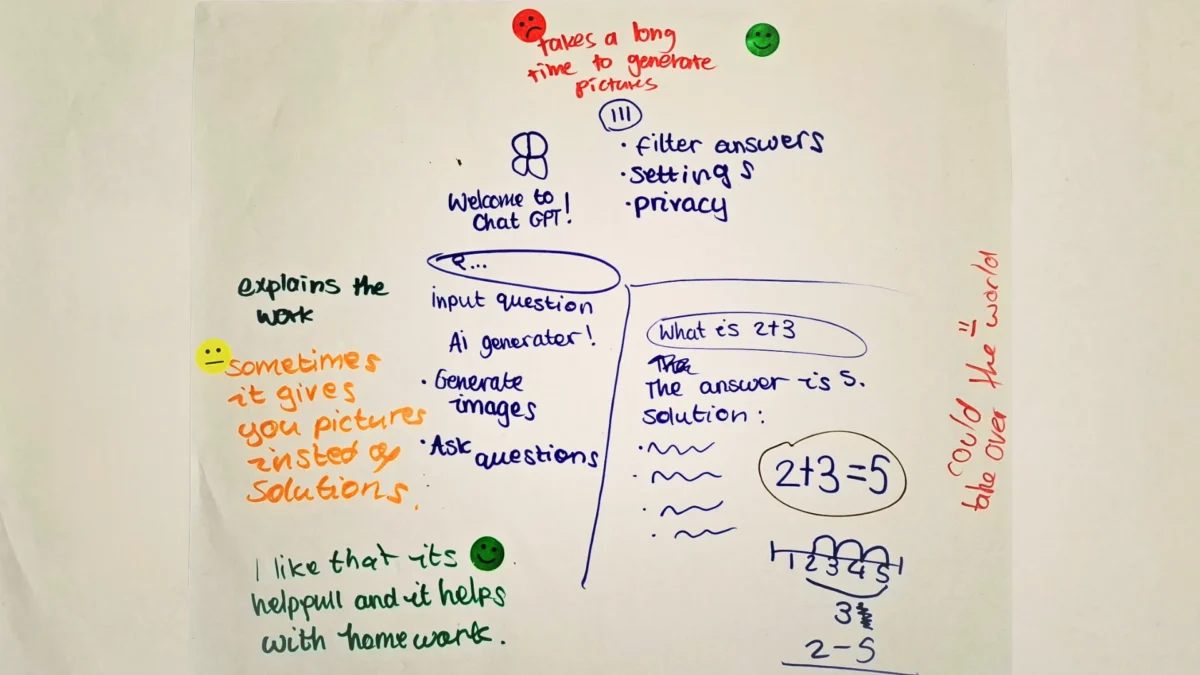
David, a young person from Portugal, captures what is at stake for every child growing up inside digital ecosystems they never chose and cannot control.
Our report, Artificial Intelligence and Children’s Rights: A Narrative Review of the Evidence, maps existing empirical and policy evidence onto the 11 themes of the 2025 Joint Statement on AI and the Rights of the Child. Drawing on over 300 sources, it reveals a growing asymmetry: the same systems that extract unprecedented quantities of data from children are seldom governed for them, with their rights, needs, and desires at the centre.
Why should we focus on children?
AI tools, particularly Generative AI, are now accelerating the production and dissemination of child sexual abuse material (CSAM) among adult perpetrators and within peer-to-peer contexts, with girls and children from marginalised backgrounds facing greater risks of sexualisation. Companion AI products and chatbots, marketed to children of all ages, have fundamental model architectures that produce sycophantic responses and raise long-term developmental concerns about a child’s dependency and the gradual substitution of human connection. For marginalised children who seek community in online spaces and with AI companions, the risks are especially urgent.
The data required to train these systems is often collected from children at a very young age, yet remains static as they grow, and is governed by consent models that scarcely view children as the rights holders they are. Their image data, including images of infants and Indigenous communities, scraped from public platforms populate prominent datasets and are then used to train AI models, including those producing CSAM, with clear harm to children’s rights and privacy.
Algorithmic recommender systems profile children using demographic and protected information, exposing them to predatory advertising and reducing a child’s growing sense of self to a monetisable data point. Meanwhile, public-sector AI systems over which children have no control subject them to biased outputs with little access to remedies: welfare algorithms in the United Kingdom and the Netherlands have been found to discriminate against minority children and families, reproducing structural inequalities rather than remedying them. EdTech, ostensibly deployed for children’s benefit, frequently operates without meaningful transparency, independent oversight, or informed consent.
As children are encouraged to embrace the benefits of AI tools, many face direct harms from extracting the very minerals needed to meet global technological demand . The existing digital divide, which disproportionately falls on girls and those in low-income countries, is further exacerbated by AI systems developed in the Global North that lack the linguistic breadth for equitable access. Benefits are context-dependent, but children worldwide bear the harms.
What is being done?
Some States await regional instruments before introducing their own framework; others rely on sectoral regulation that leaves children to be inferred rather than named. Child rights impact assessments (CRIAs), despite being mandated by General comment No. 25, are binding in fewer than half of the transnational AI governance frameworks that mention them. Evidence also shows mixed benefits from existing measures, which remain focused on post hoc restrictions rather than holistic, rights-based governance across the AI lifecycle and supply chain.
Major AI companies lack child-centred governance across their products’ AI lifecycle. Without routine disclosures that surface harms, children’s interests are subordinated to market imperatives. The knowledge and capacity gap in children’s rights and AI, necessary to overcome risks, were identified among people who work directly with children, including social workers, educators, policymakers, and developers. Across all themes, the most pressing voice, that of children themselves, remains missing.
In our accompanying brief for policymakers, we noted several promising developments across jurisdictions. Internationally, the Coalition for Children’s Rights and Protection in the Age of Artificial Intelligence, emphasises State commitments to children’s participation, child-safety-by-design, and action against AI CSAM. The EU KIDS Act, if meaningfully implemented, could serve as a rights-based instrument to mitigate risks across AI tools and the wider digital ecosystem.
What would it take to get this right?
- CRIAs must move beyond voluntary disclosures to binding preconditions published before AI systems reach children. Governance should not treat children as a homogeneous unit requiring blanket protections without considering variations in age, race, gender, disability, socio-economic background, linguistic, digital literacy, etc.
- Any deployment of AI in children’s contexts must be preceded by a rigorous analysis of risks and opportunities for all children, not merely those most visible to designers, alongside social, contextual, infrastructural, linguistic, and other sensitivities.
- Children are set to inherit this future, and they constitute a significant share of AI users. Yet they lack the skills, institutional standing, or political influence to navigate the complex digital ecosystems. AI governance must therefore treat children not only as users to protect, but as rights holders whose participation should shape the future they inherit.
🔗 You can find more information about report here

Author
Smera Jayadeva is an independent researcher whose work examines how data and technology shape power, culture and policy. Smera has shaped national and global policy frameworks, including the operationalisation of the UK’s National AI Strategy and the Council of Europe’s Framework Convention on AI, the world’s first legally binding AI treaty. Her current focus aims to bridge knowledge gaps and shape inclusive, meaningful approaches to AI policy and governance for children and other intersectionally vulnerable communities.