

In January, long before the Covid lock-down, my
Inholland colleague Tom Visscher and I submitted a proposal to the Media and
Learning Conference. Looking back on the proposal gives insight into just how
much has happened in the last few months.
Pre-Covid, Tom and I were proposing to run a
workshop in June about how to use Zoom Break-Out rooms. With a live
demonstration on site. Both of us had used Zoom breakout rooms to good effect
during presentations and classes. And we strongly felt, the world needed a demonsration
of this Video Wizardry.
As we informed the conference organisers; ‘Video Communication Technology makes it possible to interact with students at different locations and opens up many new pedagogical opportunities.’
If only we knew what was coming!
A month after submitting our proposal, on March
12th, the Dutch Government informed us that 100% of higher education
would immediately move online.
Our proposal stated; ‘As students demand
more flexibility in when and where they study, and organisations experiment
with these new approaches, shared practices are emerging that can lead to new
forms of education.’
Little could we have imagined that the ‘shared
practices’ would not ‘emerge’, but instead would explode at an inconceivable
rate. A complete, overnight transformation of higher education. The likes of
which has never been seen before. Emergency remote teaching was born.
The questions to be addressed in our workshop were relevant: ‘How are teachers using live video communication to teach and interact with students? What possibilities does this offer the lecturer and the learners?’
Higher Education, now 100% online, has been busy answering these questions over the last few months. Our session promised to address another key question: ‘What technical, didactic and practical aspects need to be taken into account when planning, running and implementing these formats in an educational context?’
If only there had been time to discuss these
key questions. Since March, we’ve all been working like crazy to support
colleagues and students in trying to address these issues. To make online
education work. It is complicated and there is no one-to-one transfer of the
physical to the online classroom.
The final question we planned to address was: ‘And
how can we learn from each other as we develop new approaches to learning?’
This question turned out be part of the focus of day 1 of the online conference run in June. The supercharging of online education has provided many creative and original approaches to teaching and learning.
Our workshop participants were promised that
they would experience for themselves the Zoom Break-Out room: ‘In these
break-out rooms, participants will experiment with different functionality
(e.g., raising a hand, typing an open and private chat message, inviting the
moderator).’
Looking back on it now, it all seems rather quaint. At the time we wrote the proposal, both Tom and I strongly believed that everyone should at least experience the break-out rooms once. Having tried it, we believed the format could be developed by lecturers to create interaction online within groups. Well, you know what happened next.
We informed our participants that: ‘The
session will use the Zoom video conferencing software that is free to install.’
Our session did not cover ‘Zoom Friday Drinks’, ‘Zoom Pub Quizzes’, ‘Zoom Family Reunions’, ‘Zoom Conferences’, ‘Zoom Exhaustion’ or tips on how to prevent ‘Zoom Bombers’. But we still think it could have been a valuable session.
Our modest conference workshop has been
consigned to the graveyard of great conference ideas. Born before its time,
overwhelmed by an inconceivable reality.
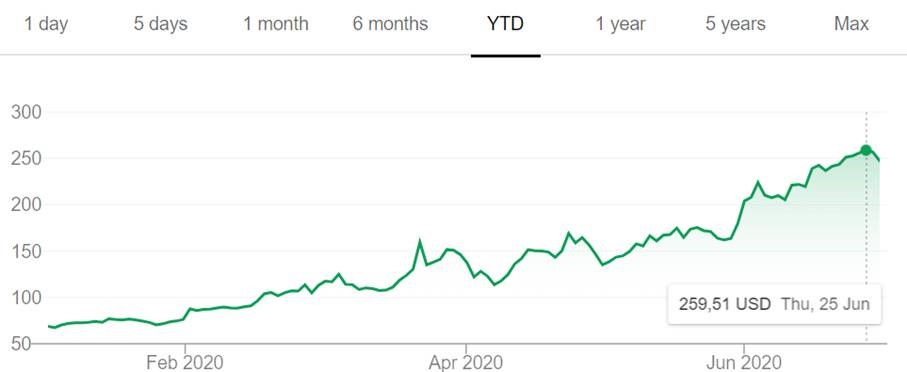
When we wrote the proposal in January, the stock price for Zoom was around 70 USD. Five months later, the price hit around 260 USD. Tom… I told you we should have invested!

Author
Zac Woolfitt
Inholland University of Applied Sciences, The Netherlands