
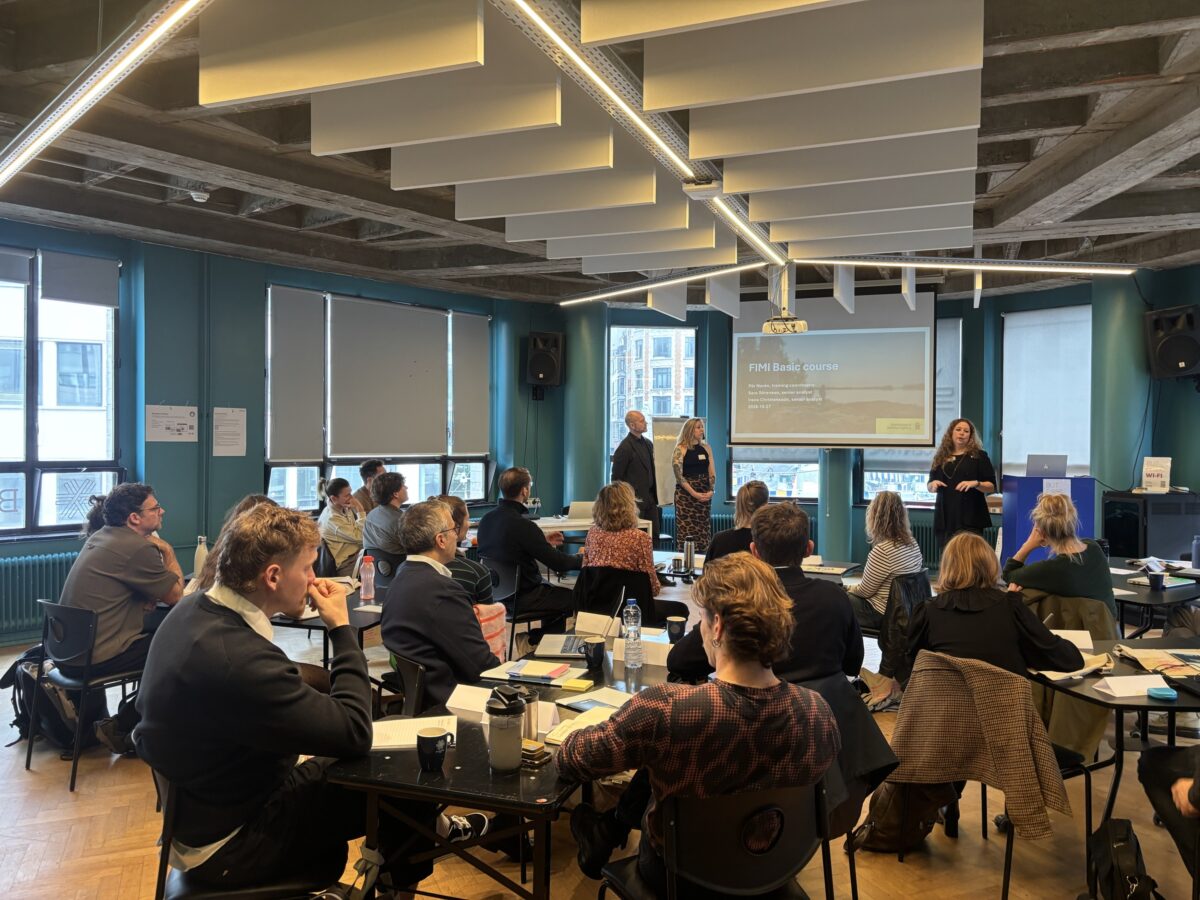
by Chloé Pété, Media & Learning Association.
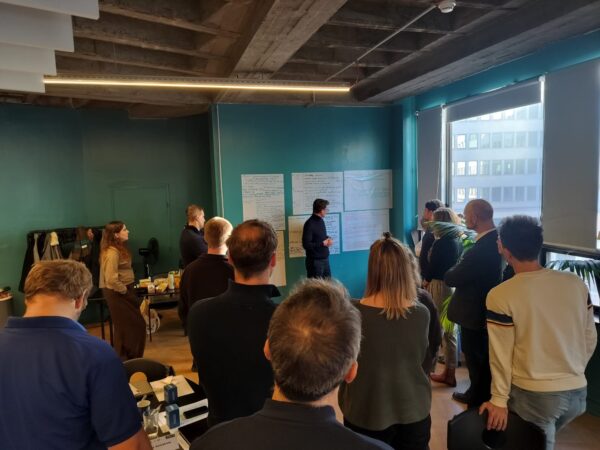
In collaboration with Mediawijs, Media & Learning and the Swedish Psychological Defence Agency, BENEDMO organised a training event on FIMI (Foreign Information Manipulation and Interference) in Brussels on 27 and 28 October 2026. The training focused on recognising, analysing and addressing foreign information manipulation.
Through theory, didactic methods and practical tools, participants learned to detect forms of foreign information influence and to respond appropriately. The group, between 20 and 30 experts, came from diverse backgrounds and countries, including, the Netherlands and Flanders, but also Cyprus, Spain, Latvia and Germany. They work within cities and municipalities, policy, crisis and strategic communication, media literacy and youth organisations and the media.
A warm and trusted space
From the first morning, the room felt warm, relaxed and open. The trainers from the Swedish Psychological Defence Agency created a cosy, trusting and genuinely pedagogical space, and brought with them their knowledge and their field expertise on FIMI. Sweden has faced these situations in practice, and the Agency shared real examples of what it has had to deal with, so that the concepts never felt abstract.
The two days were very well structured, with a good balance: there were theoretical moments, which gave us the key concepts; there were first-hand experiences and cases from the field; and there were group discussions, which were dynamic. Everyone had time to speak and to ask questions, and the exchange felt very democratic.
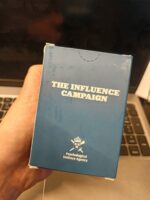
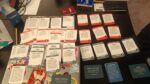
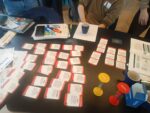
Workshop facilitator Pär Norén explained how the training was approached: “During the sessions, we worked with various interactive exercises. We developed our own card game around influence campaigns. The cards contain diverse cases and scenarios, in which participants learn to distinguish between harmful influence activities and possible countermeasures. An accompanying handbook offers trainers additional support and practical guidelines.”
The card game was a lot of fun. Playing through the scenarios, it was easy to project ourselves into what a real FIMI attack could look like, and that made the subject feel very tangible.
The peer assessment was well thought out. It made us realise that we had memorised more than we had first thought, and in that sense the structure of the course is well designed. A lot of useful material was shared as well, and much of the documentation is available in both Swedish and English, which was very much appreciated.
The interactive working methods were clearly well received. “The interactivity and the opportunity to engage in debate with other participants was a major added value for me. Due to the international composition, I had the chance to exchange experiences and realistic examples with colleagues from different countries. That helped me enormously to better understand this complex subject matter,” said a training participant.
At the same time, several participants indicated that they would like to see more attention paid to preventive strategies. This is a point of attention that the organisers will take into account for any future training.
With this training, participants take an important step to further disseminate their expertise on FIMI within their own organisations and networks. In this way, the organisers hope to work towards stronger public resilience against information manipulation, using a whole-of-society approach.
A very big thank you to BENEDMO and Mediawijs for their support, as always.
Author
Chloé Pété is Programme Manager for Digital and Media Literacy at the Media & Learning Association. After 5 years in the field, she now oversees all Digital and Media Literacy and Media Education activities, actions, events, and projects. She currently serves as the main coordinator of the media literacy and societal resilience actions and initiatives under EDMO3, and supervises AI-LITERATE and YOUTHIN3. She also represents the Association within various European networks related to media and education and serves as a Specialist Representative on the UNESCO Global MIL Alliance Board. She holds a Master’s degree in Cultural Studies, a Master’s in Modern and Comparative Literature, and a Degree in Art History. Her professional experience includes coordinating and mediating cultural projects, such as contemporary art festivals and exhibitions in Belgium and France, as well as work in research and project development.