
by Sónia Hetzner, FAU, Germany.
This article is part of the “Centres for Teaching and Learning” series, a collection of interviews and articles exploring the diverse roles and innovative practices of CTLs, presented by the Media and Learning CTL Special Interest Group. In this series, we invite one of our members each month to introduce their CTL, describe the work they do and to highlight some of the challenges they face.
Editorial note: This article is longer than our usual newsletter format.
Table of Content
Introduction
My name is Sónia Hetzner and I am Managing Director of the FAU Competence Center Education (FAU Kompetenzzentrum Lehre / FAU Education) at Friedrich-Alexander-Universität Erlangen-Nürnberg. I also lead our Learning Design department.
My role sits at the intersection of strategy, innovation and operational educational support. A major part of my work is ensuring that we do not treat digital teaching, professional development, learning media production and educational innovation as separate activities. Instead, we try to build an ecosystem in which they continuously inform one another.
This is perhaps the most important characteristic of FAU Education: we combine university-wide services with innovation projects and a close connection to research. Our projects allow us to experiment with new approaches in areas such as artificial intelligence, assessment, sustainability in education, active learning and digital learning design. But a successful project should not end when the funding period ends. We deliberately ask how the concepts, methods, resources and expertise developed in projects can become part of our regular consulting, professional-development, media-production and digital-teaching services.
FAU Education is a central academic institution, and its collegial governance provides an important connection between our operational work, the faculties and research.
The Collegial Board (in German “Kollegiale Leitung”) is particularly important in this respect. It includes representatives from all five faculties and thus brings disciplinary and academic perspectives directly into the development of the centre. Its Speaker, Prof. Dr. Svenja Bedenlier is Professor of Education with a focus on digitalisation in higher and adult education. Together with the Deputy Speaker, Prof. Dr. Nicole Kimmelmann Professor for Business Education, they provide a particularly important bridge between current educational research, university strategy and the practical work of our teams.
1. Institution characteristics
What is the name of your institution and where is it located?
Our university is Friedrich-Alexander-Universität Erlangen-Nürnberg (FAU), located in northern Bavaria, Germany. Unlike a classical single-campus university, FAU is distributed across several locations, particularly in Erlangen, Nuremberg and Fürth. The cities are closely connected, but the distributed structure is an important characteristic of the university and it also affects how we design support for teaching.
What does your institution look like?
FAU is a large comprehensive research university covering a very broad disciplinary spectrum with about 40,000 students in 278 degree programmes. It has five faculties: Humanities, Social Sciences and Theology; Business, Economics and Law; Medicine; Sciences; and Engineering.
FAU has 6,779 full-time employees in its non-clinical university statistics, including 634 professors, 3,667 academic staff and 2,478 academic-support staff. If the clinical area is included, the university employs approximately 16,000 people.
How does your university value teaching and learning?
Teaching has a very explicit strategic status at FAU. The university’s Guidelines for Innovative Teaching emphasise the strong importance of teaching within the academic mission, while also highlighting its close interconnection with research as two mutually reinforcing pillars of university activity. The university further commits itself to providing the infrastructural, technical and organisational conditions required for good teaching and to continually developing teaching and learning formats. This is important for our work because it means that improving teaching is framed as an institutional development task.
Lecturers are therefore encouraged to use FAU Education. Our services range from very practical support with digital teaching and assessment to individual consultation, media production, coaching and professional development. Increasingly, we also work with departments and degree programmes on broader questions of educational transformation.
What does the basic teacher qualification look like?
In Germany there is no single mandatory initial teaching qualification for all university teachers comparable to teacher education for schools. In Bavaria, however, pedagogical aptitude is also one of the requirements for appointment as a professor.
In our role we place therefore considerable emphasis on continuing professional development. Our higher-education didactics programme is part of the Bavarian ProfiLehrePlus network and contributes towards the Certificate for Teaching in Higher Education of the Bavarian Universities. The qualification is offered at three levels – 60, 120 and 200 working units – allowing teaching staff to build their competence progressively.
2. CTL characteristics
What is the name of your CTL?
The centre is the FAU Competence Center Education, in German FAU Kompetenzzentrum Lehre. Internally, the shorter name FAU Education / FAU Lehre is used.
The current centre was established on 1 March 2025 through the merger of two long-standing institutions: the Institute for Learning Innovation (ILI) and the Centre for Continuing Education in University Teaching. FAU Education itself is very young, but the expertise and services that it brings together have a very long history.
What is the main target group?
Our primary target group is everyone involved in teaching at FAU, from tutors and early-career academics to experienced lecturers and professors.
However, I increasingly see our target group as extending well beyond individual lecturers and the FAU itself. We also work with teaching teams, degree programmes, faculties, project teams, university management and administration, other higher education institutions, ministries, and other university service units. Students are direct users of our digital learning environment and, increasingly, partners in co-creation and tutoring processes. Beyond the university context, we also advise and support local, national, and European companies, public institutions, ministries, higher education institutions, and other educational organisations. Our support covers the entire process, from identifying user needs and developing concepts and programmes to their implementation, validation, and evaluation.
Is your CTL centralised or decentralised?
We are a central university institution, but our working model is deliberately networked and decentralised. We provide central infrastructure and expertise while working closely with the five faculties.
The Board (Kollegiale Leitung) is valuable here, since their perspectives are structurally integrated into the governance of the centre.
How many people work for your CTL and what are their roles?
Our public team currently comprises around 30 colleagues, about 21 full-time equivalents.
We bring together an intentionally diverse range of profiles: instructional designers with expertise in higher-education didactics, learning design and media didactics, media producers, video and multimedia specialists, digital-learning and platform experts, IT developers and technical specialists, e-assessment specialists, project managers, administrators and researchers. Didactics and technology work hand in hand, with pedagogical and technical perspectives continuously informing and shaping one another in a bidirectional and iterative process. Operationally, the centre has three major departments:
StudOn / StudOn-Exam (developed on ILIAS OpenSource) is responsible for our central digital teaching, learning and assessment platforms and for related support and consultation.
Learning Design combines digital teaching, media didactics, learning design and professional learning-media production. The FAU office for the Virtual University of Bavaria is also located here.
Higher Education Didactics provides professional development and qualification programmes for teaching staff across career stages.
This combination is central to our identity: infrastructure, pedagogy and learning design, media production and professional development sit under the same roof.
Has the CTL changed much since its inception?
The biggest change is precisely the creation of the centre itself. Bringing previously separate areas together was more than an organisational merger. It created the opportunity to move from parallel support structures towards a shared strategy for teaching innovation.
We are now working much more intentionally across departmental boundaries, and we are still very much in the process of growing together as a newly merged centre and developing a shared identity. A question about AI, for example, may concern learning design, assessment, platform functionality, media production, legal and ethical issues and teacher professional development. It makes little sense to address these questions in isolation.
3. Mission and vision
Does your CTL have a formal mission and vision?
Our mandate is closely anchored in FAU’s strategy and in the university’s Guidelines for Innovative Teaching. At the centre, I would summarise our mission as: to make high-quality, innovative and evidence-informed teaching possible at scale, by connecting services, professional development, digital infrastructure, media production, innovation and research.
For me, one particularly important part is at scale. A pilot involving five enthusiastic teachers can be extremely valuable, but institutional transformation requires us to ask what happens afterwards.
How does day-to-day functioning connect with this vision?
We increasingly think in terms of a project-to-service cycle.
Innovation projects provide protected spaces in which we can experiment, co-create, evaluate and learn. We then translate relevant results into things that can be used across the university: professional-development formats, consultation models, guidelines, templates, learning resources, media-production workflows, technical solutions or new forms of support.
At the same time, the direction works the other way around. Our service teams are in daily contact with lectures and students. They see where problems occur, what questions are emerging and what existing solutions are no longer sufficient. Those insights feed into our innovation agenda. The aim is to make innovation part of the service organisation itself.
The same applies to research. Through the Kollegiale Leitung (Board), and particularly through the close collaboration with its Speaker and Deputy Speaker, we can critically evaluate innovations against research evidence rather than following every technological trend simply because it is new.
How closely does this align with the university strategy?
Quite closely in terms of the university’s broader educational ambitions. FAU explicitly understands education as enabling students to develop into critical and responsible individuals who can apply their knowledge and skills independently and for the benefit of society.
That requires more than technology. It requires high-quality teaching and learning, meaningful assessment, learning environments that encourage active participation, and lecturers who can make informed choices about emerging possibilities such as AI. Translating this broad ambition into all areas of teaching and learning is, however, an ongoing process. These topics are gaining importance, although their strategic visibility and institutional prioritisation can vary.
This is where we see an important role for FAU Education: connecting these educational questions with the university’s broader strategic goals and helping to turn them into sustainable practice.
4. Visibility
How do you make the CTL and its services known?
We use our central website (lehre.fau.de), newsletters, professional-development programs, events, direct consultation and project communication. But perhaps our most important visibility mechanism is usefulness. A teacher may first encounter us because they need help with our LMS StudOn, want to produce a learning video, redesign an assessment, attend a didactics course or have a question about AI. Our challenge is to make it visible that these different services belong to a common educational ecosystem.
Additonaly we are members of FAU’s central commissions for teaching, programme development, and digital infrastructure.
What percentage of teachers know your CTL?
I would think that nearly everyone is aware of at least one of our services, particularly because StudOn (our LMS) is embedded in everyday teaching across the university. This leads to awareness of FAU Education as the umbrella organisation connecting all of these.
How do you liaise with faculties?
We work with faculties through consultations, professional-development activities, projects, networks and direct cooperation with teaching staff and degree programs. And especially through our governance structure:
The Kollegiale Leitung (board) is the leading governance body of the centre and gives this relationship an additional structural dimension. Its members come from all five faculties and provide strategic academic leadership for FAU Education. In addition, the 48 members of the Mitgliederversammlung (General Assembly), representing all faculties and status groups and typically being actively engaged in teaching, form a second participatory governance body. Through regular dialogue, exchange of ideas and feedback, they contribute directly to the further development of the centre and help ensure that our work stays close to the needs of the different disciplines and cultures of teaching and learning at FAU.
Are CTL employees also part of faculties?
The operational team is located centrally within FAU Education. Though, members of our board have their primary academic homes in faculties and research contexts.
I see this as a very strong structural features: central professional expertise combined with distributed academic ownership.
How do you collaborate with other support units?
Teaching touches almost every part of the university. Depending on the topic, we therefore collaborate with units concerned with IT, quality management, legal and data-protection questions, accessibility and diversity, internationalisation and other aspects of student and academic support. Our responsibility is to connect expertise around the educational problem rather than send people from office to office.
How do you liaise with university leadership?
As a central institution, our work is connected to the university’s governance and strategic development of education. The Board is particularly useful because it creates a regular interface between operational expertise, academic perspectives and institutional decision-making. The Vice-President for Education also participates as a permanent guest and advisory member of the board, further strengthening this link to university-level strategy.
Does your CTL liaise outside FAU?
Yes, extensively. For professional development, for example, we are embedded in ProfiLehrePlus, the network of Bavarian universities for higher-education teaching development. We also host FAU’s office for the Virtual University of Bavaria, and our innovation projects connect us with national Associations such as the ILIAS-Association, the Hochschulforum Digitalisierung and European partners, including engagement in European networks such as the Media & Learning Association, which brings together institutions across Europe.
Where is the CTL physically located?
Our main location is in Fürth, at Dr.-Mack-Straße 77 in the Uferstadt area.
5. Products and services
What are the main educational themes targeted by your CTL?
Our portfolio is broad. Current themes include digital teaching and learning, higher-education didactics, artificial intelligence in teaching, assessment, open educational resources, sustainability and education for sustainable development, internationalisation, diversity and inclusion, accessible teaching and student wellbeing.
These themes increasingly cut across our departments. AI is a good example: it is simultaneously an issue for teacher competence, learning design, assessment, media production and digital infrastructure.
What products and services do you offer?
Our core portfolio includes digital teaching and assessment infrastructure through StudOn and StudOn-Exam, technical and pedagogical consultation, learning design, professional design and production of learning media, higher-education didactics courses and certificate programmes, coaching and consultation, support for course and assessment design, and the FAU office of the Virtual University of Bavaria (vhb).
The vhb provides online courses for students across Bavaria as well as open online learning opportunities for the wider public. At FAU, we work closely with lecturers to develop these courses and support them with learning design and the professional production of learning media.
But I increasingly hesitate to describe these merely as “products”. The real value comes from combining them. A teacher developing a new course may need didactic consultation, a new assessment approach, media-production support and a suitable digital learning environment. Those elements should reinforce one another.
Which service is most commonly used?
In terms of overall reach, StudOn and the associated digital teaching infrastructure are our most ubiquitous touchpoint because they are embedded in everyday university teaching.
If we look at intensive person-to-person support rather than platform reach, professional development, consultation, vhb course design and development, and learning-media production and support are among our most visible services.
How much of the CTL’s work leads to educational innovation?
I would not try to express this as a percentage, because we deliberately try to remove the boundary between “innovation” and “service”.
Some of our work must be extremely reliable and stable, since teachers need learning platforms and examination systems that work every day. At the same time, those services must evolve.
Our innovation projects (funded by the state of Bavaria, federal institutes and European programs such as Erasmus+) function as innovation laboratories for the centre. They allow us to explore topics such as AI-supported teaching, active learning, new forms of formative assessment or sustainability education and then ask: What should become normal practice? What should become a service? What competence do our staff and teachers need? What infrastructure needs to change?
That transition from experimental project to sustainable educational practice is one of the core challenges, and I believe that combining innovation and services within the same centre is very powerful.
How do you identify needs?
We have several sources: direct consultations with teachers, questions coming through our digital platforms, professional-development participants, faculty dialogue, project co-creation, feedback from students, developments in educational research and discussions within the Board and the Members Assembly.
This gives us both bottom-up signals from everyday teaching and a more strategic view of where higher education is heading.
Do you evaluate your products and services?
Yes. Evaluation takes different forms depending on the service: participant feedback in professional development, feedback and usage data for digital services, evaluation within innovation projects, consultation feedback and, where appropriate, research-based evaluation.
I would like us to go even further in the future and connect service data, evaluation and educational research more systematically. A strong CTL should not only ask whether people used a service, but also whether it ultimately contributed to better learning and sustainable changes in teaching practice.
6. Budget
What is the budget of your CTL and how is it spent?
approximately 2 million euros, combining permanent institutional funding, thematic programme funding, and third-party project funding, with personnel as the main cost driver due to the expertise required, followed by digital infrastructure and software, media production facilities, and project-related activities.
How has the budget changed over time?
This is difficult to compare directly because the current FAU Education structure only dates from 2025 and brings together areas that were previously organised separately.
More important than the absolute number is the relationship between permanent funding (50%) and temporary innovation funding (50%). Projects are good for experimenting with new ideas. The difficulty begins when a successful project creates an ongoing need but the funding disappears when the project ends.
What happens when budgets are reduced?
Operational obligations naturally come first: platforms have to run and existing commitments have to be met. Innovation, evaluation, experimentation and the scaling of successful pilots are therefore particularly vulnerable.
For me, sustainable financing of a CTL requires both a strong, stable service base and sufficient flexible capacity for innovation.
7. Successes, problems and wishes for the future
What are your biggest obstacles?
One is scale. We support a university of almost 40,000 students, five very different faculties and many locations.
A second challenge is the speed of change. Generative AI demonstrates this very well: pedagogical questions, technological developments, assessment, ethics, data protection and regulation evolve simultaneously.
A third challenge is sustainability after innovation projects. It is relatively easy to create an innovative prototype for two years. It is much harder to maintain, support and update it for the next ten.
And finally, university teachers have very limited time. We therefore need to make innovation accessible without making teaching staff feel that every new development creates another qualification requirement and another workload.
What would help solve these problems?
Stable core resources, combined with flexible innovation funding, are essential. We also need high qualified interdisciplinary staff, strong research links, good institutional data and the possibility to evaluate what we do.
We need a clear mandate not only to react to requests, but also to shape institutional educational development proactively.
How many people does your CTL help every year?
This depends greatly on what we count. Through the digital infrastructure, our potential reach extends across essentially the whole university and teaching staff. Direct consultation, professional development, media production and project collaboration naturally involve a smaller number of people more intensively.
Is there one faculty that mainly uses the CTL?
No. We are explicitly a university-wide centre. The mix of services used may differ considerably between disciplines, but we work across all five faculties.
What success story are you most proud of?
For me, the most important success is not a single course or technology. It is the creation of FAU Education itself as an integrated model.
When FAU brought digital teaching infrastructure, learning design and media production, and higher-education professional development into one centre in 2025, it created the possibility of something much more ambitious than a collection of services. Our Kollegiale Leitung is essential to this model.
I believe this is where CTLs can have their greatest impact. They should be part of the institutional infrastructure through which educational innovation is created, evaluated, scaled and sustained.
What would your ideal CTL look like if everything were possible?
Actually, pretty much what we have at the moment, with some add ins (e.g. legal advice services, learning technologies development, AI Lab for Teaching) and a secure and evolving funding as our tasks are also evolving. My ideal CTL is both a dependable service organisation and an educational innovation lab.
And its success would not primarily be measured by how many workshops were delivered, how many videos were produced or how many support tickets were closed. Those numbers matter, but the larger question would be: Has the university increased its capacity to create excellent learning?
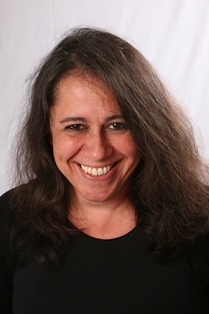
Sónia Hetzner, Friedrich-Alexander-Universität Erlangen-Nürnberg (FAU), Germany