
by Mariana Grépinet, University of Tours, France ; editor-in-chief of the Factoscope.fr platform.
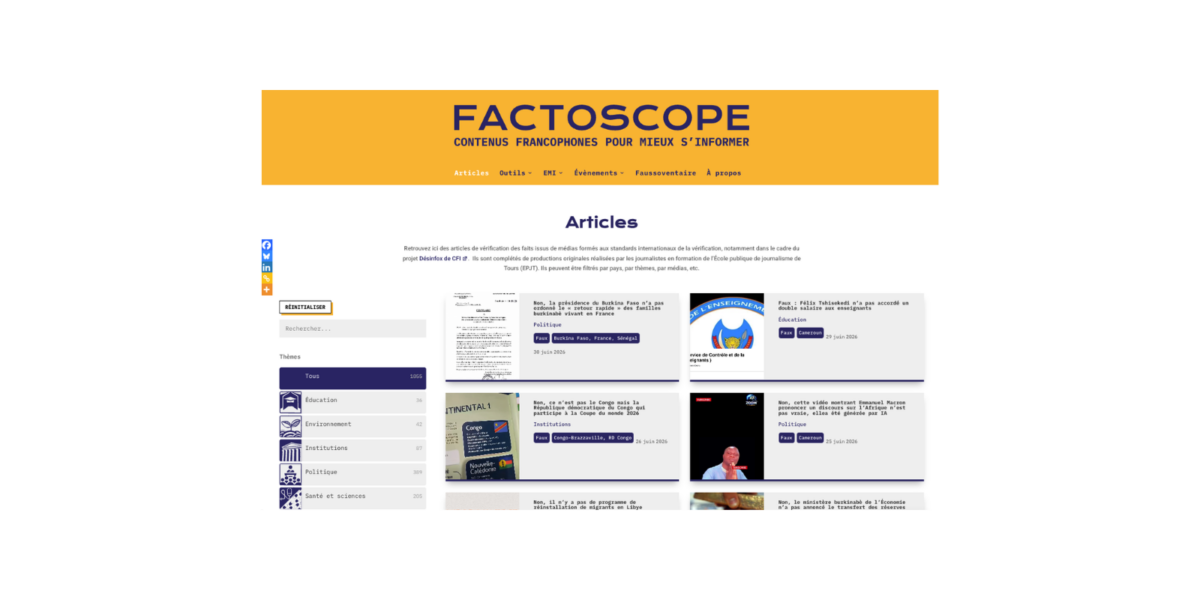
Four new media outlets and organisations have joined Factoscope.fr in the space of two months, bringing this francophone media-verification and media-literacy portal’s total number of partners to 38, spread across 16 countries. Among the latest arrivals: Influencemag.ci, an independent digital outlet based in Côte d’Ivoire founded by journalist Marina Kouakou, which added fact-checking to its output as disinformation rose; and SciencesCheck, a scientific-verification initiative based in Bamako, Mali, combining fact-checking, scientific expertise and digital pedagogy. The pace of new memberships speaks to the vitality of a project that has become, within a few years, a reference point for the whole French-speaking world.
Now led by the École publique de journalisme de Tours (EPJT, Tours’ public journalism school) under the direction of Laurent Bigot – the school’s director of publication and Factoscope’s founder – together with the NGO Nothing2Hide, with support from CFI – Développement médias (the French media development agency, backed by the French Ministry of Europe and Foreign Affairs), the project is anything but a one-off experiment. It was born in 2017, during the French presidential campaign, when web-press students at EPJT set out to aggregate political fact-checks already produced by Libération, Le Monde, Les Surligneurs, Arte and La 5, while carrying out their own verifications. A second version, Factoscope 2017-2022, then tracked the statements of French political figures throughout the following five-year presidential term. Since 2023, a third version – intended as the project’s final iteration – has changed both in nature and in scale: Factoscope.fr has become a permanent portal, entirely in French, covering the whole chain of the fight against disinformation across the French-speaking world : verification articles, investigative tools, teaching resources and a scholarly resource base.
A growing community of fact-checkers
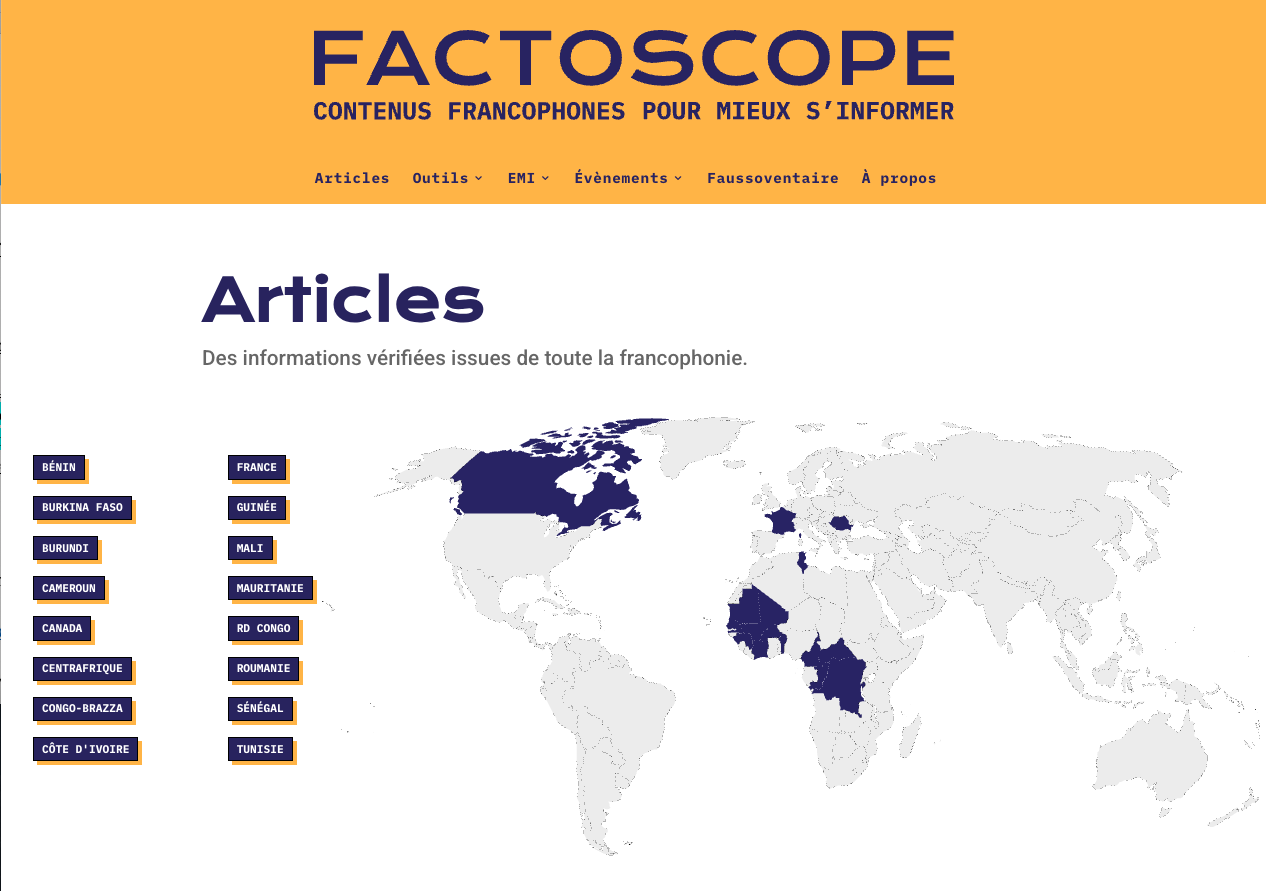
The site’s core remains its Articles section, which brings together fact-checking output from these 38 media and partner organisations (including TV5Monde), based in Benin, Burkina Faso, Burundi, Cameroon, Canada, the Central African Republic, Congo-Brazzaville, Côte d’Ivoire, France, Guinea, Mali, Mauritania, DR Congo, Romania, Senegal and Tunisia. Journalists from these contributing media outlets have been trained in international fact-checking standards, in particular through the Désinfox Afrique project run by CFI, or through other field training programmes run by the École publique de journalisme de Tours (EPJT) and Nothing2Hide with embassies, French cultural institutes, partner journalism schools and other organisations (foundations, NGOs, and the like). Their content gains greater visibility here, along with secure hosting; particularly valuable when it is produced in sensitive contexts. It is supplemented by original productions from journalists in training at EPJT.
This community is also growing through the Francophone Verification Awards (Prix de vérification francophones), whose second edition launched on 2 April 2026, International Fact-Checking Day (entries extended to 31 August). Four prizes of €1,000 each reward verifying media outlets (political statements, debunking, audiovisual recontextualisation, disinformation targeting women), joined in 2026 by two new prizes open to civil-society and academic initiatives. The jury brings together the Théophraste network of francophone journalism schools, Nothing2Hide, EPJT, CFI and the Agence universitaire de la francophonie (AUF), the worldwide francophone university network.
Shared OSINT tools
The Tools section, curated by Nothing2Hide, lists resources organised by use: website analysis, databases, setting up secure investigation accounts, data visualisation, Chromium and Firefox extensions, image and video verification, specialised search engines, setting up an investigation workstation, and researching social media accounts and profiles. Tutorials help users get to grips with these tools, essential to the daily work of investigative reporters and fact-checkers alike.
Media literacy, from short workshops to in-depth training
The Media and Information Literacy (MIL) strand brings together about thirty teaching sheets produced by Nothing2Hide, filterable by audience (children, teenagers, adults, seniors) and by length, from 5 minutes to 3 hours. Workshops on offer include “Influencers vs journalists: understanding their roles”, “Scroll, like, comment: how platforms capture your attention”, “Artificial intelligence: I’m hallucinating!”, “Seeing what we want to see: unpacking confirmation bias”, and the “Citizen investigation workshop”, which introduces citizens and journalists together to OSINT techniques through a real investigative topic. TV5Monde adds to this collection with a media-literacy resource pack designed for French-as-a-foreign-language learners, adaptable for native francophone audiences.
The Tools and Media Literacy sections both draw on content (directories and links to online resources, teaching sheets) produced by the NGO Nothing2Hide, as well as on productions from the media-literacy workshops of the Détours project, led by EPJT with support from the DRAC Centre – Val de Loire, the regional cultural affairs authority.
The Faussoventaire, a scholarly memory of disinformation
Another distinctive feature of the project: the Faussoventaire (a play on “inventaire”, inventory, and “faux”, fake) – a database of more than seven hundred resources on the issue of disinformation, built and maintained by the PRIM research team (Pratiques et ressources de l’information et des médiations, University of Tours) as part of the Vijie project, funded by France’s National Research Agency. Academic sources, official reports, dictionaries, journalistic investigations and works of fiction are indexed by theme – fake news, conspiracy theories, rumours, propaganda, post-truth – and open to outside contributions.
A participatory portal, open to new contributors
Factoscope.fr sees itself as both a resource portal and a participatory outlet, open to any proposal for editorial contribution to the fight against disinformation. That is the logic behind the partnership signed in April 2025 with the worldwide francophone channel TV5MONDE, intended to amplify the visibility of the verification work carried out by contributing media and of Factoscope.fr’s educational content.
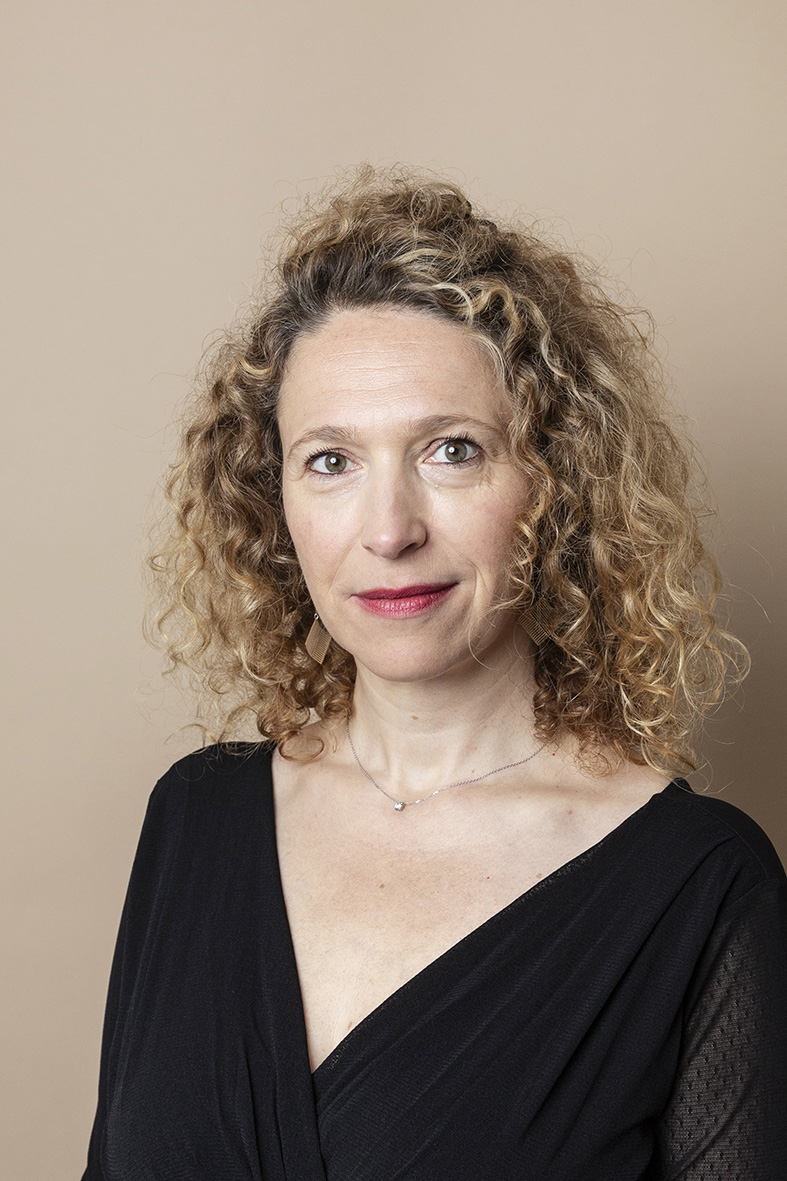
Mariana Grépinet teaches at two journalism schools : the EPJT, at the University of Tours and the IPJ Dauphine-PSL in Paris. She has just completed a doctoral thesis on French journalists’ media literacy practices, to be defended in October. A freelance senior reporter after nineteen years at Paris Match magazine, she is also editor-in-chief of the Factoscope.fr platform.