by Tiina Kasuk, Tallinn University of Technology, Estonia.
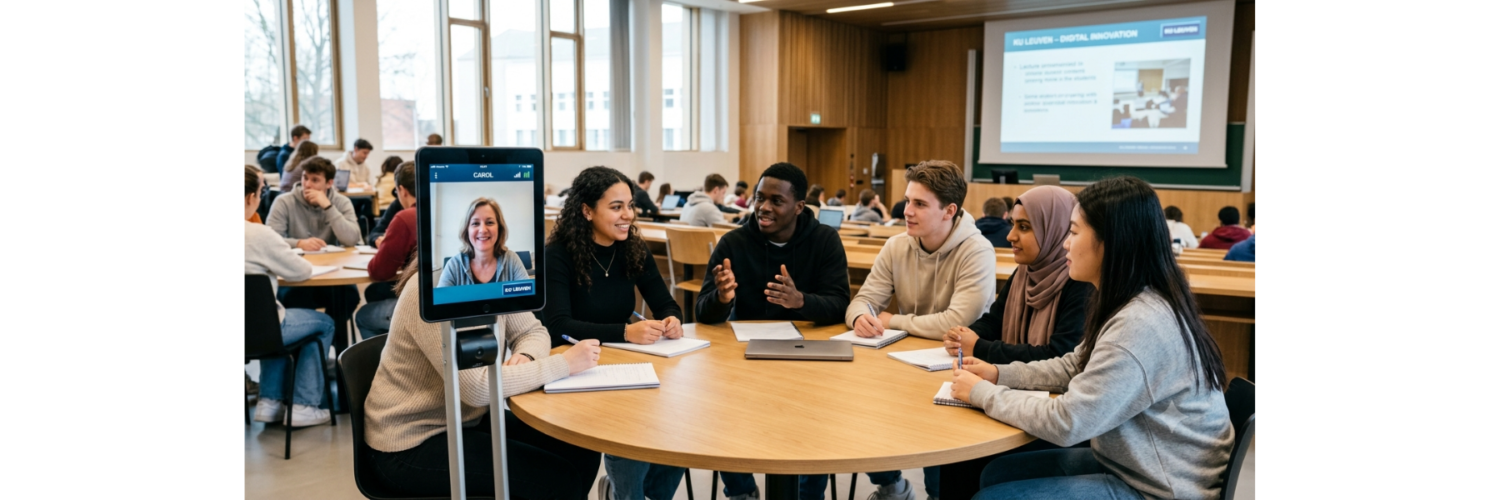
It was Monday. Carol was already, patiently waiting for the clock to reach 9:55 so that today’s first class could begin. The clock struck 9:55, and Carol joined the lesson. Mary and Peter were sitting in their usual seats. She moved to her own usual place, between her friends. They greeted each other happily and shared weekend experiences. Mr. Oak started the lesson, as usual. After the introduction, he asked the class a few questions to retrieve previous lesson. Carol answered one of the questions. The lesson was just like any other lesson. But Carol attended the class via telepresence robot because she was at a two-week training camp in the Alps.
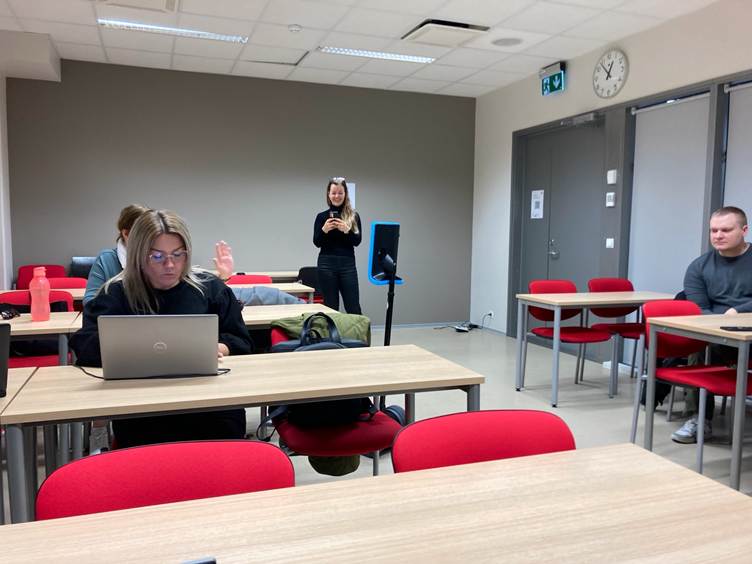
Carol’s story illustrates what telepresence robots can make possible. Instead of appearing as a small face on a classroom screen, she was able to take her place among her classmates, choose where to move, who to talk to, and how to participate. Unlike traditional video conferencing, telepresence robots allow remote learners or teachers to move around the classroom, join different groups, and interact more naturally with in-class participants. Previous research has shown that telepresence robots can strengthen social presence, support interaction, and improve remote participants’ sense of belonging in the classroom. However, research has so far provided only limited guidance on how telepresence robots should be implemented in educational settings. Their adoption requires overcoming technical challenges, coping with the fatigue associated with mediated communication, addressing privacy concerns, and adapting the structure of the learning process.
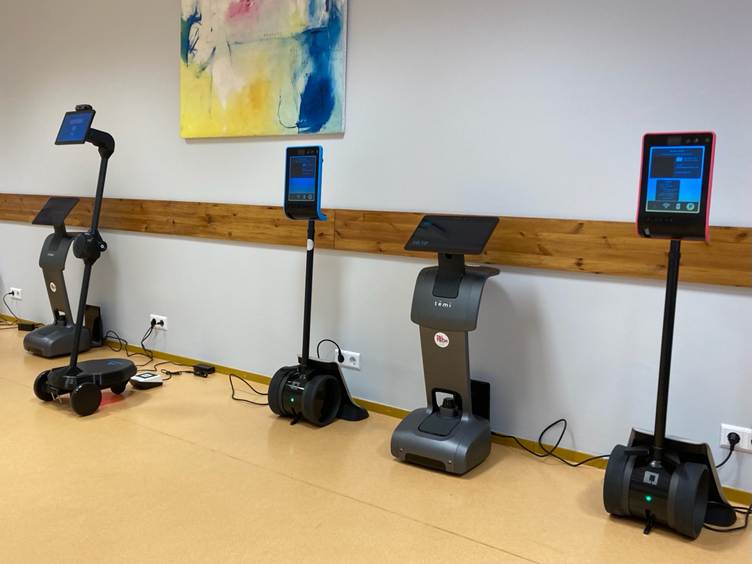
Our experience of using telepresence robots in higher education has shown that successful implementation depends on far more than simply introducing the technology to teachers and learners. Rather, it depends on a set of factors that can be described as follows.
Is the environment ready?
The first question is whether the environment supports the effective use of telepresence robots in learning. This includes both the classroom and the location of the remote participants.
A classroom where the telepresence robot can move freely, combined with reliable audio and video, forms the foundation for active participation. Testing the setup in advance helps ensure that the remote participants can clearly see, hear, and follow the lesson. Good lighting and the robot’s position also improve visibility of both the in-class participants and the learning materials.
Have ethical issues been addressed?
Responsible use is essential. Remote participants should respect the privacy of people in the classroom and avoid recording others without their knowledge. In return, learners and teachers should respect the remote learner by avoiding blocking the robot’s view or moving it without permission.
How is the robot integrated into learning activities?
Technology alone does not make learning inclusive. The way teachers design learning activities determines whether a remote learner becomes an active participant or simply observes the lesson.
When planning a lesson, teachers should consider whether any adaptations are needed so that learners participating through a telepresence robot can contribute, collaborate with peers, and achieve the same learning outcomes as learners in the classroom.
Are users prepared?
Successful implementation starts with preparation. Teachers need to understand how the technology works, its possibilities, and its limitations to design inclusive learning experiences.
Testing the setup before the lesson also helps ensure that both the technology and the planned learning activities work as intended.
Does the approach support inclusion?
Using a telepresence robot does not automatically create an inclusive learning experience. While the technology enables remote participants to join the classroom, meaningful inclusion depends on how learning activities are designed.
Encouraging collaboration with classmates and creating opportunities for interaction help remote participants feel part of the learning community, despite being physically elsewhere.
How are teachers facilitating participation?
Teachers should deliberately invite remote learners into classroom discussions, include them in small-group work, and regularly check that they can hear, see, and contribute throughout the lesson. Telepresence robots are most effective when remote participants are actively involved rather than simply observing. This is where they offer clear advantages over traditional video conferencing.
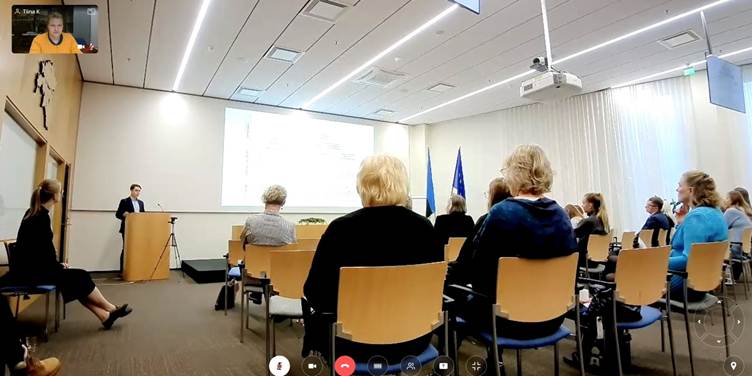
Telepresence robots create new opportunities for both physical and social presence in the classroom. However, making synchronous hybrid learning truly inclusive requires more than technology itself. Meaningful participation depends on thoughtful pedagogical design, careful preparation, and a holistic approach that considers both educational and organisational factors. Telepresence robots are not a substitute for good teaching, but they can extend the classroom beyond its physical walls. When combined with thoughtful pedagogical design, they offer teachers and learners who cannot be physically present the opportunity to remain active members of their learning process.
Author

Dr. Tiina Kasuk is a Researcher at Tallinn University of Technology, Estonia. She recently completed her PhD on the use of telepresence robotics in higher education. Her research interests include educational technology, hybrid learning, telepresence robotics, and digital pedagogy. Alongside her research, she works as an Academic Developer, supporting innovative teaching and curriculum development in engineering education. She has over 20 years of experience in digital learning and instructional design.