

by Andrea Winkler-Sousa De Vilhena, Bournemouth University, United Kingdom.
We live in a world of constant connection, where messages, notifications, and information compete for our attention. Digital technologies make it easier than ever to stay connected, but they can also make it harder to be fully present with the people and things around us. We are increasingly driven to divide our attention between multiple screens and interactions. Over time, this can lead to what researchers call a state of “continuous partial attention” (Linda, 1998) and “absent presence” (Gergen, 2002). If this becomes the modus operandi, this can result in “interpersonal divides” (Bugeja, 2018) and contribute to a culture of polarisation, distrust, and disengagement.
In this “culture of distance” (Mihailidis, 2025), media education needs to create spaces in which care, attention, and intentional presence can be cultivated. When our attention is constantly being challenged by digital technologies of absence, choosing to truly listen, connect and be present with others can become a meaningful act of care. Care that is much needed in human and more-than-human interactions.
In the context of a PhD project, we explored how media literacy interventions can use the arts to cultivate presence in the midst of digital distractions. For this purpose, we designed a workshop that was tested with three case study groups: 55 university students, 20 parents and 5 educators. The workshop uses the arts as a starting point for discussion and reflection. After a theoretical introduction, participants explore artworks, discuss them, and then create their own art objects. Based on these case studies, we designed a framework in the form of a toolkit that can be applied in different social and thematic contexts.
At the beginning of the intervention, before being introduced to any content, case study participants were invited to reflect on what being present means and to write down their personal definition. Some examples of what they wrote were: “Being present is the feeling of being there, being attentive to one’s environment and the people around you”. Someone else wrote: “Being present is to be here and in the now – mentally, emotionally, physically. I’m not thinking about any other place or person or thing. I’m here.”
The individual reflection on presence was followed by an engagement with an art exhibition, specially curated for the intervention and installed in the workshop space. This exhibition brought together artworks that explored media-related themes through a range of visual languages, including sculpture, photography, ceramics, jewellery, and drawing.
The artworks were intended to elicit reflection and stimulate conversations about the role of digital devices in social interactions and personal relationships. The discussions that followed were highly engaging, with participants sharing different interpretations of the artworks and reflecting on their individual and collective media practices.
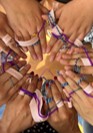
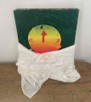
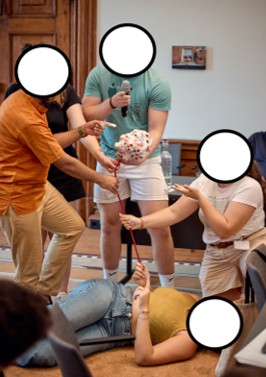
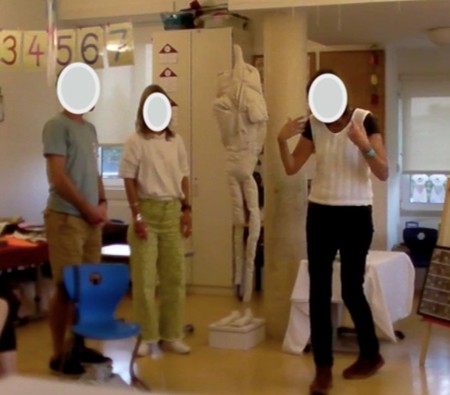
For the next activity, participants were divided into small groups and asked to develop a shared definition of what presence means to them and then translate this definition into an artwork. After some initial confusion and hesitation, participants began selecting from the materials provided – e.g. paper, fabric, newspaper, string, old boxes – and engaged in a playful and creative process of making. They were highly involved throughout the activity and clearly enjoyed the process. The resulting artworks showed different interpretations of presence and demonstrated diverse and imaginative ways of making these ideas visible. At the end of the workshop, participants presented their creations.
This study resulted in a replicable toolkit for media literacy practitioners and offers a conceptual framework for presence as an act of care. A thematic analysis of more than 80 definitions of presence resulted in a conceptual model centred on the ideas of being committed, being human, showing appreciation, and being seen. The findings suggest that presence is a valuable concept for media literacy education.
The engagement with the arts in the context of media literacy can be used as a metaphor for our everyday media practices. The reflective and caring processes involved in looking at and creating art, making meaning, finding common ground, and engaging in collective imagination can, when transferred to our daily media practices, contribute to building a more caring and just communication ecosystem.
These are some of the collective artworks that participants made:
Author
Andrea Winkler-Sousa De Vilhena, Bournemouth University, United Kingdom.