The Media & Learning 2026 conference (13th in-person edition!🎉), jointly organised by the Media & Learning Association with KU Leuven, will take place in Leuven, Belgium, on 17–18 June 2026. Held under the tagline Co-Creating the Future of Learning, the event offers an excellent opportunity for media producers, instructional designers, educators, researchers, professionals working in Centers for Teaching and Learning (CTLs) and all innovators to connect, exchange ideas, and explore how media can effectively support teaching and learning in higher education.
Wondering why you should contribute to this year’s agenda? There are many reasons to present, run a workshop, or lead a discussion, and below are just a few of the benefits of submitting a proposal and joining us in Leuven in June 2026.
1. Share your project or research
If you have been working on a project or research related to educational media, this conference provides a platform to share your findings with a wider audience. Whether you are exploring the role of AI in media production, examining student engagement with digital tools, or investigating the role of CTLs, presenting your work can lead to useful feedback and encourage further discussion on the topic.
2. Contribute to the discussion on the role of media in learning
There is growing interest in how media can truly enhance learning experiences, especially when resources are limited. Many educators are asking whether the media used in classrooms is making a measurable difference in student outcomes. By presenting your ideas or findings, you can help address these questions and contribute to a broader conversation about the role of media in teaching and learning.
3. Explore new trends and approaches
Educational media is constantly evolving, with new technologies, production techniques, and strategies emerging regularly. The conference provides an opportunity to learn from others and share your own experiences with innovative approaches, whether it’s immersive learning environments, interactive media, or student-driven content. Sharing what you’ve learned can help others stay informed and find practical solutions for their own contexts.
4. Collaborate with a diverse community
The event offers a space for collaboration among educators, researchers, media producers, and other professionals involved in learning innovation. It’s an opportunity to connect with colleagues from different educational contexts, share best practices, and form partnerships that could lead to future projects or research.
5. Increase visibility for your work
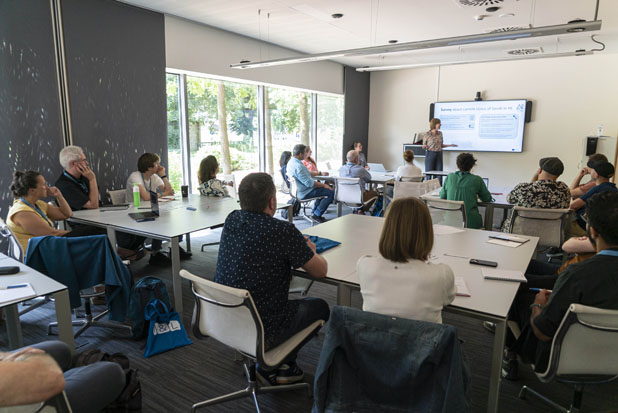
Presenting at Media & Learning 2026 gives you the chance to highlight your work to an international audience, which can lead to more recognition for your efforts. It’s also a great way to showcase your expertise and receive constructive feedback from peers who are working on similar challenges in education.
6. Explore key themes in educational media
The conference will feature 17 different themes that reflect the current trends and challenges in educational media, providing a rich platform for sharing insights. Themes include:
1. From One-Size-Fits-All to Flexible Learning Pathways
Digital media makes it possible to move beyond a single way of teaching the same content. Instead of one fixed format, educators can offer multiple options, such as videos, short texts, interactive activities, or audio, allowing students to choose what works best for them. This theme explores how to design flexible learning pathways while ensuring fairness, shared learning outcomes, and meaningful assessment for all students.
2. AI-Driven Co-Creation
Generative AI tools for text, image, video, speech, including multimodal GenAI, synthetic video/audio, translation/localisation, AI storyboarding, accessibility automation (captions, audio description), and AI-assisted editing are transforming how media is produced in higher education. Proposals may also address provenance and trust in an era of synthetic media (C2PA, disclosure, institutional credibility). This theme explores how these technologies enable learners and academic teaching staff to move from consuming media to co-creating content with AI, and how this shift reshapes authorship, creativity, assessment, and pedagogical roles.
3. Playful and narrative-driven learning experiences
Play, storytelling, and simulation are increasingly used in higher education to design engaging learning experiences. This theme explores how narratives, game mechanics, and multimodal media, including XR simulations, branching video, interactive storytelling, spatial audio, game engines, and virtual production, can support learning goals, assessment, and inclusion. Contributions should critically examine sustainability, scalability, accessibility, and the balance between meaningful learning and novelty.
4. Augmented agency: learners, media agents & AI companions
AI agents or media companions, RAG/knowledge assistants, AI tutors embedded in the LMS, and companion interfaces (voice, avatar, chat) that scaffold, tutor, co-author — what does it mean to give agency, control, transparency, and how do we address the implications of these emerging roles in higher education?
5. Media, memory & futures
In higher education, so much of what we create — from videos and simulations to online courses — can be short-lived. How do we preserve digital heritage, keep valuable media accessible and manage versioning as technologies and formats change in a sustainable way?
6. Evidence-based and responsible use of learning technology
Under this theme researchers, teaching staff, designers, and policymakers are invited to separate myth from evidence in learning technology. Which tools genuinely enhance learning, which fall short, and why? Contributions could draw on research studies, data, standards, interoperability and case analyses to reflect on the effectiveness, ethical implications, and responsible use of technology in higher education.
7. Rethinking Assessment and Learning in the Age of AI
Assessment in higher education is evolving beyond traditional exams and essays. Educators are exploring new forms of assessment, including portfolios, podcasts, XR simulations, and interactive dashboards, while also focusing on learning processes rather than depending solely upon final products. At the same time, the widespread adoption of AI by students raises important questions about critical thinking, authorship, creativity, and academic integrity. This theme invites contributions that examine both innovative assessment practices and the broader consequences of AI on learning, teaching, and evaluation. The challenge is designing assessments that are meaningful, fair, and trusted while supporting authentic student learning. Proposals may address authentic assessment using media production workflows, iterative process evidence, provenance tools, watermarking, and assessment design for AI co-authorship.
8. Using analytics to refine and adapt learning media
The use of analytics tools to help educators continuously refine and adapt learning content is on the increase. This theme welcomes examples of how engagement data, A/B testing, and media-level metrics are used to evolve courses and media in real time, improve learner engagement, and respond to students’ needs. Emphasis is on practice, iteration, and actionable strategies. Proposals may also address privacy-safe media analytics, video engagement analytics, and classroom AV analytics.
9. Mapping the skills and resources needed by educational media producers at a time of dwindling budgets
The rapid pace of change in media production within higher education brings a number of challenges. As budgets shrink, roles blur, and new tools emerge, the boundaries between professional media creators, educators, students, and non-professionals are shifting. What does it mean to be a professional media producer in 2026? How are student skillsets outpacing (or reshaping) staff expertise? How can institutions maintain high production standards with reduced budgets and rising expectations?
10. Gamification & playful design
Gamification is no longer just points and badges — today it’s deeply embedded in learning environments through quests, narratives, AI-driven challenges, peer review systems, and game-like assessments. How do we ensure such gamification is sustainable, inclusive, aligned with learning goals, scalable and not just a novelty effect?
11. Designing learning for cognitive balance
How can we design courses and learning media that challenge students without overwhelming them? This theme explores strategies to reduce unnecessary cognitive load while supporting engagement and learning, such as the use of breaks, pacing, microlearning, narrative structure, and multimodal content. It also addresses ways to promote resilience, focus, intrinsic motivation, and well-being in high-pressure higher education environments.
12. Through the learner’s ears and eyes – finding ways to ensure student feedback
There is often a gap between what educators, designers, and institutions aim to achieve with media and how students actually experience it. While staff may design with clear intentions, learners frequently interpret, adapt, or repurpose media in unexpected ways. Examining these differences highlights the importance of student agency, feedback, and co-creation, and helps us understand how media genuinely supports — or sometimes fails to support — learning in higher education.
13. Beyond the degree
Micro-credentials, lifelong learning, and skills for unpredictable futures — how do we rethink recognition and achievement? What role should CTLs play in ensuring quality, equity, and sustainability in credentialing beyond the degree? How can learners be better supported in navigating lifelong learning journeys across disciplines, platforms, and borders? And how do audio-visual departments contribute?
14. Lifelong learning without barriers: digital media for inclusive, flexible education
Digital media is transforming how learners access education, acquire skills, and demonstrate achievement. Sessions addressing this theme will explore how digital tools and media can support lifelong learning journeys, remove barriers to participation, and enable recognition beyond traditional degrees. Proposals may address accessible learning designs, micro-credentials, adaptive media, and strategies for inclusive, flexible, and sustainable higher education.
15. Centres for Teaching and Learning: Driving Innovation
Centres for Teaching and Learning (CTLs) play a key role in supporting faculty, enhancing teaching, and fostering innovation in higher education. This theme invites CTL staff and practitioners to share case studies, lessons learned, and practical insights on operational management, curriculum design, pedagogical initiatives, staffing requirements, faculty development, and cross-departmental collaboration. Proposals may address innovative learning spaces and renewed classroom strategies such as hyflex delivery, lecture capture policy, accessibility, remote participation, spatial audio, camera tracking. Proposals can include service design for AI, XR, studio support, hybrid classrooms, maker/media labs, and workflow automation for media production at scale.
16. Next-Generation Educational Media Production and Learning Environments (Audio, Video, XR & AI in Practice)
Higher and further education are entering a new era of educational media production, where quality expectations are rising while budgets and time remain constrained. This theme focuses on the practical use of innovative technologies and workflows that enable institutions to design, produce, and deliver high-quality multimedia learning experiences at scale. It is aimed particularly at audiovisual and media professionals, XR developers, studio and learning space specialists, learning designers, and CTLs supporting teaching staff. Proposals may address approaches, tools, and case studies on topics such as AI-assisted production pipelines (pre-production, editing, captioning and localisation), virtual production, immersive and spatial media, XR content creation and deployment, innovative learning spaces, advanced lecture capture and hybrid classroom ecosystems, interactive and narrative media formats, and sustainable models for re-use, archiving, and distribution. Sessions may explore staff training models, quality frameworks, service design, equipment choices, workflow automation, governance and standards, and ways to maximise educational impact while ensuring accessibility, ethics, and responsible innovation.
17. Co-Creating Learning: partnerships between students, teaching staff, and CTLs
Co-creation can enrich higher education, but it requires thoughtful design and management. This theme explores how teaching staff, CTLs, and students can collaborate to develop courses, learning materials, and educational experiences. Proposals may address practical insights, strategies, or case studies on maximising collaboration, balancing roles, and achieving meaningful learning outcomes.
7. Learn from a wide range of perspectives
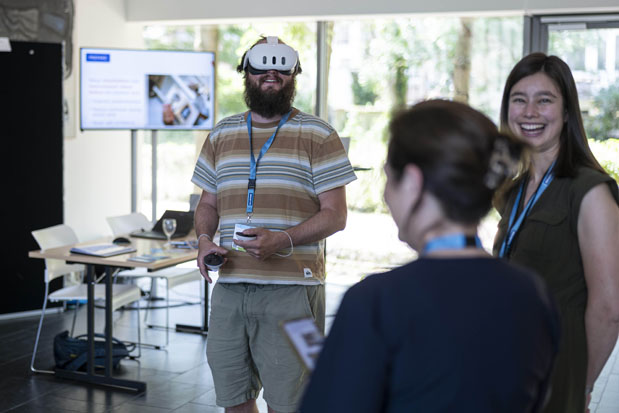
With attendees from across Europe and beyond, the conference will offer a chance to hear different perspectives on the use of media in education. Presenting your ideas can help spark new discussions, while learning from others can give you a fresh view on both the challenges and the opportunities that lie in the field of educational media.
Don’t just take our word for it!
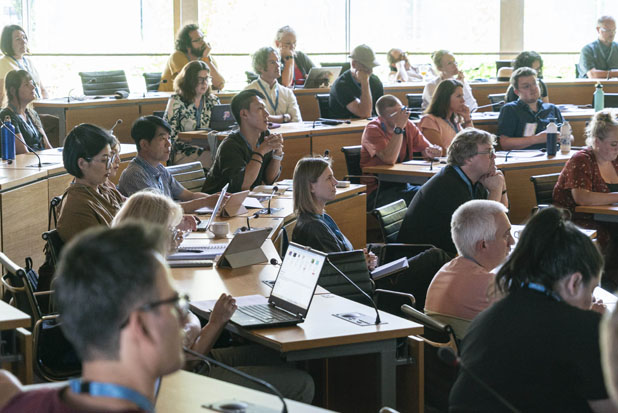
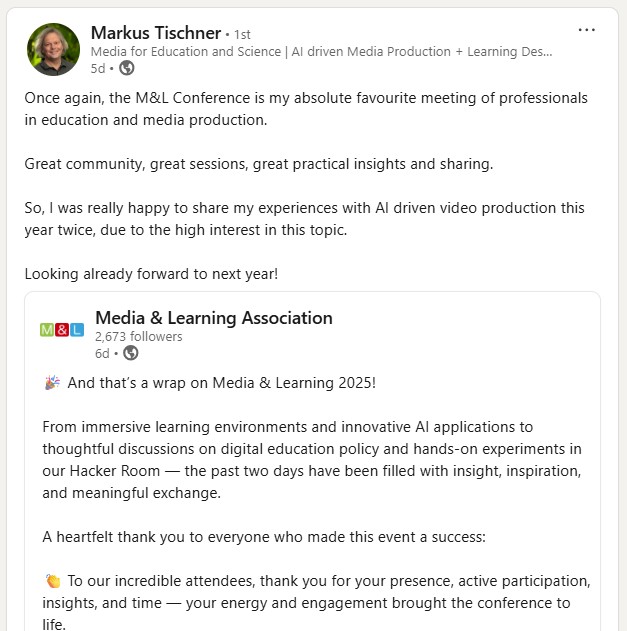
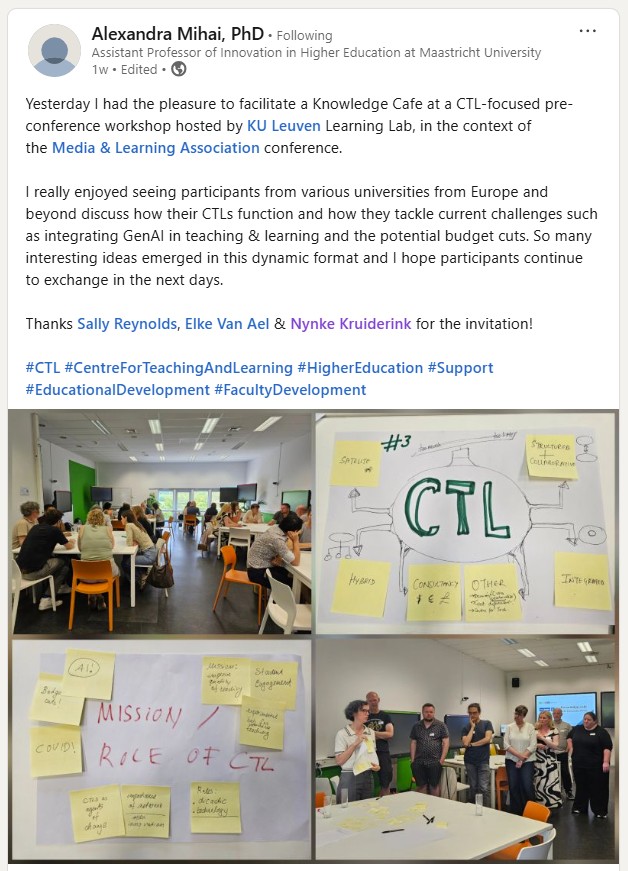
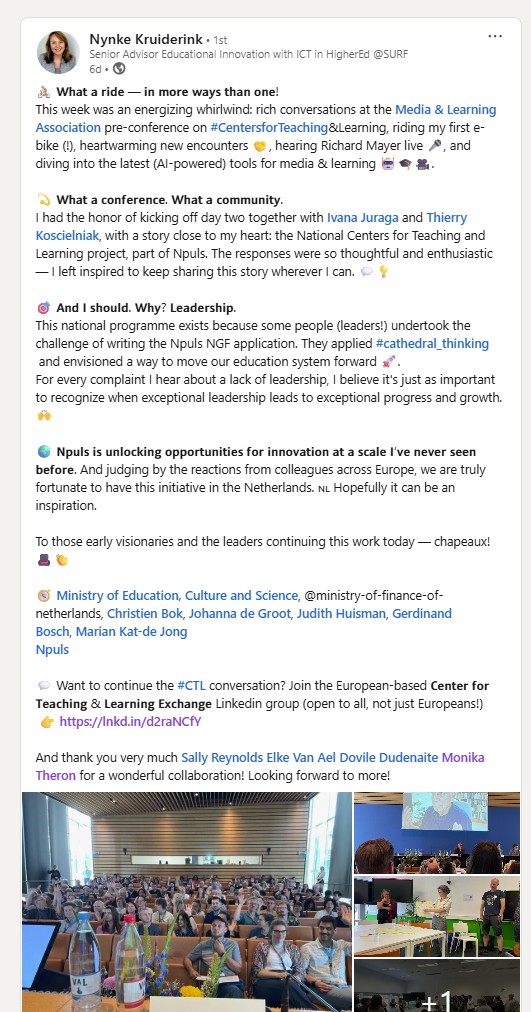
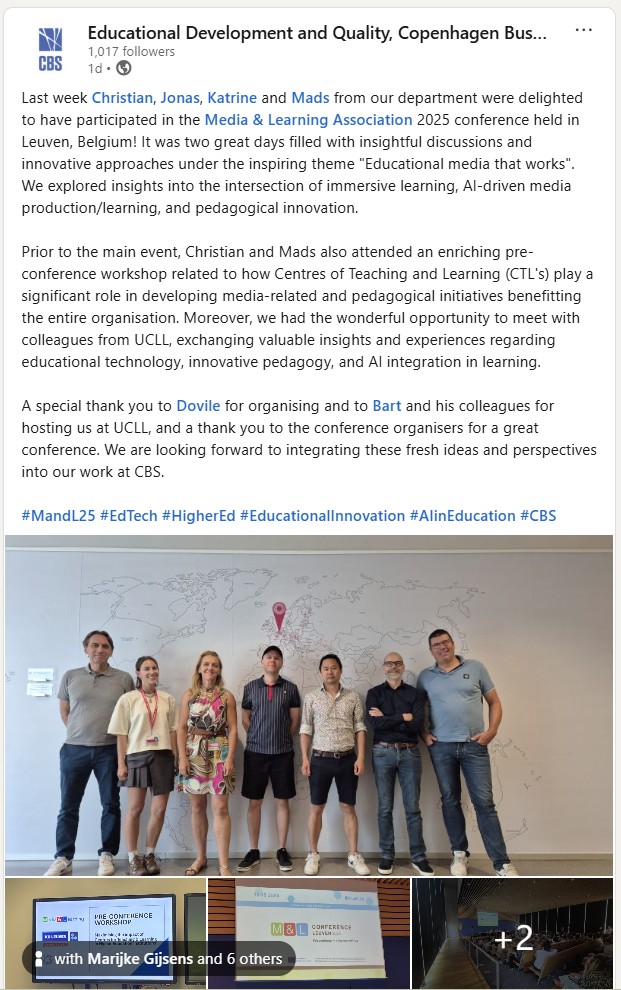
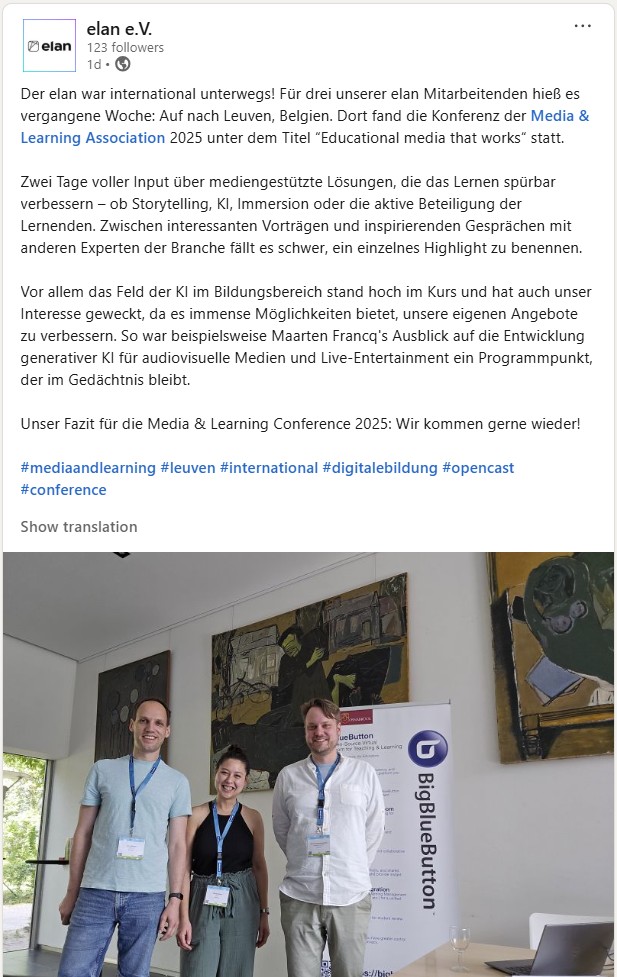
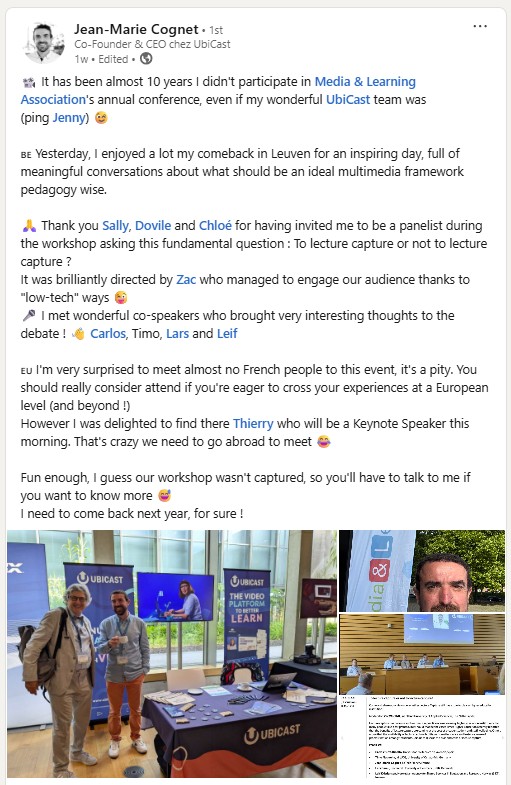
Feedback from the Media & Learning 2025 conference survey provides evidence of the impact the event had on participants, both immediately and in the longer term. An overwhelming 96.55 % of attendees expressed satisfaction with the overall quality of the programme, which included the content, speakers, and presentations. This indicates that the conference not only met but likely exceeded participants’ expectations, providing valuable insights and learning opportunities. Additionally, 89,54% of respondents reported being very satisfied or satisfied with the extent to which they were able to gather new and relevant information during the event, highlighting the effectiveness of the programme in delivering meaningful, practical knowledge.
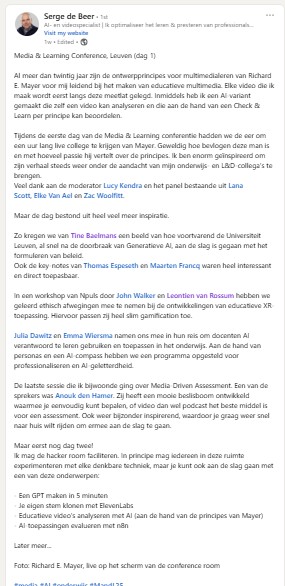
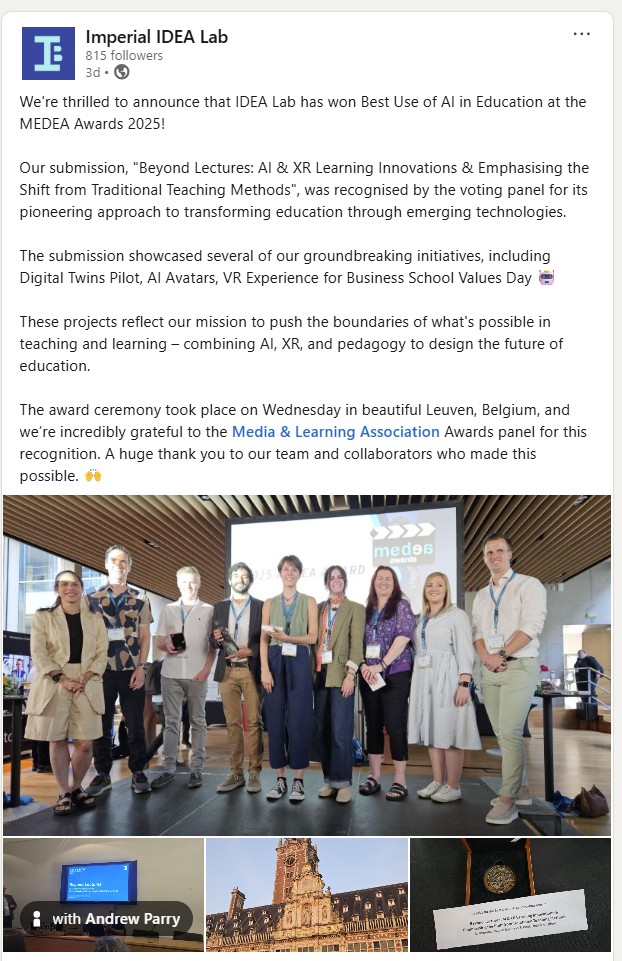
Impressions from our attendees ⤵️
Hope to see you in Leuven!
Media & Learning 2026 provides a valuable opportunity to share your work, connect with others, and contribute to the ongoing discussion about how media can best support education. By submitting a proposal, you can help shape the direction of educational media and collaborate with others who are passionate about its potential to improve learning outcomes.
If you are working on a project or research related to educational media, consider submitting a proposal and join the conversation at Media & Learning 2026. We hope to see you in Leuven!