An interview with Jan T. Goldschmeding, International Association for Media in Science (IAMS)
Can you tell us a bit about the role of scientific film in higher education when you began university in the early 1960s? How did its purpose and character evolve over the following decades?
When I entered university in 1963, scientific films were the result of close collaboration between scientists and professional filmmakers. At that time, the International Scientific Film Association (ISFA), predecessor of today’s International Association for Media in Science (IAMS), distinguished three genres: scientific research films, films for higher education, and popular science films. Over the decades, these categories gradually blurred. Scientific films evolved into films about scientific subjects, often resembling popular science documentaries broadcast by networks such as BBC, National Geographic Channel or Discovery Channel.
In lecture halls, films initially served as moments of pause, resting points for teachers and welcome interruptions for students. Yet even then, moving images held significant pedagogical value: they visualised complex processes, captured laboratory experiments, and documented phenomena otherwise inaccessible to learners.
Can you describe the origins of IAMS, the circumstances surrounding its, and the aims and international significance of the organisation in its early years?
The roots of IAMS go back to October 1947, when ISFA/AICS (Association Internationale du Cinéma Scientifique) was founded in Paris. It emerged from the joint efforts of the Institut de Cinématographie Scientifique (created by Jean Painlevé in 1930) and the Scientific Film Association established in London in 1943. Visionary figures such as Joris Ivens, John Maddison, Francisco Giner Abati, Virgilio Tosi, Hans-Karl Galle and Jan Korngold played a decisive role in shaping scientific cinema as an international movement.
From its inception, ISFA/AICS aimed to raise standards and promote the use of scientific films worldwide to foster understanding of scientific methods and their contribution to social progress. It also sought to encourage international exchange of information, coordination of production, and standardised documentation systems.
Organised as a federation of national associations, ISFA/AICS brought together national institutions such as the IWF in Göttingen and scientific film institutes within academies of sciences across Europe and beyond. Despite Cold War tensions, the association managed to maintain dialogue across the Iron Curtain. From 12 founding nations, membership grew to 30 countries by 1962, including the People’s Republic of China.
How did developments in audiovisual and digital technologies during the 1970s and 1980s transform higher education media, and in what way did these changes lead to the creation of IAMS in 1992?
The 1970s marked a turning point. Universities established audiovisual centres equipped with in-house video production studios. Higher education film flourished, and new subgenres emerged: demonstrations, instructional videos, and discipline-specific tutorials.
In the 1980s, the convergence of computer and video technologies introduced programmed instruction, simulations and interactive exercises. Video became embedded within multimedia packages and, later, websites. Educational video shifted from passive illustration to an active learning tool.
At the same time, tensions grew within ISFA/AICS. In the science film committee there was a discussion about the criteria for a film to be scientific. Committee members argued that a scientific film should be a lineair registration, no stops, no montage, no spoken comments. Otherwise it was an educational film. And there was also a discussion about video. Some members argued that a video never could be a science film since the quality was less than film. The situation in the member countries was quite different. Fewer scientists were using film as a research tool, while producers increasingly focused on dissemination and education. The new university media centres experimented with the emerging digital video technologies which allowed new program formats, many of them being non-lineair.
For ISFA many strategic questions arose: should the association prioritise research films, educational production, or popular science? How should it respond to interactive and digital media?
In the ISFA meeting of 1986 in Leningrad the Dutch delegation demonstrated a laser disc with interactive programmes of all universities. After a long discussion, ISFA installed a committee to advise ISFA on what to do with the new digital media. Members of the commission were Werner Grosse (IWF Göttingen), Murray Weston (BUFVC, UK), Virgilio Tosi (Univ. La Sapienza, Rome) and Jan T. Goldschmeding (NVWFT, Netherlands). After fierce discussions in the following ISFA meetings in Pardubice (1988) and Utrecht (1990) the committee provided a final plan. 1: add a new ISFA branch for digital media and 2 (in response to the fall of the Berlin Wall in 1989:) open ISFA for a broad group of organizations and individuals in the field, i.e. National media institutions, University AV centres, Individual film makers, Broadcast organisations, Festivals for scientific films, etc.
For technical reasons in Zaragoza it was decided that ISFA would be dissolved and a new Association would be founded. The main office would be in Paris, the working office would be hosted in the OMI (Educational Media Institution, Univ. Utrecht, Netherlands). The board included Jan Tijmen Goldschmeding (president, Netherlands), Werner Grosse (general secretary, Germany), Edoardo Ventimiglia (treasurer, Italy), Francisco Giner Abati (Spain), Joannes van Heddegem (Belgium). Annick Demeule (France) and Alessandro Griffini (Italy) followed Jan as president.
Over the years, you have witnessed major changes in the media and education landscape. In your opinion, how has the rise of the internet and streaming technologies transformed higher education, the role of students in media production, and the wider landscape of scientific media in general?
The arrival of the internet profoundly reshaped higher education. Students born in the 1990s grew up in a permanently connected world. They expect instant access to information anytime and anywhere. Social networks and virtual environments extend their physical realities. Communication is continuous and multimodal, combining text, sound, images, animation and video.
Streaming technologies and mobile devices have transformed video into a do-it-yourself medium. Production tools once reserved for studios are now embedded in laptops and smartphones. In education, students are no longer merely viewers; they are producers. Video assignments, collaborative documentaries, flipped classroom lectures and micro-learning clips are common practice.
This transformation also disrupted traditional scientific film markets. Television documentaries remain important, but streaming platforms have fundamentally altered dissemination, retrieval and reuse. University production centres have adapted or diversified; many national associations have dissolved or reoriented their missions. The once cohesive international structure fragmented into smaller, more flexible networks.
What did IAMS do particularly to respond to the digital transformation of media in higher education? Is the association still playing a role today?
In response to these changes, IAMS evolved from a federation of institutions into a global network of professionals interested in all media, analogue and digital, within scientific research, teaching and dissemination. The association collaborates with scientific film festivals worldwide, awarding the IAMS Prize, organising round tables and contributing to debates, conferences and publications. It works alongside national associations and partners such as the World Association of Health and Medical Films.
Today, IAMS is less a centralised body and more a distributed community of expertise. Its members include educators, researchers, producers and media specialists united by a shared interest in moving images, and increasingly digital media, shape scientific knowledge and learning.
Looking back over the past fifty years, how has media in higher education evolved, and what has remained in your opinion constant throughout this transformation?
Over fifty years, media in higher education has shifted from carefully crafted scientific film reels to user-generated streaming content. What began as a specialised collaboration between scientists and filmmakers has become a pervasive, participatory culture. The language of moving images is now immediate, accessible and globally shared.
Yet one element remains constant: the ambition to enhance understanding of science and its societal relevance. Whether through 16mm film, VHS, multimedia CD-ROM, or online streaming, the core objective persists, to make complex knowledge visible, engaging and meaningful.
The history of IAMS mirrors this evolution. From post-war scientific cinema to today’s digital ecosystems, the association has both witnessed and contributed to a half-century of transformation in media and higher education.
Thank you very much, Jan Tijmen
Editor’s Note: We are delighted to announce that this year’s MEDEA Awards includes a specific Thematic Prize – Best Use of Educational Media in Science to honour innovative applications of Best Educational Media in Science, spotlighting innovative trends in the field. This prize will be co-awarded with the International Association of Media in Science (IAMS).
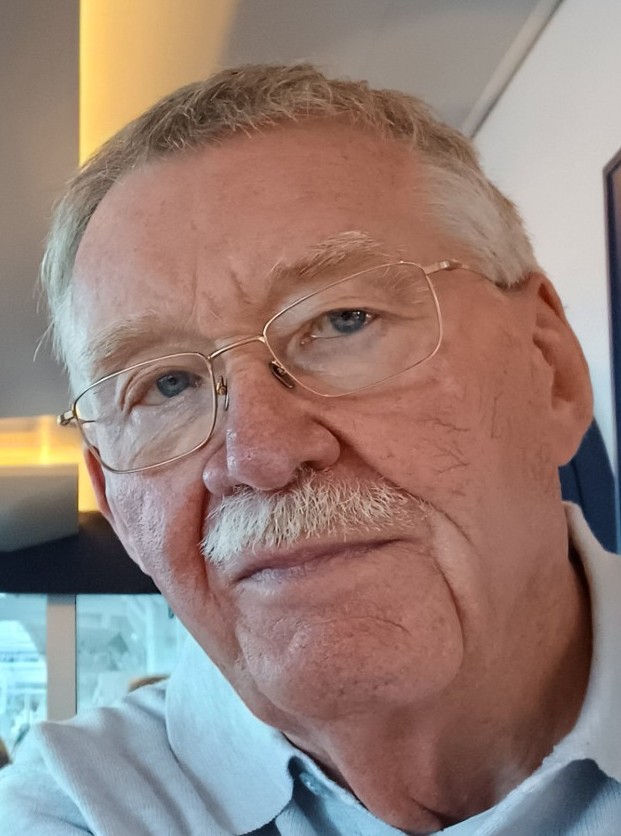
Jan Tijmen Goldschmeding studied biology at the Vrije Universiteit Amsterdam. He began his career as a scientist and lecturer in zoology and physiology, producing innovative instructional films and animations for teaching. From 1982 to 2010, he served as Director of the Audiovisual Centre of VU and VU Medical Center. Goldschmeding has held leading roles in several national and international media and education associations and was co-founder of SURF’s special interest group Webstroom (now Media & Education). In his spare time, he enjoys playing the piano, genealogy, and griffins.