by Mengqi Hu, Xi’an Jiaotong-Liverpool University, China.
As data-driven decision-making becomes central to academic and administrative workplaces in higher education, spreadsheets remain a ubiquitous yet often underutilized tool. While powerful, platforms like Microsoft Excel require significant expertise to unlock their full potential – a challenge for educators, researchers, and administrative staff alike. GPT Excel, an AI-powered assistant designed to simplify advanced data analysis and automate complex spreadsheet tasks through natural language commands. But beyond the convenience, can such a tool meaningfully enhance productivity, accuracy, and data literacy in universities?
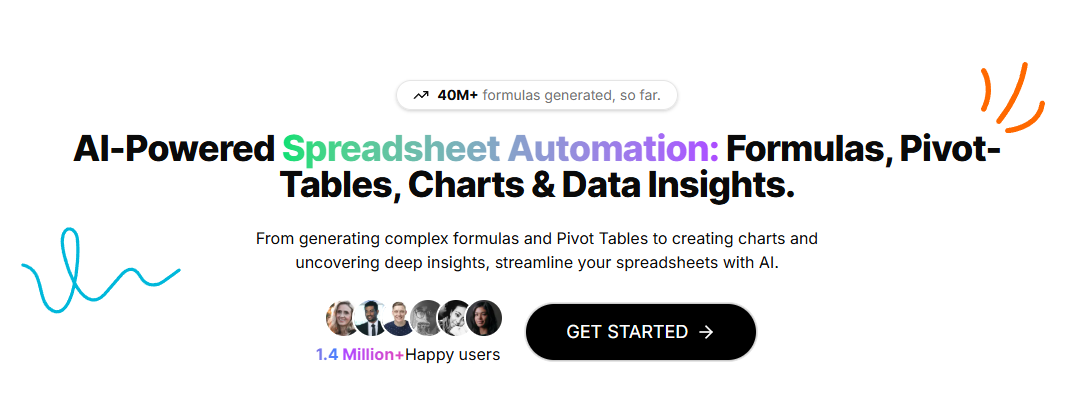
Developed by integrating large language models with spreadsheet functionalities, GPT Excel allows users to perform everything from simple calculations to sophisticated data visualisations by typing questions or instructions in plain language. For instance, an instructor can ask, “What is the average grade of students in Module A?” or “Create a pivot table showing research funding by department,” without writing a single formula. Originally aimed at business users, its application in higher education is growing – especially among staff and faculty who manage budgets, excel spreadsheet data, research metrics, or course evaluations but lack formal data training.
The tool is built on a foundation of natural language processing and spreadsheet logic, trained on diverse datasets to interpret context, detect intent, and generate accurate outputs. it also explains the steps it takes, offering not just results but opportunities for users to learn and engage more deeply with their data. In academic workplaces, time saved on repetitive data tasks can be redirected toward pedagogy, research, or student support. Consider a research officer might use it to track publication outputs across faculties, generate visual summaries for reporting, and even flag discrepancies in research data in real time.
However, as with any AI tool, thoughtful integration is key. The Leiden Learning and Innovation Centre’s rubric for evaluating AI in education offers useful lens here. Adopting GPT Excel should align with core educational principles:
- Cognitive Presence – Does it promote deeper engagement with data, encouraging critical analysis rather than passive receipt of information?
- Teaching Presence – Can educators use it to design more insightful assessments or monitor student progress more effectively?
- Social Presence – Does it facilitate collaboration, for example by allowing teams to query and discuss datasets in shared workbooks?
- Ethical Presence – How does it handle sensitive data? Are processes transparent, and is bias in data interpretation minimized?
GPT Excel also supports sustainability in digital workflows as it contributes to more efficient, less resource-intensive administrative practices. Moreover, clearer data insights can inform greener operational decisions, from energy use in labs to travel planning for conferences.
Getting started is intuitive: users could sign in with email. After a brief setup, they can move to Dashboard to experience AI Chat, Pivot Tables, Formulas, Scripts, SQL, Regex, Template and Billing to save time and increase confidence in handling data-driven tasks. Yet the tool is not a replacement for human judgment. It works best when users maintain oversight—checking outputs, refining queries, and applying institutional knowledge to interpret results.
Looking ahead, GPT Excel represents a step toward more accessible, human-centered AI in higher education. When integrated with pedagogical and operational goals, it can help shift the focus from spreadsheet mechanics to meaningful analysis – freeing up intellectual energy for what universities do best: teaching, learning, and innovating for society.

Mengqi Hu is a Language Lecturer from ALC IBSS Team, Academic Literacies Centre, Global Cultures and Languages Hub at Xi’an Jiaotong-Liverpool University, China.