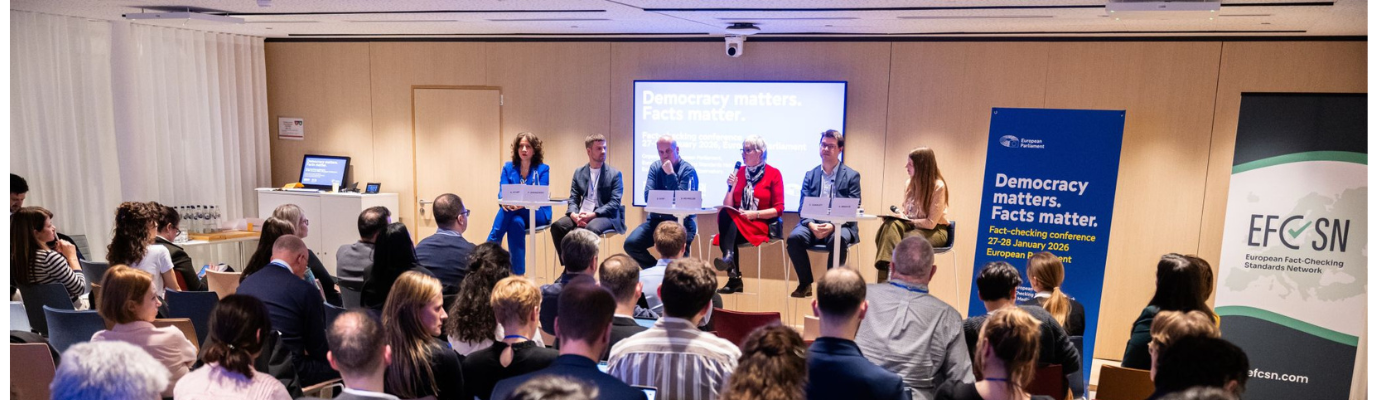
The European Parliament, the European Fact-Checking Standards Network (EFCSN) and the European Digital Media Observatory (EDMO) organised a high-level conference on information integrity on 27-28 January in Brussels. This is the fourth such annual conference and the mood was generally gloomy as speaker after speaker spoke about the current world order in terms of the rising tide of disinformation, the collapse of trust in all sources of news and fears about how AI looks likely to exacerbate our current problems. Sessions on day one focused heavily on just how important facts are to a healthy democracy and included several inputs from EP and EC representatives about plans for the future including the work going into the new European Democracy Shield Initiative which sparked considerable debate.
The programme featured a panel on Media and AI Literacy, highlighting best practices and discussing new frontiers for the sector. Panelists in this session included Sally Reynolds from the Media and learning Association/EDMO and Patryk Zakrzewski from Demagog Association. Sally spoke about the challenges facing European media literacy practitioners including how best to measure and evaluate different types of initiatives and pointed to the success of practices fostering participation over persuasion while highlighting the work taking place in EDMO to support and promote best practice through the EDMO Guidelines for Effective Media Literacy Initiatives (insert link). Patryk began by speaking about success factors in the media literacy work carried out by Demagog with seniors. He then went on to introduce the work planned with university students in the new AI Literate project.
The conference continued on 28 January with sessions on sourcing a sustainable funding model for fact-checkers, a session on enforcing the DSA and surviving or thriving in the AI revolution.