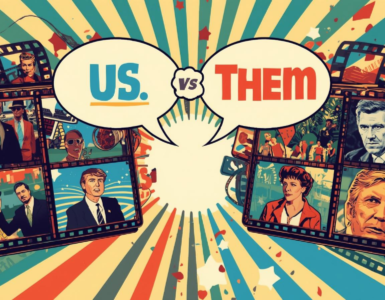
by Larysa Nazarenko, CSO Segalor, Ukraine.
Today’s information space is governed not just through policy and legislation, but through
socio-technical infrastructures and human-AI collaboration. Algorithms actively construct and manage human digital identity through profiling, behavioural prediction, automated categorisation, content curation, ranking, and emotional targeting.
Disinformation, in turn, does not appear as isolated false content but moves and mutates
through these same socio-technical infrastructure, exploiting dark patterns and AI-driven personalisation that blur the boundary between user choice and manipulation.
The information ecosystem has changed. So have the tools meant to fight disinformation. Within the EU framework, combating disinformation relies on two distinct but interconnected types of tools. While legislative tools set and enforce boundaries, nonlegislative ones contribute by supporting users’ capacity to engage with information more critically.
As EU legislative tools increasingly rely on platform-led algorithmic systems to detect, moderate, and remove illegal or harmful content, combined with the growing role AI systems play in shaping what becomes visible, believable, and influential online, media and informational literacy (MIL) needs to be adaptive, accessible and future-oriented.
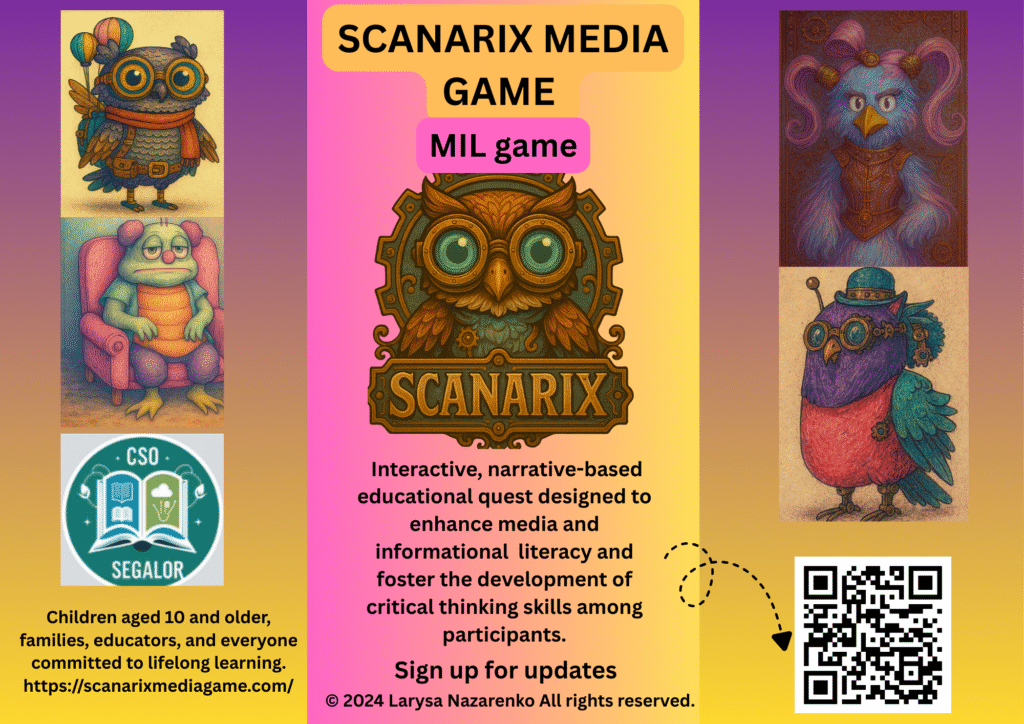
The Scanarix Media Game
Against this backdrop, the Scanarix Media Game is deliberately designed to respond to these dynamics, drawing on relevant international and EU policy and legal frameworks, critical AI scholarship, empirical findings across EU, international contexts on countering disinformation, digital democracy, MIL, and the human rights agenda, rooted in everyday realities.
Scanarix Media Game enables players to engage with the full spectrum of contemporary
media challenges: AI, visibility mechanisms, narrative framing, and the political economy of
attention. It is a multilingual serious MIL game for players aged 10 and up, including intergenerational groups, developed and implemented by me, Larysa Nazarenko in collaboration with the Ukrainian CSO Segalor.
Designed for everyone, students, families, educators, and lifelong learners, the game uses
scenario-driven narrative-based gameplay, collaborative tasks, and structured reflection to
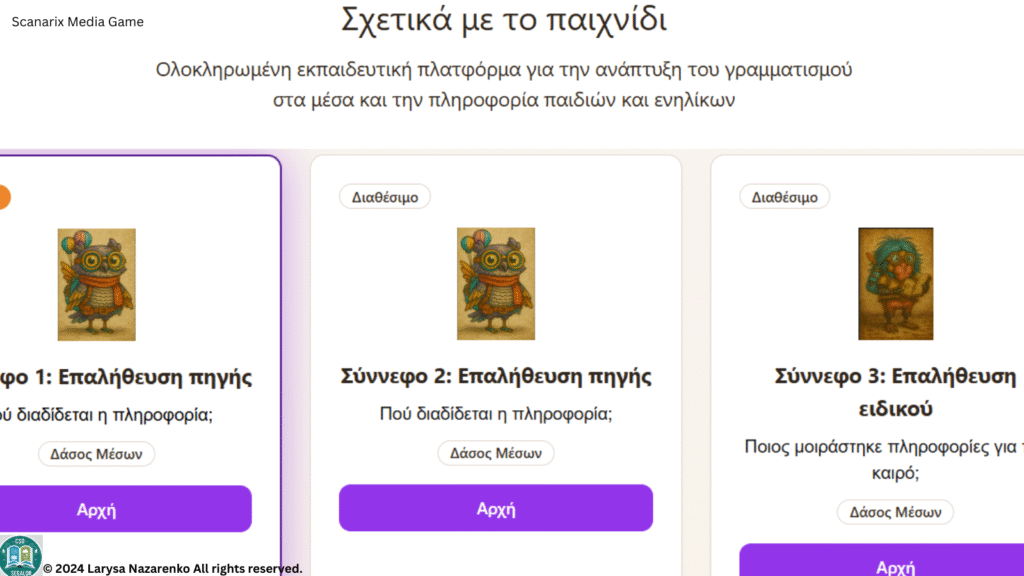
foster critical MIL awareness. It is available as both an offline quest-based game with board game elements and a web-based interactive game (demo version). Currently in English, Ukrainian, and Greek, Scanarix is designed for inclusive, cross-cultural learning, with more languages on the way.
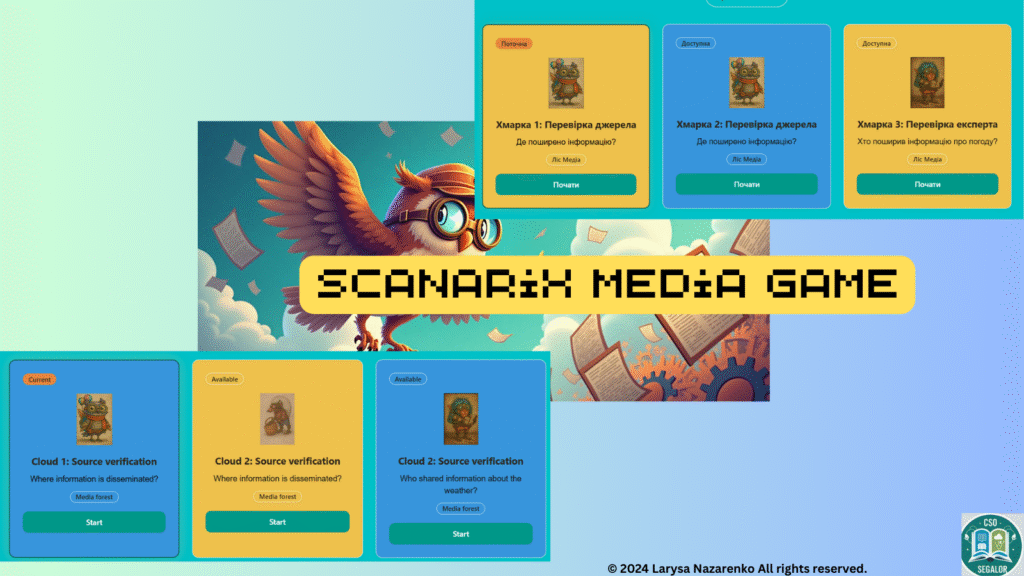
How Scanarix works in practice
It is designed for formal and non-formal educational settings, including schools, youth organisations, universities, community centres, and civic education programmes. The game is facilitated by trained facilitators and adapted to different age groups, learning objectives, and
contextual needs.
Scanarix is grounded in contemporary pedagogical approaches that emphasise active, inquiry-based and constructivist learning through realistic media scenarios. The game is adaptive: all age groups engage with core MIL skills such as information search, critical analysis, and recognition of manipulation, including AI – generated content, while also exploring additional educational thematic areas integrated into gameplay.
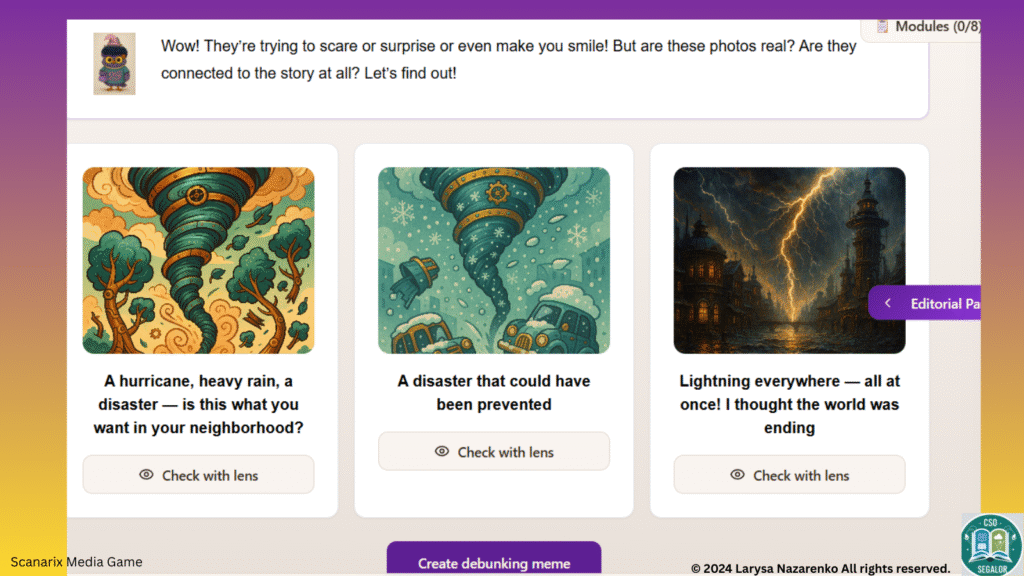
With young children, the game introduces MIL through age-appropriate formats focused on distinguishing truth from deception, recognising online risks, manipulations and developing basic awareness of how algorithms influence content. With teenagers, it expands to include human rights, online safety, AI bias, and democratic values as thematic areas through which they develop MIL skills. For adults, it further deepens into complex areas such as, for instance, AI governance, platform accountability and SLAPPs.
Across all age groups, the Scanarix Media Game makes invisible media infrastructures visible by showing how content is amplified through language, visuals, emotions, social interaction, and positioning MIL as a civic competence. The game cultivates curiosity and problem-solving by helping users to use evidence to guide their reasoning. The game can be delivered by our team or implemented independently, supported by a facilitator’s guides and all necessary materials we provide. The scenarios are constantly updated and scaled to suit each age group.
See Scanarix in action. Watch the game video here
Pilot testing and further implementation with Ukrainian children in Greece and educators demonstrated strong educational impact, increased motivation for MIL and strengthened skills in source evaluation and collaborative problem-solving. As one young participant put it: “I thought it would be easy, but it made me rethink how I usually see things online”. The game’s international relevance has been further underscored through the presentation of the demo version of the web-based Scanarix Media Game at the award ceremony event of the 5th International Student Board and Digital Game Design Competition. The lesson…is a game, organised by EKKOMED in collaboration with key Greek sectoral institutions active in the field.
Learning objectives
Players don’t need prior knowledge – the game leads them to it through gameplay, choices, and reflection. Scanarix doesn’t test what players know – it is built to activate thinking, whether players arrive with prior expertise or not. Learning outcomes include the development of the following skills:
- critical thinking, analytical skills, and awareness of AI-driven media challenges;
- media, informational and AI literacy;
- collaboration and communication skills;
- increased motivation to continue engaging with media and informational literacy
Author

Larysa Nazarenko is the creator of the Scanarix Media Game and the founder and head of the CSO Segalor-a member of the UNESCO Media Literacy Alliance.
Larysa is a distinguished lawyer with over 20 years of professional experience across a wide range of legal fields, specialising in legislative drafting, policy analysis, institutional capacity-building, and the promotion of the rule of law. She has substantial expertise in human rights, media law, access to information, accessibility, European integration, digital rights, disinformation, and broader legal and policy domains.
Mrs. Nazarenko is a PhD student at Panteion University of Social and Political Sciences, Department of Communication, Media and Culture, researching legislative and non-legislative tools for combating disinformation, and a member of the International Association for Media Education (IAME), Belgium—a global network advancing media education worldwide.