This article is part of the new “Centres for Teaching and Learning” series, a collection of interviews and articles exploring the diverse roles and innovative practices of CTLs, presented by the Media and Learning CTL Special Interest Group. In this series, we invite one of our SIG members each month to talk about CTLs, to describe the work they do and to highlight some of the challenges they face.
This month’s article is written by Nynke Kruiderink from Npuls, the Netherlands.
CTLs as Systemic Knowledge Brokers for Lifelong Learning
In the past weeks I gave a keynote and led a workshop at two European conferences with very different audiences and atmospheres. Still, the same energy was present in both places: a growing sense that staff development is moving from the margins to the centre of educational strategy. It’s no longer treated as a supportive extra, but as a core condition for the kind of change higher education is being asked to deliver, whether that change is driven by AI, new student needs, shifting labour markets, or wider societal expectations.
That broader shift also connects to European ambitions around lifelong learning. Across Europe, the emphasis on upskilling and reskilling is becoming more explicit and more urgent. And if lifelong learning is to become reality, it cannot stop with students and professionals “out there.” It has to include the educators themselves.
This is where Centres for Teaching and Learning (CTLs) come into view. CTLs sit at an interesting crossroads: they support the professional development of educators, they connect expertise and practice, and they help institutions make educational improvement more sustainable. In the Netherlands, within the Npuls programme, CTLs are also becoming increasingly visible as change agents: not because they “own” staff development, but because they make it easier for staff development to happen in coherent, connected, and sustainable ways.
Qualification is not the same as competence
Formal degrees and teaching qualifications matter. They ensure educators meet professional standards and have a shared baseline. But in a rapidly changing world, qualification is only the beginning. Competence is something different: it is continuous. It needs renewal. It needs room to practice, experiment, reflect, and learn together—especially when new technologies, new pedagogies, and new student realities keep reshaping what “good teaching” looks like.
That is why lifelong learning approaches are so crucial for educators. CTLs often play a key role here, not just by offering training, but by creating scaffolding for professional learning that fits daily academic life. When that scaffolding is strong, educators don’t have to “figure everything out alone” and innovation doesn’t stay locked inside a single course team, department, or early adopter group.
Two European moments, one shared question: how do we make staff development work?
The first event was a keynote for E³UDRES², the European University Alliance. The conversation there focused on how alliances can strengthen education, innovation and collaboration across institutions and regions. It was an inspiring setting for a very practical question: what does it take to build a well-functioning CTL?
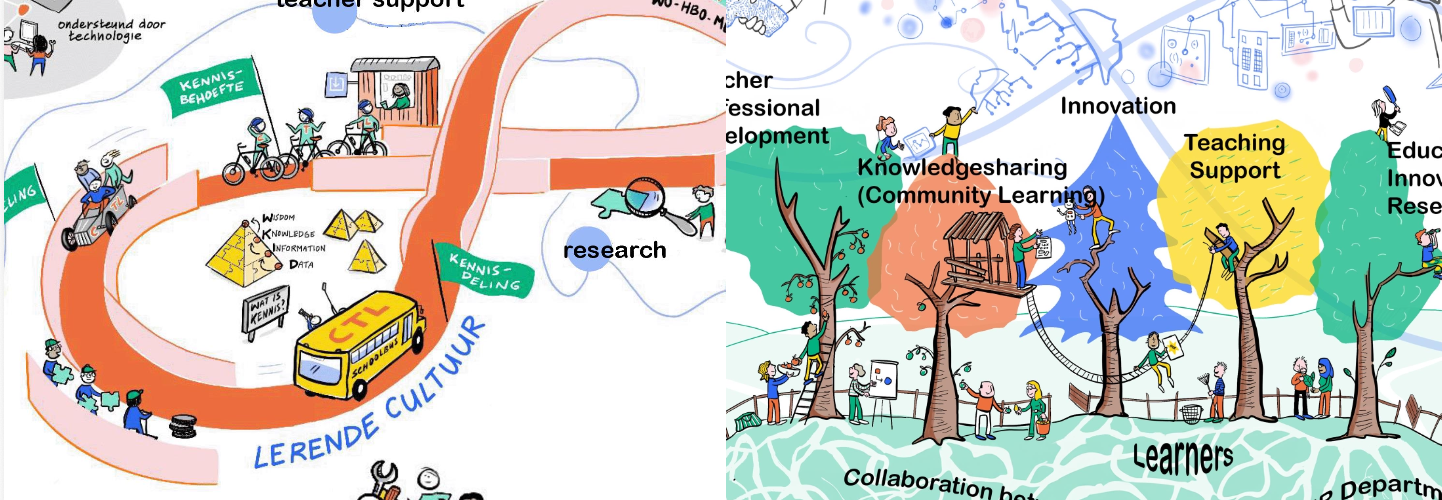
A key insight from Npuls is that you often need a shared language before you can build a shared movement. In the early phase, we invested in concepts and visualisations to make CTLs understandable and discussable. When people can see the logic, the building blocks, and the possibilities, something starts to move. Shared language helps people position their own work, recognise overlap, and start making intentional choices rather than simply adding “another initiative.” And this trend has also been identified by a recent report published by the StaffDev working group of the European University Association: Staff development in learning and teaching at European universities.
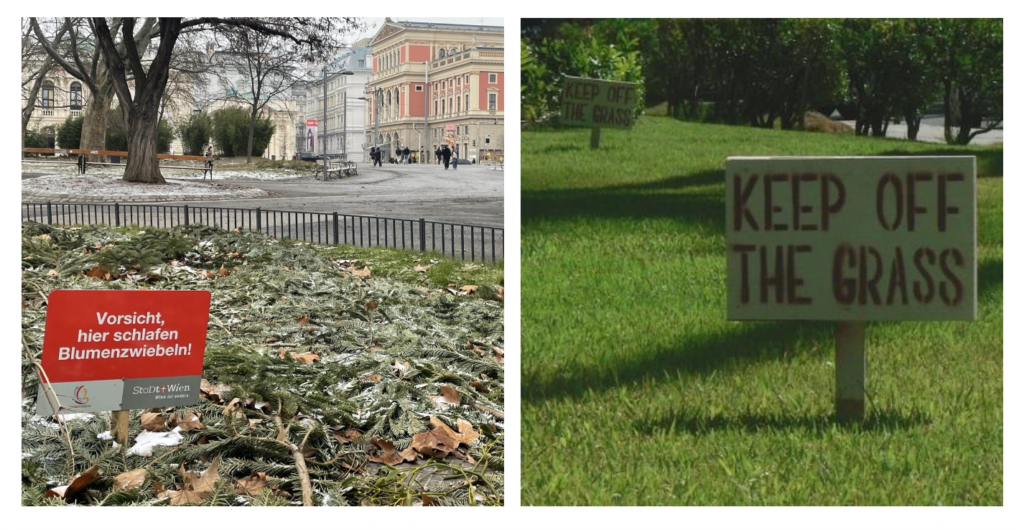
“you often need a shared language before you can build a shared movement”
The sign in the left side of the picture: “Be careful, flower bulbs are sleeping here”
It would be unrealistic not to mention the role of funding. In the case of Npuls, the subsidy helped enormously. It created attention and urgency, and it helped institutions make time and space for the conversation. Funding opens doors. But it doesn’t automatically create lasting impact. The real work begins after the initial momentum: how do you continue moving forward in a way that is sustainable?
Two things matter deeply in that next phase. The first is that each CTL needs to be organised in a way that is relevant in the context of its institution. Institutions differ in culture, structure, priorities, and maturity. So CTLs will differ as well—and that is not a weakness. A well-functioning CTL is not a copy-paste model; it is a contextual solution.
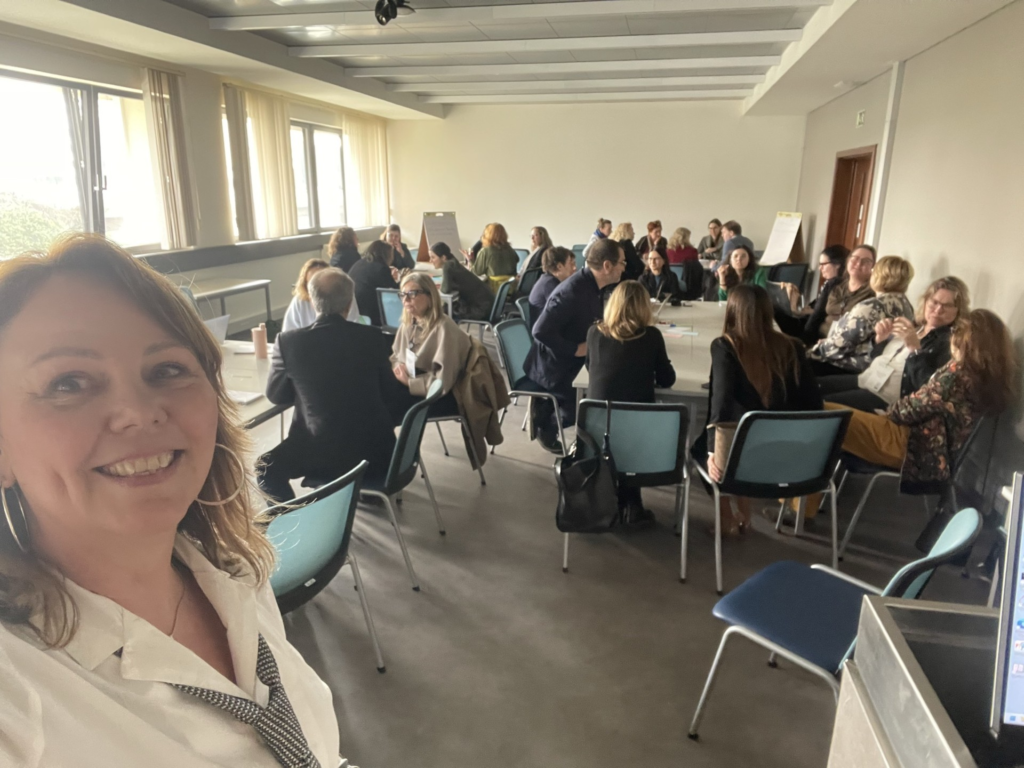
At the same time, sustainability also depends on CTLs working together. If every CTL reinvents everything in isolation, learning remains slow and fragmented. Collaboration allows knowledge, tools, formats, and lessons learned to circulate. It also creates companionship: the sense that you’re not doing this alone, and that progress in one place can help progress elsewhere.
In the Dutch context, that balance—local relevance and national connection—has been supported by a shared CTL framework. While CTLs can look very different, we keep recognising common ground in five shared goals. CTLs tend to converge around professional development, knowledge sharing, educational innovation, support for educators and programmes, and research or evidence-informed practice. That shared backbone makes collaboration easier without forcing uniformity.
Change isn’t a straight line, and designing for that matters
Another theme that resonated strongly at E³UDRES² is that institutional change is rarely tidy. It is messy, varied, and often non-linear. Progress can accelerate, stall, loop back, or appear in surprising places. In Npuls we explicitly included that reality in our CTL change strategy. Instead of assuming that “a plan” will roll out smoothly, we assume that change will develop through many local dynamics and that the path will differ across institutions.
This way of thinking aligns well with what Hans Vermaak describes as a patchwork logic, the “lappendeken” approach. Rather than trying to force one coherent, centralised trajectory, you connect meaningful initiatives and build movement through relationships, shared direction, and mutual support.
That focus on relationships has shaped our day-to-day work. We invest heavily in the relationship between the programme team and colleagues in institutions. But we invest just as much in relationships between colleagues across institutions. Trust, recognition, and informal exchange are not “soft extras”; they are the channels through which knowledge and momentum travel.
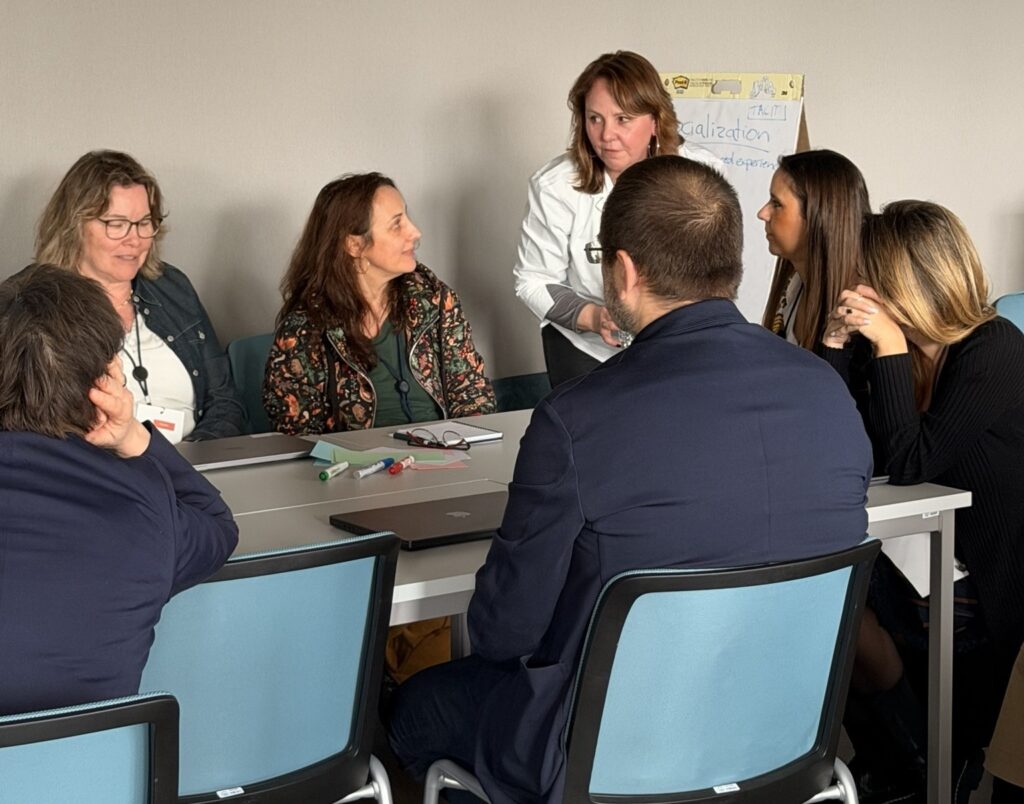
That focus on relationships has shaped our day-to-day work. We invest heavily in the relationship between the programme team and colleagues in institutions. But we invest just as much in relationships between colleagues across institutions. Trust, recognition, and informal exchange are not “soft extras”; they are the channels through which knowledge and momentum travel.
One of the most wonderful and unexpected outcomes of this approach has been the emergence of CTL networks. These networks formed as a result of collaboration calls, but they quickly became something richer: communities that organise themselves around shared questions and shared practice. They are the kind of result you cannot fully plan, but you can absolutely nurture. We celebrate these networks, support them, and are now investing in strengthening them because they are a foundation for sustainable change, capacity that can live beyond a programme timeline.
A second European conversation: staff development at scale
The second event was the European University Association’s Learning & Teaching Forum. The theme centred on impactful staff development for educational transformation, and the programme was strong, twenty-eight sessions were approved, each offering a different angle on how institutions are tackling the same underlying challenge: how do we support educators in a way that truly improves student learning and helps institutions adapt to change?
In that forum setting, the conversation naturally shifted from building CTLs to scaling staff development. A useful lens here is knowledge: how knowledge is created, how it moves, and how it becomes usable in practice.
Many institutions have pockets of excellent expertise. But expertise does not automatically spread. Great ideas can remain locked inside individuals or teams, and valuable lessons learned can disappear when a project ends. That is why it helps to look at staff development not only as “activities,” but as a knowledge system.
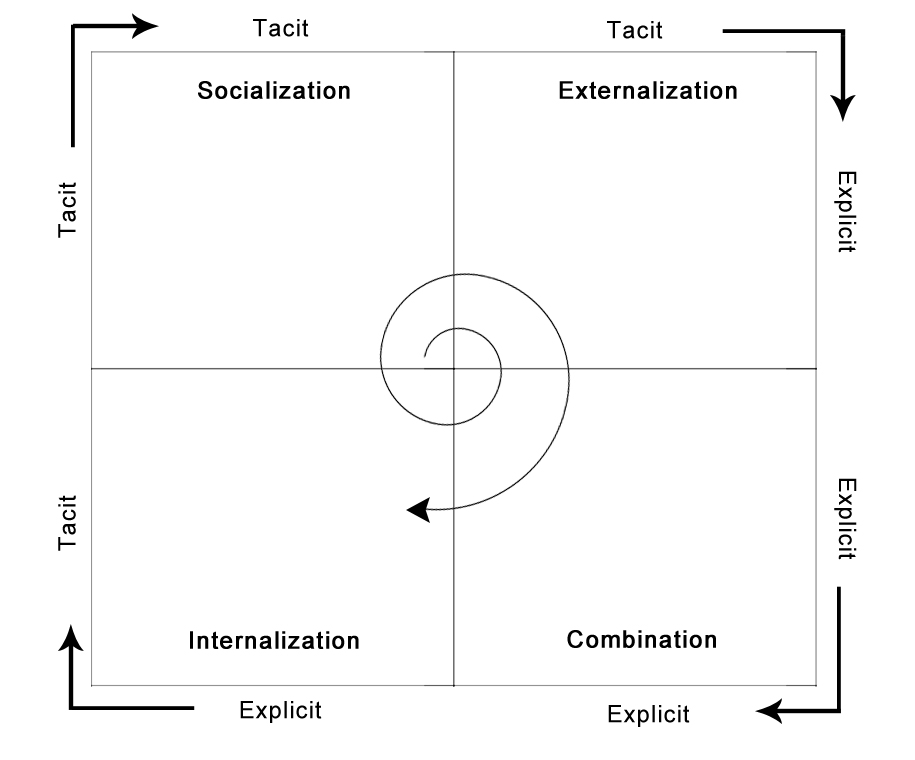
The SECI model offers a simple but powerful way to explore this: knowledge moves from tacit experience to shared language, into reusable resources, and back into practice again. When institutions support all these knowledge processes—social exchange, articulation, combination, and internalisation—staff development becomes more than training. It becomes continuous learning embedded in the institution.
This links back to the role of CTLs as knowledge brokers. CTLs can help make professional knowledge visible and shareable. They can connect educators with peers, resources, and evidence. They can help institutions build routines and platforms that keep learning moving—within an institution, and across institutions.
And in a European context, that raises an exciting possibility: a stronger European knowledge infrastructure for teaching and learning. Not one central solution, but connected spaces and networks where institutions and alliances can learn together, reuse what works, and build shared capacity. If we want transformation at scale, we need the infrastructure that allows learning to travel.
A hopeful conclusion: transformation scales through connection
Both conferences left me energised, not because the challenges are smaller, but because the attention for staff development is growing at exactly the right moment. More and more, staff development is being recognised as a strategic lever for quality, innovation, and resilience.
The strongest thread connecting these experiences is simple: transformation doesn’t scale through isolated brilliance. It scales through connection. CTLs are uniquely positioned to support those connections. They help educators move beyond “being certified” toward “staying competent.” They help institutions move beyond fragmented initiatives toward sustainable learning ecosystems. And they help build the bridges—within institutions, between institutions, and increasingly across Europe—that make lifelong learning for educators real.
If the ambition is lifelong learning, then teaching staff must be included not only in rhetoric, but in structures. CTLs, networks, and knowledge infrastructures are part of how we build those structures—patiently, relationally, and with room for the beautiful messiness of real change.

Nynke Kruiderink, Npuls, the Netherlands