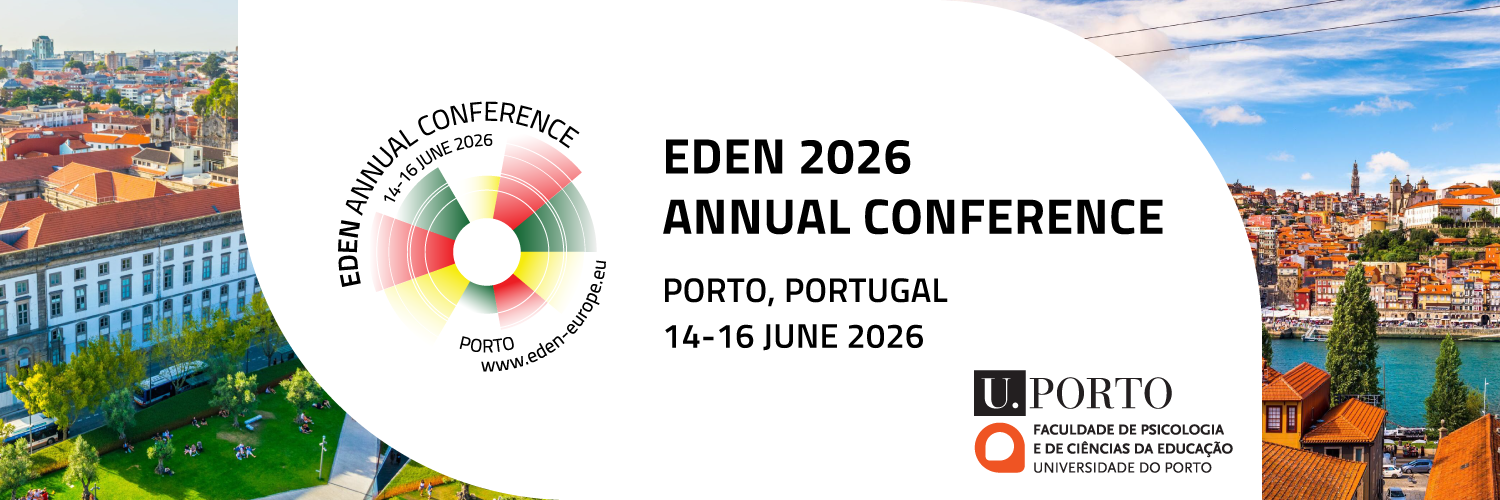
Learning and teaching is no longer defined in the digital age by technology but is shaped by collaboration, co-creation and relational intelligence. EDEN 2026 invites educators, researchers,and institutional leaders to Porto to explore how human-AI partnerships are transforming learning design, inclusion, and institutional practice across the sector. Hosted by the University of Porto’s Faculty of Psychology and Education Sciences, this year’s conference foregrounds the human, socio-emotional and cultural dimensions of technological change. From adaptive learning systems to ethical frameworks and visual models, we will examine how AI can amplify and not replace human creativity, agency and connection. Find out more here.
You may also like

Making remote learners truly present: lessons from using telepresence robots
by Tiina Kasuk, Tallinn University of Technology, Estonia. It was Monday. Carol was already, patiently waiting for the clock to reach 9:55 so that today’s first class could begin. The clock struck 9:55, and Carol...
2 days ago
5 min read
From checking claims to understanding AI: bringing critical literacy into everyday learning
by Hamed Hosseini Vaghar, Founder of CACIT, Belgium. CACIT connects media literacy, AI literacy and fact-checking through practical learning routes for workshops, classrooms and education projects. Young people do not...
2 days ago
4 min read
vera.ai: AI tools to spot deepfakes and disinformation
Verifying whether a video, image or audio clip has been manipulated is getting harder every year, as generative AI makes convincing fakes easier to produce than ever. vera.ai is a Horizon Europe research project...
2 days ago
2 min read