This article is part of the new “Centres for Teaching and Learning” series, a collection of interviews and articles exploring the diverse roles and innovative practices of CTLs, presented by the Media and Learning CTL Special Interest Group. In this series, we invite one of our members each month to introduce their CTL, describe the work they do and to highlight some of the challenges they face.
by Imane Allilouch, VU, the Netherlands
Laying eggs, raising larvae, storing pollen and honey. That is what bees do inside the honeycomb they build, maintain and use themselves. This is, of course, an article for Media & Learning Magazine, not for National Geographic. Still, that honeycomb has a surprising amount to do with the VU Centre for Teaching & Learning at Vrije Universiteit Amsterdam.
We, too, work from a structure that is constantly in motion. A place where knowledge is collected, ideas are shared, education professionals develop, and new initiatives can grow. The honeycomb is our logo and makes us recognisable within VU Amsterdam. But the longer you look at that honeycomb, the more you realise it is not just a shape. Its characteristics are also reflected in the way we work. For us, educational development is not something designed from the top down. It is something built together, cell by cell, by lecturers, educational advisers and, perhaps most importantly and most distinctively in our way of working, by students.
The beginning, admittedly, was not immediately neat and polished. At times, it resembled the sticky awkwardness of honey more than a perfectly designed structure. Two different units initially existed side by side. One part focused mainly on offering professional development for lecturers, such as the official qualifications and training programmes for the UTQ and STQ. The other part, the VU Education Lab, had a different origin and mainly offered accessible, practical and digital support for educational innovation and the use of educational tools. These worlds have now come together in one CTL. Not as a course factory, but as a place where professional development, practical support, innovation and collaboration strengthen one another. A training programme with us is not only about obtaining a certificate, and practical support is not only about solving a technical question. It always comes back to the same bigger question: how can we make education better, more meaningful and more useful for the world beyond the lecture hall? That is why VU pillars such as Mixed Classroom, A Broader Mind and Students as Partners all have a place in our work.
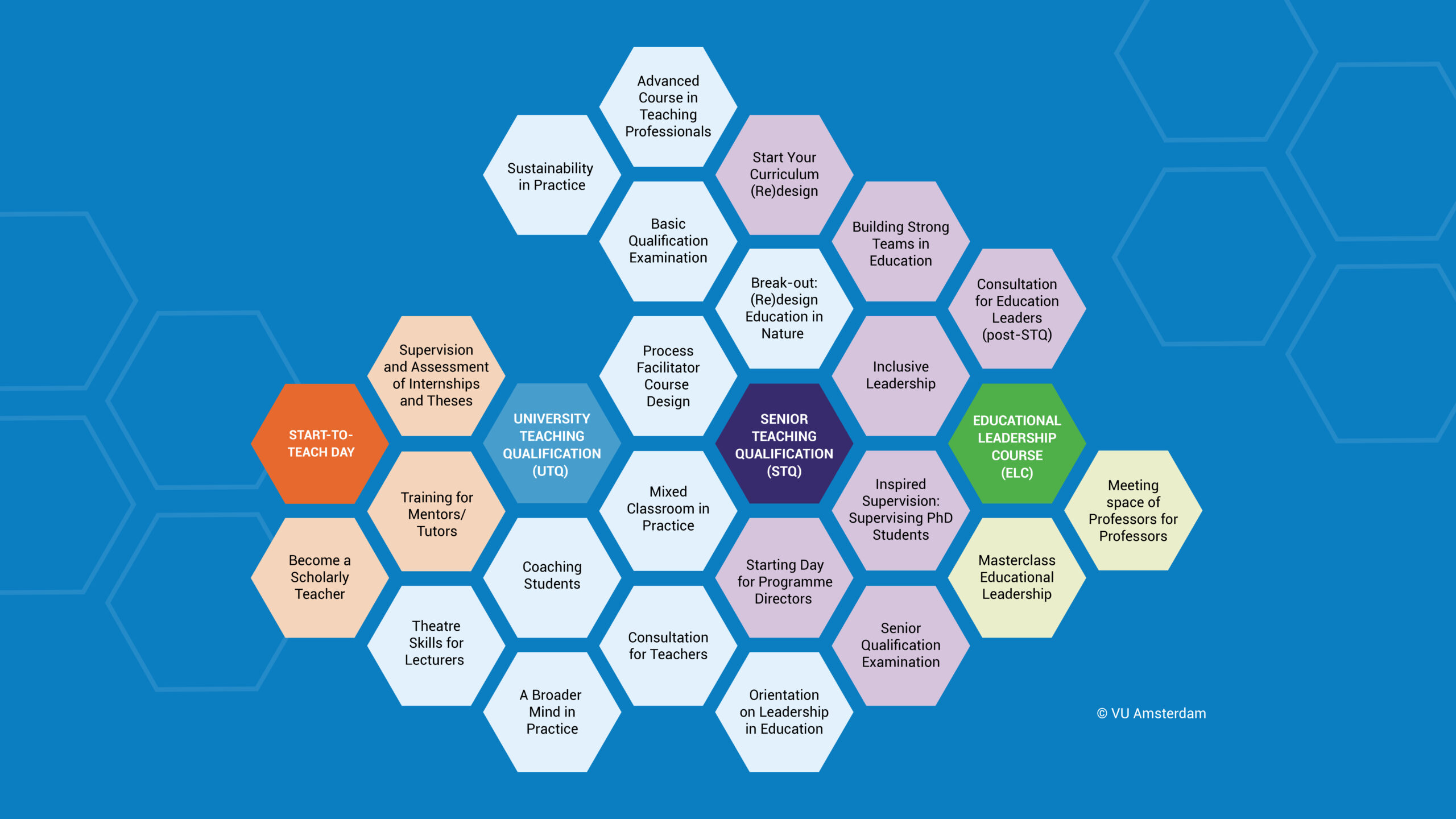
So, not a course factory, but, as we said, a real honeycomb. Figuratively, but also quite literally. One way in which the honeycomb becomes very concrete is through our VU CTL development path. This development path helps lecturers choose professional development trajectories that fit their situation, experience and learning needs. Each cell in this path represents a trajectory that can be followed separately. New lecturers, for example, often start with a Start-to-teach day. This is often followed by the UTQ, a 200-hour trajectory in which lecturers develop a strong didactic foundation. They receive training in areas such as constructive alignment, assessment, student guidance and many other relevant educational theories. Lecturers decide for themselves which pollen they want to store. In this way, no linear route emerges that is the same for everyone, but rather a personal development path that moves with someone’s teaching practice.
Still, our greatest pride does not lie only in the content of our honeycomb. It lies above all in the people who help build it. Within VU CTL, around 56 staff members work together with 16 student-colleagues, together forming 45 FTE. And we use that word deliberately. Not student assistants on the sidelines, not temporary help for executive tasks, but student-colleagues as genuine partners in educational development. Besides being proud, we are also grateful that students want to build with us, and we are often surprised that this is not the norm. After all, are we not doing all of this for students? Of course, it is important to be honest. Working together as equal partners does not happen automatically. Sometimes the reins are suddenly pulled tight. Sometimes students do not have access to the same background information as staff members at the table. Sometimes uncomfortable conversations are needed about expectations, responsibility and who ultimately gets to decide. It is a muscle that needs training. Fortunately, no gym membership is required, but it does mean taking on the challenge. It requires people who actively ensure that students are not pushed back down into a classic role in which they mainly take minutes, fill in Excel sheets or are “allowed to think along for a moment”. Partnership means that students are also at the table when the user-friendliness of a tool is being discussed. That they are given space to shape conference presentations themselves. That they give training sessions on teaching methods such as Active Blended Learning. That they can contribute to lecturers’ support questions without their input first having to pass through three extra layers of control. Of course, that requires trust. But that is precisely where partnership begins. Believe me students are capable of so much: giving training sessions on teaching methods, even to UTQ participants; developing concepts such as the Teacher Trainer Lab, where lecturers can give a mock lesson and receive feedback; building AI environments; and conducting interviews with education experts that are published in our magazine. Through their sharp perspective, expertise, curiosity and openness, they create something valuable.
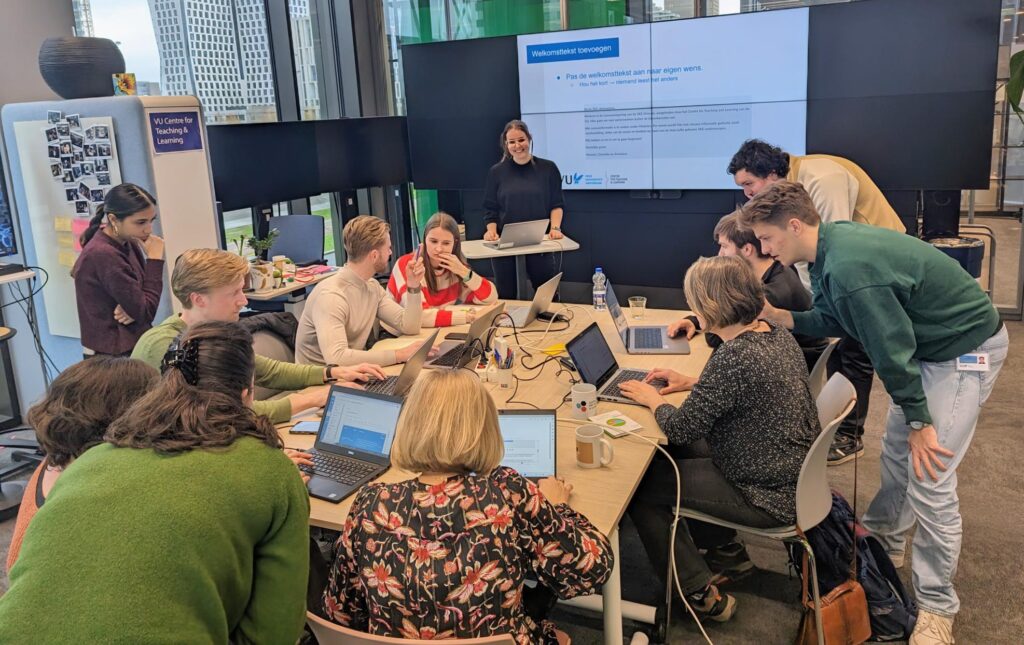
Within VU CTL, we have already come far in the development of Students as Partners. Students are genuinely partners with us. At the same time, that does not mean we are finished. Partnership is not a final destination, and not everyone embraces our ideals. It requires renewed attention every time. Do students receive enough context? Do they genuinely have influence? Is their expertise taken seriously? Can they honestly say what they see, even when that is not entirely comfortable? Because precisely in that openness, and sometimes even in a touch of boldness, there is great value. Sometimes it is necessary for someone at the table to be able to say: “I actually think this is completely pointless.” Not to block the conversation, but because such a statement makes something visible. If someone feels free enough to say that out loud, space opens up to examine where the resistance lies. And the responses to that can unexpectedly lead to new ideas, better questions or a different direction. Of course, something is required in return. Anyone who offers criticism must also be willing to help build a solution. But when that space exists, something emerges that cannot be achieved through policy documents or project plans alone: a more honest conversation about what education needs in practice. The real, sweet, pure honey.
As with every good honeycomb, you only truly understand how it works when you look at it up close. That is why we would like to end with an invitation. Anyone who would like to know more about us is warmly welcome at VU CTL. We would be happy to show how we work, how the development path is structured and above all, how our student-colleagues contribute to the way we shape educational development. Feel free to visit us on the campus of Vrije Universiteit Amsterdam. We will provide a tour and of course, the coffee.
Send an email to ctl@vu.nl.
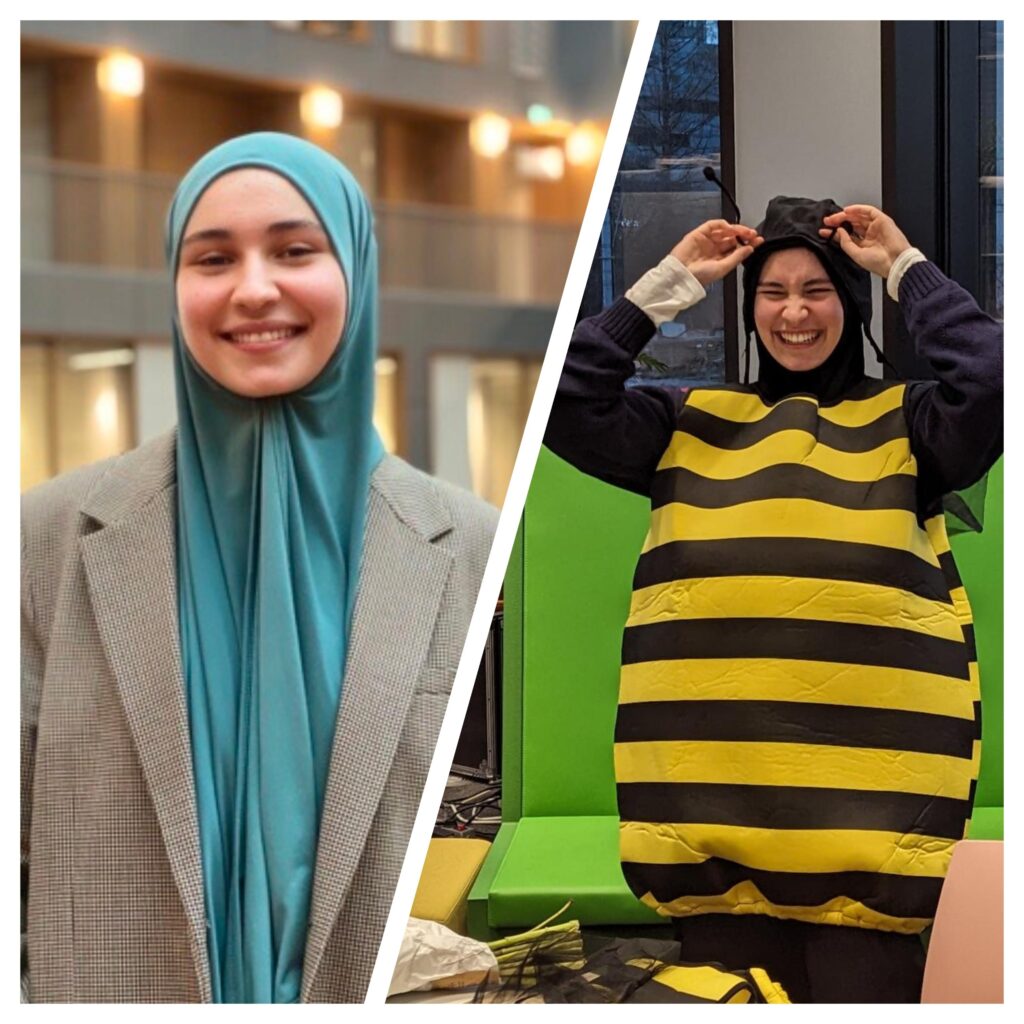
This article was written by one of our VU students:
Imane Allilouch is a Law student at Vrije Universiteit Amsterdam and a student-colleague at VU CTL. Since joining CTL, she has been involved in a range of exciting projects, including interviewing education professionals about developments within the university, giving tours and training, and contributing to discussions on educational innovation.