by Steven Verjans & Andy Veltjen, UCLL University of Applied Sciences, Belgium.
At the Media & Learning pre-conference workshop in Leuven this June, my colleague Andy Veltjen and I shared the first results of the SAIL project (Scenarios for AI and Learning), an internal research and development project at UCLL University of Applied Sciences. Our central question is simple but urgent: how can education help students develop the competencies they need to remain professionally autonomous in an era of generative AI?
Like many institutions, we see higher education facing a paradox. Generative AI can dramatically increase efficiency and productivity, yet it may also reduce opportunities for students and professionals to build the expertise needed to critically evaluate AI-generated outputs. If AI can produce answers, code, designs, and reports instantly, what should students still learn for themselves? What should we teach them in our universities? Which are the core competencies needed to function in a profession that is changing profoundly? And what kind of autonomy will future professionals need?
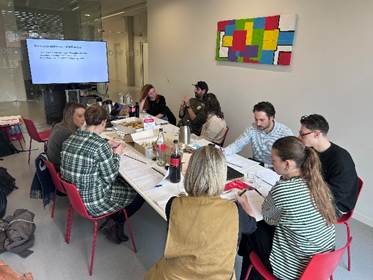
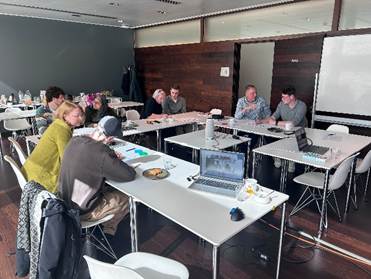
To explore these questions, we organised scenario-planning workshops with stakeholders from two very different professional domains: Creative Media Management and Applied Computer Science. Although the disciplines differ considerably, the discussions revealed strikingly similar concerns.
One recurring theme was the tension between efficiency and depth. Participants recognised the tremendous productivity gains that AI offers, but also worried that speed may come at the expense of deeper understanding. In software development, this concern appeared as developers use AI-generated code without fully understanding it. In creative media, participants feared an abundance of technically acceptable but generic content — what several participants referred to as “boringly similar” creative output.
A second tension concerned using AI versus understanding AI. Across both domains, participants argued that the real challenge is not merely operating AI tools, but understanding their limitations, biases, and outputs. Professional expertise increasingly depends on knowing when to trust AI, when to question it, and when to intervene.
Perhaps the most important finding was that human responsibility does not disappear when AI enters the workflow. Whether someone is designing a communication campaign or deploying software into production, the professional remains accountable for the final result. AI may contribute to the work, but responsibility stays firmly with the human.
Across both workshops, we identified several competencies that appear to be growing in importance. These include the ability to critically evaluate AI-generated output, interpret context and stakeholder needs, take ownership of decisions, communicate effectively with clients and colleagues, and use AI professionally rather than merely operationally. Interestingly, these are not purely technical AI skills. They combine domain expertise, judgment, responsibility, and interpersonal capabilities.
To make sense of these findings, we developed a framework based on two dimensions. The first is the degree of deep understanding a professional has of their domain and processes. The second is the extent to which they can actively control or steer AI systems, rather than passively accepting outputs. Combining these dimensions resulted in four archetypes (cf. diagram).
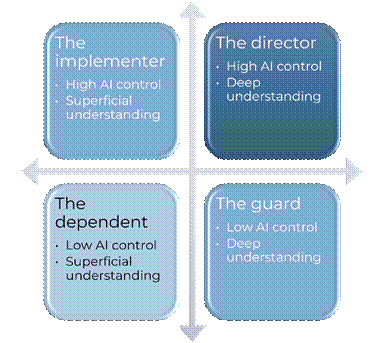
The first archetype, which we see as the desired endpoint, is the Director. Directors combine deep professional understanding with strong AI literacy. They actively guide AI, define quality criteria, critically evaluate outputs, and remain responsible for outcomes.
The Guard possesses deep expertise but relies more on reactive quality control than proactive AI steering. The Implementer actively uses and steers AI but may lack sufficient underlying understanding of the domain. Finally, the Dependent relies heavily on AI while lacking both deep expertise and active control. This is the position educators should help students avoid.
For us, the implications for education are profound. If future professional value shifts from producing outputs to judging, directing, interpreting, and taking responsibility for them, then curricula and assessment need to evolve accordingly. Assessing only final products will become increasingly insufficient. Instead, we need learning activities that make students’ reasoning visible, require them to justify decisions, critically analyse AI outputs, and demonstrate genuine understanding.
Our preliminary conclusion is that the future is not about teaching students to use AI. Most students can already do that. The real challenge is helping them develop the understanding, judgment, responsibility, and steering capacity needed to work effectively with AI without becoming dependent on it. In other words, higher education should aim to develop not merely AI users, but AI directors.
The SAIL project now enters its next phase, in which we will design and test educational scenarios based on these findings. We look forward to continuing the conversation with the Media & Learning community as we explore what meaningful professional autonomy can look like in an AI-powered future.

Dr. Steven Verjans is a multidisciplinary professional with a background in different fields, often focused on the role of computers and information systems for humans and organisations. He has worked in research and higher education in Flanders, Denmark and The Netherlands within the fields of information systems, blended learning, learning technology and quality of education. He is currently working as a researcher and teacher trainer at the UCLL University of Applied Sciences.
LinkedIn

After obtaining a bachelor’s degree as Teacher of Business, Economics & ICT, Andy graduated as an MA in Communication & Media Design. He is currently working as a Senior Researcher for the Education & Development Centre of Expertise, a research centre within UCLL University of Applied Sciences.
His wide-ranging expertise covers the fields of e-learning, blended learning, mobile learning, gaming and social networks. He is involved in a variety of local and international projects in many different sectors like e.g. healthcare, politics, entertainment, education, labor market, etc.
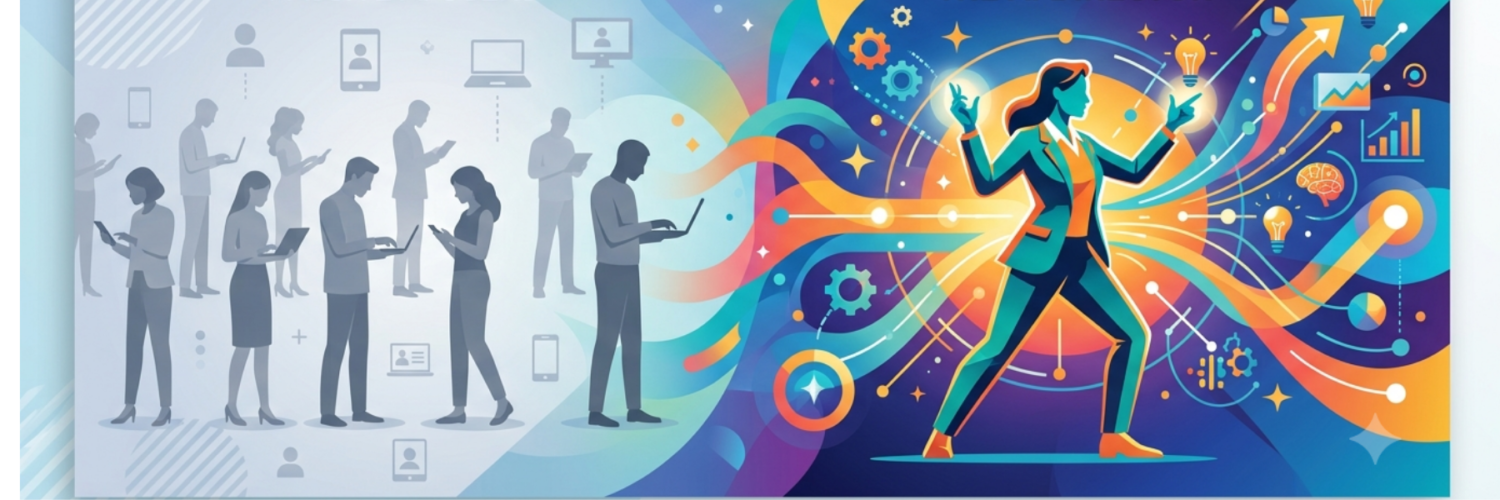
The banner image is generated by AI.