by Lucas Chevalier, Le Centre pour l’éducation aux médias et à l’information – CLEMI, France.
Media and information literacy (MIL) has become a cornerstone of modern citizenship. In an era of information overload and widespread disinformation, equipping educators with the right skills to foster critical thinking is more essential than ever. A major step forward in this direction has emerged from the French-speaking world: the Competency Framework for Media and Information Literacy Trainers in the Francophone Space.
The developers express hope that this framework will meet the expectations of practitioners across the Francophone space, especially in Central Africa, West Africa, and France where this tool could enable the widespread deployment of MIL through new actors who can intervene locally or within international cooperation initiatives. The framework could also be a useful tool for introducing MIL in the curriculum and for evaluating public policies.
Who is this framework for?
One of the framework’s key strengths is its inclusive design, addressing a broad range of practitioners involved in MIL. The target audiences identified include:
- Teachers and educators working in formal education settings
- Librarians and documentalists supporting information literacy
- Journalists and media professionals engaged in educational outreach
- Youth workers and community facilitators operating in non-formal education
- Civil society actors and NGO staff conducting awareness campaigns and trainings
- Trainers and training engineers designing MIL programmes
- Policy advocates working on MIL governance
This wide scope reflects the framework’s ambition to reach all actors who can contribute to MIL deployment, whether in classrooms, community centres, newsrooms, or international cooperation projects.
A collaborative initiative born from REFEMI
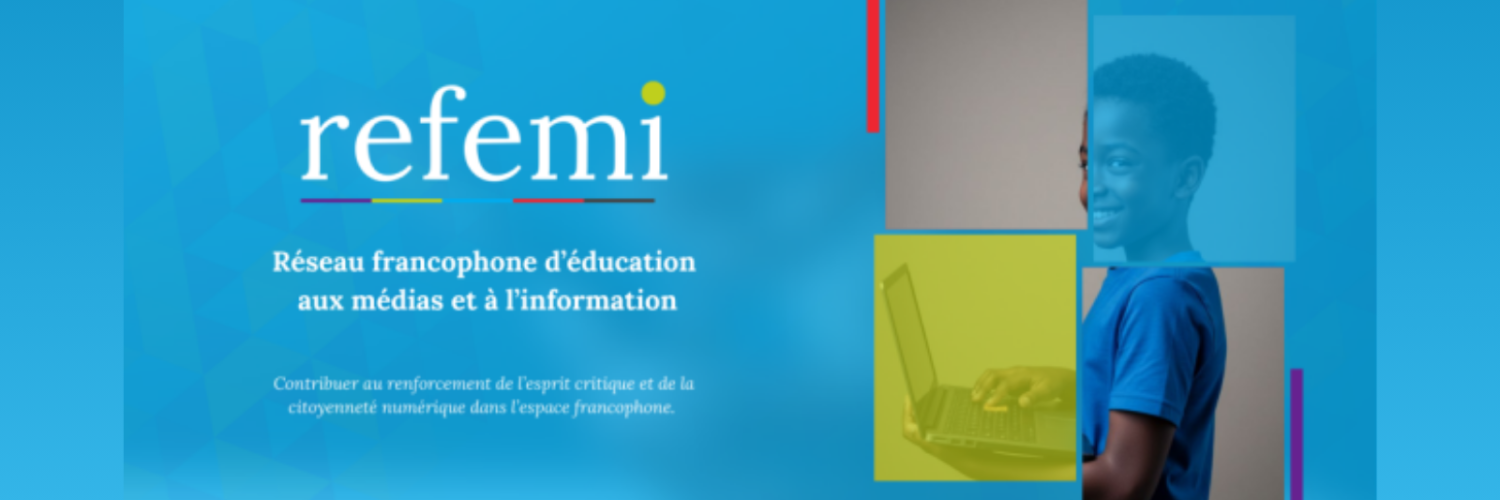
This framework is the first concrete output of the Francophone Network for Media and Information Literacy (REFEMI), officially launched in October 2024 during the XIXth Summit of La Francophonie. REFEMI brings together seven organisations from Belgium, Cameroon, Canada (Quebec), Côte d’Ivoire, France, Senegal, and Switzerland.
The framework was developed collaboratively by four founding members: CLEMI (France), Eduk-Média (Cameroon), Les Bénévoles de l’EMI (Côte d’Ivoire), and Polaris Asso (Senegal). Each partner contributed local expertise shaped by their diverse audiences, resulting in a document that reflects both shared values and contextual adaptability.
Accessibility and inclusivity at the core
To reach all intended audiences, the framework has been designed with accessibility and inclusivity as guiding principles. The competency transfer model can be adapted to different contexts, professional backgrounds, and levels of prior experience with MIL.
The framework is organised around three foundational literacies—information literacy, media literacy, and digital literacy – which together form the bedrock of MIL. Beyond these core competencies, it introduces transferability skills, including training engineering and pedagogical action design. This structure ensures coherent, gradual, and measurable professional development for practitioners at all levels.
Practical tools and insights from the founders
To support widespread adoption, the framework comes with an accompanying toolkit, including a tutorial and explanatory video. These resources lower the barrier to entry for new trainers and organisations.
Looking ahead
As REFEMI continues to grow, it aims to contribute to broader Francophone priorities, including the fight against disinformation.
For Media and Learning Association members interested in cross-border collaboration, this initiative offers a compelling model of how shared frameworks can unite diverse actors around common educational goals – while remaining adaptable to local contexts.
For more information, visit the CLEMI website or consult the official press release.
Author
Lucas Chevalier, Head of International Projects at CLEMI (France)