by Karin Heremans, Jens Vermeersch, Lien Vandael and Stefanie Van Brussel from the Miles Project.
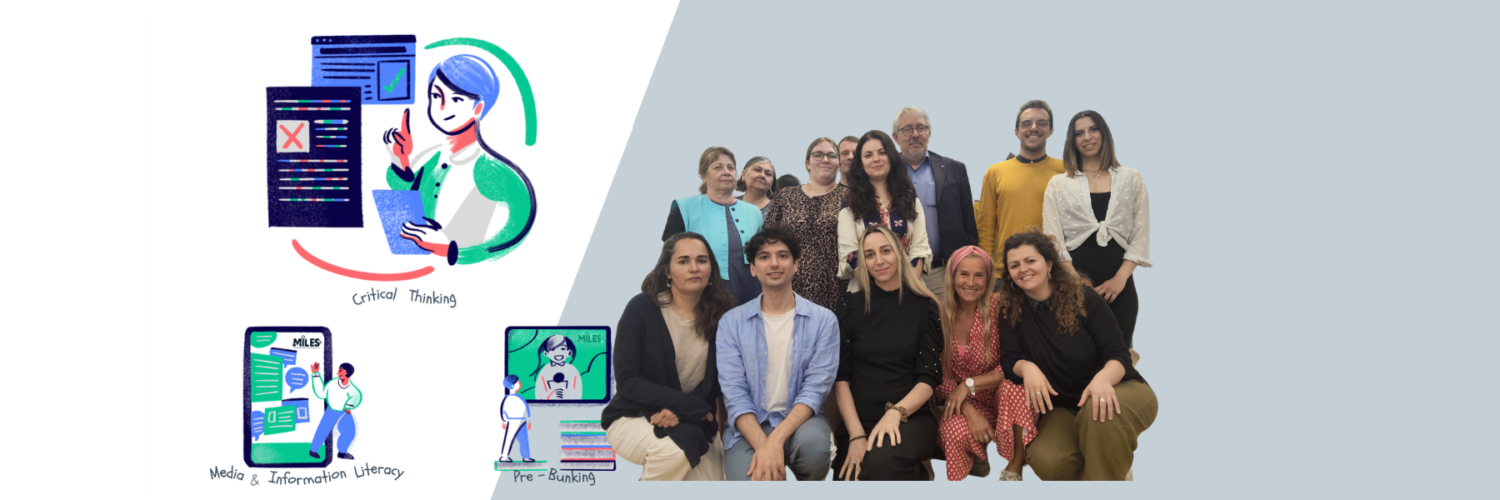
For the past three years, the Miles Project has made it its goal to tackle disinformation in education across 10 EU countries, through the empowerment of teachers, students and parents, as well as through raising public awareness and influencing policy makers.
Below we would like to share some results of the project and some insight in the next and final steps of the project.
Impactful teacher trainings and the creation of a student toolbox
Nine partner organisations from nine European countries each delivered the MILES training course as part of continuous professional development (CPD) for secondary school teachers, and as part of initial teacher education (ITE) for university student teachers. The MILES training programme significantly strengthened educators’ media and information literacy competences. Across the partnership, on a scale from 1 (basic) to 5 (advanced), the average score increased from 3.28 to 4.26, representing a substantial improvement of +0.98 points. The strongest gains occurred in knowledge‐intensive and skills‐oriented areas such as pre‐bunking, debunking, EU policies, analysis of content, and understanding information disorder. These results confirm that the training effectively addressed conceptual gaps and equipped participants with practical tools to recognise and counter disinformation.
After having completed the training sessions, a select group of teachers in each country got together to develop teacher materials for students, ranging from workshops on propaganda to data analysis exercises and factchecking tools. These materials were collected in a toolbox to be used during the student workshops. The toolbox is currently being translated into all partner languages to be shared publicly on the Miles website.
Student workshops and co-creating activities
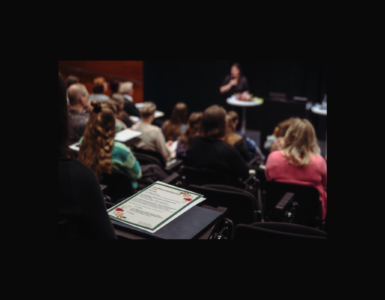
Participating teachers implemented classroom workshops using the newly developed learning materials. These workshops provided an opportunity not only to test the usability and quality of the toolbox, but also to evaluate its impact on students’ media literacy, critical thinking and digital citizenship competences. According to the project plan, each partner country was expected to involve a minimum of approximately 60 students, resulting in an anticipated minimum participation of around 540 students across the consortium. The actual implementation considerably exceeded this target, with approximately 845 students participating in pilot workshops across nine European countries. Despite differences in school structures, curricula and learner groups, all partners were able to integrate the Student Toolbox into authentic classroom practice while maintaining the common pedagogical objectives of the project. Teachers and students alike responded positively to the workshops and used materials.
After finishing the workshops, students were challenged to design a board game based on the things they had learned. The board game was then played by parents, teachers and other participants, with the goal of sharing what the students had learned in a flipped classroom setting.
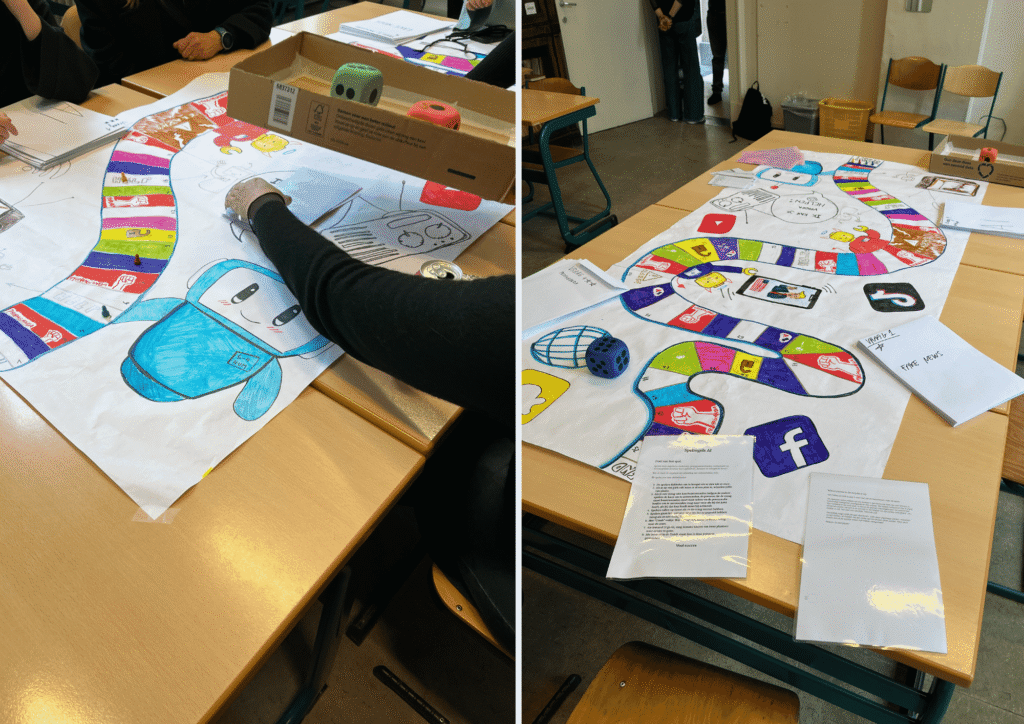
Inspiring policy makers with our requests
During the a second meeting with education professionals and experts, each country created a list of formal requests regarding the tackling of disinformation in education. These requests will now be offered to policymakers to ask them to sign them and to influence them to act on this crucial topic.
Some reflections on sustainability
With the project coming to an end, we are looking to the future and what will remain of Miles afterwards. Each participating country has established great partnerships with experts, organisations and schools. It is our goal to compile this information and share what we have learned with the necessary partners and stakeholders, which included making our tools publicly available.
The final stretch: EU-EDU Conference in Brussels (27 November 2026)
On 27 November 2026 the Miles Project takes its final bow during its EU-EDU Conference in the Flemish Parliament. The programme includes an expert keynote speaker, two panel discussions, one on good practices from across Europe and one on policy, as well as a presentation of the project’s final results. There will also be time for lunch and networking. The conference is free, but registration is mandatory. If you cannot attend in person, you can also book a ticket for the livestream.
Authors
Karin Heremans is principal at the Royal Athenaeum Antwerp and is responsible for the policy on prevention of radicalisation & polarisation at the GO! Flemish Education System. She is also an Expert Member for the EU Knowledge Hub on PVE/ CVE. karin.heremans@g-o.be
Jens Vermeersch is responsible for the Policy on Internationalisation for the GO! Flemish Education System. jens.vermeersch@g-o.be
Lien Vandael is an inclusive strategist and teacher. She is the MILES-project coordinator for GO! lien.vandael@atheneumantwerpen.be
Stefanie Van Brussel is a teacher and historian, responsible for the Parallel Histories project in Flanders. She is also one of the project coordinators for MILES.