by Emma Leigh Capdevila, Verificat, Spain and Aino Elina, Faktabaari, Finland.
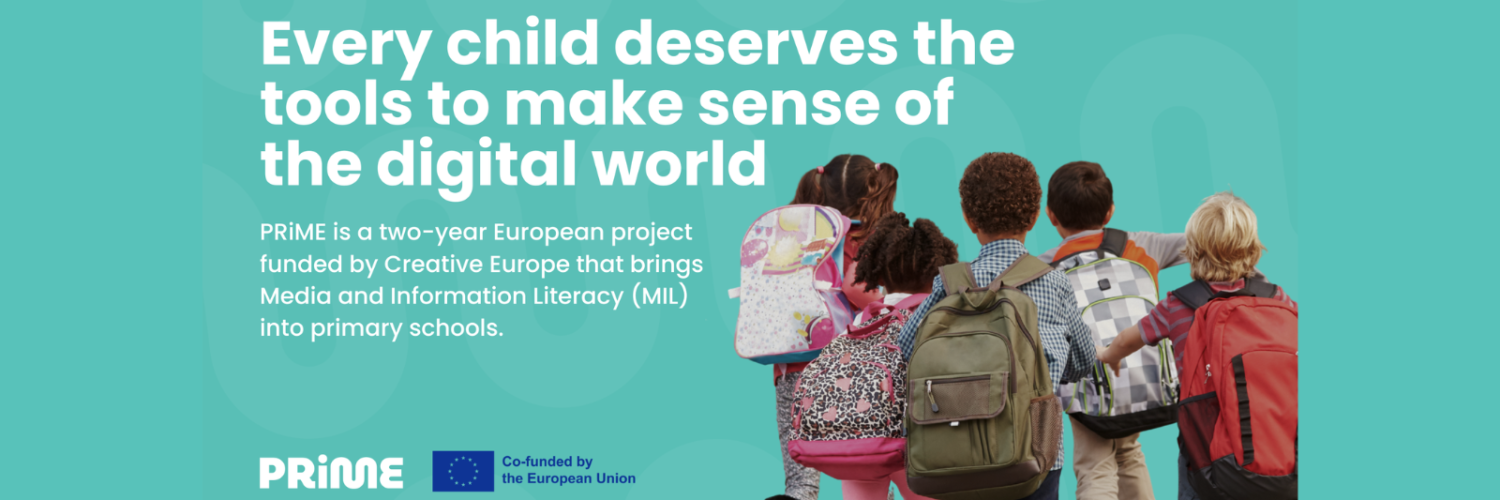
Every child deserves the tools to make sense of the digital world.
Children are growing up in an increasingly complex media environment, yet media and information literacy (MIL) is still not systematically integrated into primary education across Europe. The PRiME project aims to address this gap by helping schools develop children’s ability to navigate, evaluate and engage critically and safely with media and digital environments from an early age.
Bringing together media literacy experts, fact-checkers, teachers and curriculum developers from five European countries, PRiME has developed a comprehensive toolkit for teaching MIL to children aged 6–12 available in five languages to support its use across different European contexts. The toolkit brings together research, a competence framework, teacher training and practical classroom materials, creating a pathway from understanding what children need to learn to supporting teachers in putting these skills into practice.
What is the PRiME toolkit?
The PRiME toolkit is built around four connected elements.
First, a European benchmark study examines how MIL is currently understood and taught in primary schools across five countries. It identifies common challenges and emerging priorities, including artificial intelligence literacy, digital ethics and digital wellbeing. These findings provide the evidence base for the rest of the toolkit.
Second, the PRiME competence framework translates these findings into 23 learning objectives for children aged 6–12. Rather than proposing a new, rigid curriculum, the framework offers an adaptable structure that schools can integrate into their existing subjects and educational practices.
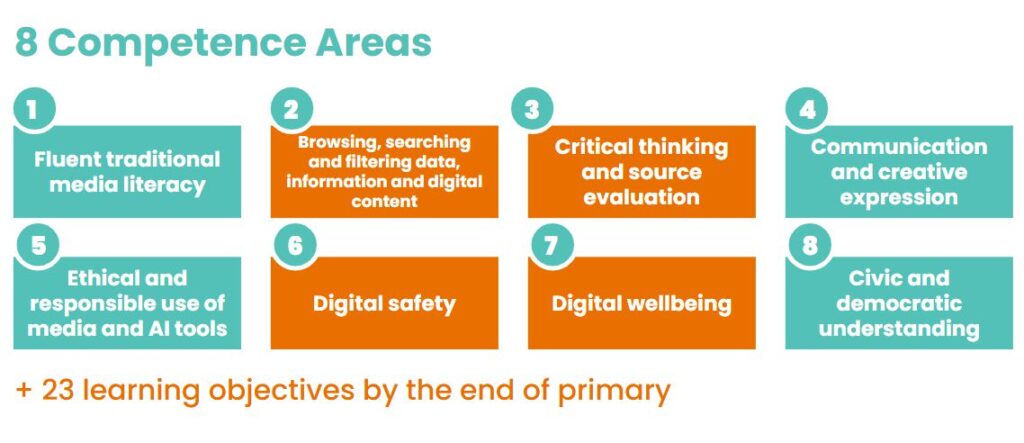
Third, the toolkit includes an online teacher training course, designed to help teachers develop their own knowledge and confidence in teaching MIL. The five modules cover digital wellbeing and safety, critical thinking, artificial intelligence and algorithms, digital ethics, and creativity and pupil participation. The training combines expert input with interactive activities, reflection and practical resources.
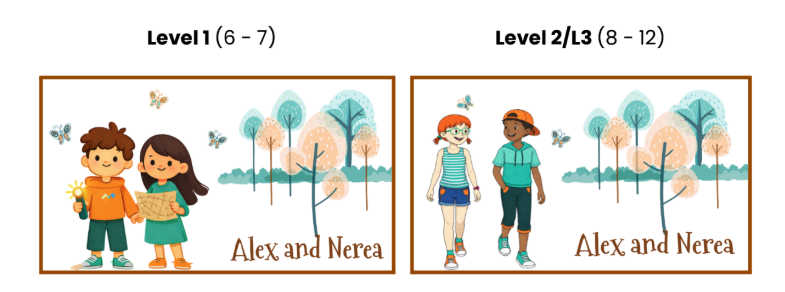
Finally, the toolkit provides ready-to-use teaching materials. The Teacher’s Guide introduces the PRiME pedagogical approach, learning objectives, teaching strategies and a shared “digital forest” story that accompanies pupils throughout the activities. Alongside the guide, teachers have access to 12 lesson plans, covering four key competence areas: browsing, searching and filtering information; critical thinking and source evaluation; digital safety; and digital wellbeing. The lessons include adaptations for different ages and printable materials that can be used directly in the classroom.
From framework to classroom
A key strength of PRiME is the connection between these different elements. The framework identifies what children should learn; the teacher training supports educators in understanding how to teach it; and the lesson plans provide concrete opportunities to put these competences into practice.
For example, pupils can explore how digital environments track and predict their interests, investigate how apparently perfect online images can be altered, or reflect on the digital traces they leave behind. Through these activities, abstract concepts such as algorithms, source evaluation and digital safety become tangible classroom experiences.
From development to testing
The first pilot phase is now underway. Fifty teachers from ten schools across Europe will complete the PRiME online training between September and November 2026 and test selected lesson plans with their pupils.
A second pilot phase will then open the training and teaching materials to teachers, allowing them to explore the resources independently and provide feedback from different educational contexts.
Through this process, PRiME aims not simply to produce another collection of teaching resources, but to offer schools a coherent and adaptable approach to media and information literacy—one that connects evidence, learning objectives, teacher development and classroom practice, and helps equip children with the skills they need to navigate an increasingly complex digital world.
For more information: weareprime.eu
This article is written on behalf of the PRIME consortium: European School of Helsinki, Finland; FaktaBaari, Finland; Escuela21, Spain; Vedruna Catalunya, Spain; Verificat, Spain; and Lie Detectors, Belgium.

Funded by the European Union. Views and opinions expressed are however those of the author(s) only and do not necessarily reflect those of the European Union or the European Education and Culture Executive Agency (EACEA). Neither the European Union nor EACEA can be held responsible for them.