by Maja Cimerman Sitar, EduSkills+.
Last year, I wrote here about a simple activity that helps young children discover that photographs do not necessarily show reality. I ended that article with a question that had increasingly occupied us while developing EduSkills+ Media: how can kindergartens and parents learn about the media together? After more than a year of thinking together with educators and experts, coming up with ideas and trying them out in real situations, we have some answers we would like to share.
Nobody wants to be told how to parent
When we started developing our new Media Education Toolbox, we first asked kindergarten teachers and parents about their perceptions and experiences. One message became very clear: media can be a sensitive topic.
One finding that may have been unexpected for educators was that many parents considered themselves already well informed about guidelines and potential risks related to young children’s use of digital media. This suggests that simply providing more information through lectures or other top-down formats may not always be the most effective way to engage them.
Educators, meanwhile, generally felt confident about addressing media education with children, but were less confident about initiating conversations with parents. Many felt that they lacked sufficient expertise or practical strategies for approaching potentially sensitive media-related topics with families. The challenge, therefore, was not simply to provide parents with more information, but to create forms of cooperation in which educators and parents could explore these questions together.
This changed the way we approached our Toolbox. Instead of asking, “How can we teach parents about media?”, we began asking, “How can we create situations in which parents, children and educators can think about media together?”
Start with curiosity, not rules
During piloting, educators experimented with a wide range of ways to involve families. Some approaches were deliberately low-threshold, such as placing an informational poster in the kindergarten hallway — but with a twist. Alongside a short piece of information, the poster invited parents to add their own thoughts and experiences. In this way, the kindergarten signalled that it was not only interested in raising questions about children’s digital experiences, but also genuinely interested in parents’ perspectives.
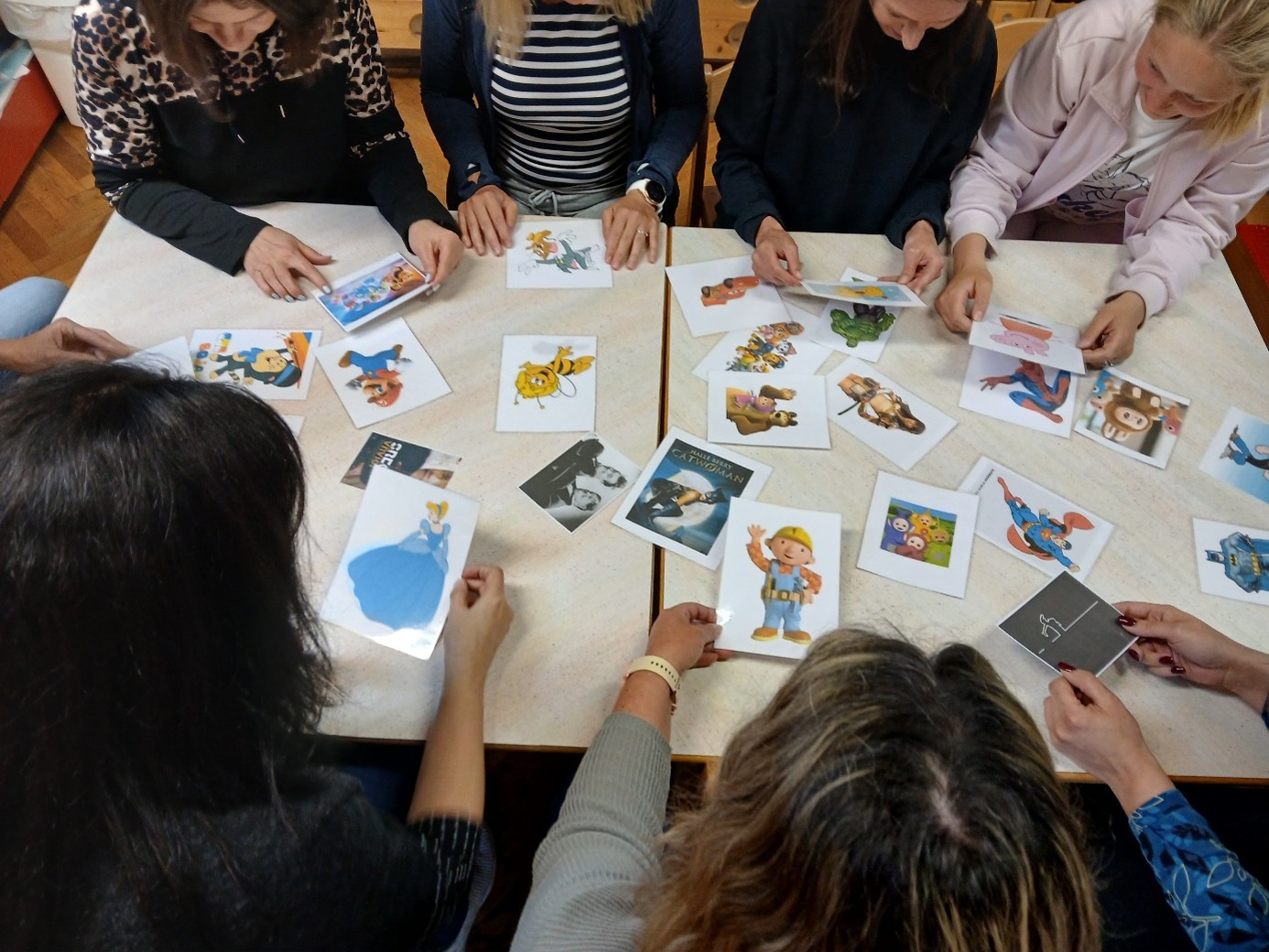
Other approaches created opportunities for more active participation, including take-home challenges, workshops for parents, joint workshops for parents and children, family cinema visits, and exhibitions featuring photographs created by the children. These examples show that involving parents does not necessarily require a formal event or a lecture by an expert. Sometimes it is enough to look at an ordinary shared experience through a different lens. With the right questions and space for conversation, many everyday kindergarten experiences can become opportunities for children, parents and educators to think about media together.
We found that there is no single format that works for every family. Some parents enjoy workshops and discussions; others are much easier to reach through their children or through a simple activity they can try at home.
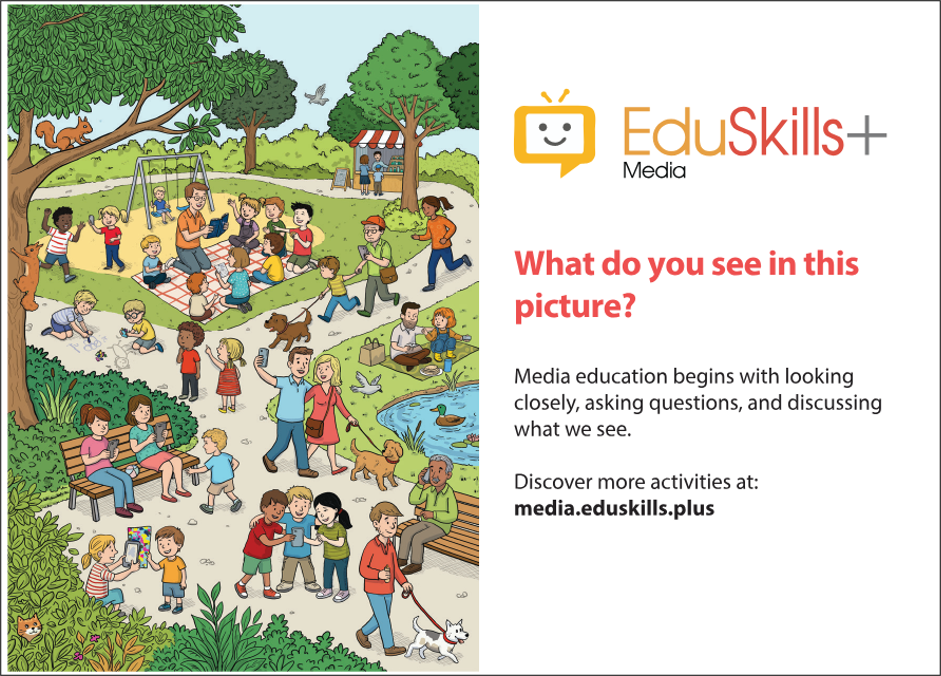
And the conversation does not always have to begin and end with a smartphone use and screen time. Giving parents simple ideas and tools for asking meaningful questions can help bring media education into everyday family life. Parents can ask a child what might be happening outside the frame of a photograph or invent different stories for the same image. They can listen to the sounds around them and decide which ones they would record to tell the story of their neighbourhood. Small moments like these can turn ordinary family experiences into opportunities to observe, question, create and talk about how media shape the way we see and understand the world.
From our findings to a practical Toolbox
The needs of teachers and parents as well as ten months of trying out approaches in four kindergartens helped shaped the new EduSkills+ Media Education Toolbox, developed specifically to support cooperation between kindergartens and families.
We wanted the Toolbox to be practical and approachable – something educators could return to and use in their everyday work, rather than another long handbook they might read once and put aside. It therefore combines concise background information with questions that encourage educators to reflect on their own views and consider how media education can be integrated into their practice. It also offers practical methods, activity ideas and printable materials that can be selected and adapted to different families, groups and kindergarten settings.
I think one of the most important aspects of the Toolbox is that it encourages educators to reflect on their own approach, including the assumptions they may bring to their work with families. What do we assume about families’ media habits? Are we creating opportunities for dialogue, or mainly communicating rules and recommendations? Do we offer parents different ways to participate? As digital media and the ways families use them continue to change, our approach to media education cannot remain static either. Regularly revisiting our own assumptions and practices is therefore an important part of educators’ work. It also supports a broader understanding of media education as a process of shared learning, in which children, parents and educators can learn from one another.
Perhaps our biggest lesson is also the simplest one: we cannot divide a child’s media world into “kindergarten” and “home”. Children move constantly between these spaces, carrying experiences, questions and habits with them. Effective early media education therefore needs connections between the adults who accompany them.
What do you think?
The new activities, resources for families and the Media Education Toolbox are all freely available on the EduSkills+ Media portal.
We would be very interested to hear what you think. If you explore the portal, you can help us by sharing your feedback through our short questionnaire you can find here.
And if you try one of the Toolbox methods or an activity with children, we would love to hear how it worked in practice. What did you try? How did children or parents respond? Would you do anything differently next time?
You can share your experience with us here.
Your feedback helps us understand how the materials work in real educational settings and how they can continue to support educators and families.

Author
Maja Cimerman Sitar is a project coordinator and editor of the EduSkills+ portal, an educational platform that supports kindergartens and schools in developing children’s competences in media literacy, social learning, and emotional development. She collaborates with educators and families to design hands-on, reflective activities that empower children to explore the world around them with curiosity and critical thinking.