by Stefanie Havelka, University College Dublin, Ireland.
Since the public release of ChatGPT, an AI assistant by OpenAI, nearly 4 years ago, AI has been widely debated worldwide. AI is reshaping labor markets by automating routine tasks, transforming knowledge work, and bringing algorithmic decision-making into more areas. For example, AI is now used in recruitment, evaluation, and workplace communication. Without focused and inclusive support, people with disabilities, about 1.3 billion people worldwide (World Health Organization, n.d.), could be left out of an AI-driven workforce. This could worsen existing inequalities in employment and economic participation among an already marginalised community. According to Fitzpatrick and Neff (2024), AI presents major opportunities for disability inclusion in Ireland, alongside challenges that require careful consideration (p. 4).
This is why AI literacy will play an increasingly crucial and empowering role, especially for disabled people. AI literacy is, according to Long and Magerko, “a set of competencies that enables individuals to critically evaluate AI technologies; communicate and collaborate effectively with AI; and use AI as a tool online, at home, and in the workplace” (2020, p.2). While many frameworks for AI literacy, AI fluency, or AI competencies already exist (see, for example, Lyu, W., Li, X., & Salleh, S. M. (2026)), to my current knowledge, very few take an inclusive approach and take the needs, wants, and worries of people with disabilities into account. For example, the UNESCO AI Competency Framework for Students (Miao et al., 2024) emphasises the need to support students with disabilities and ensure they have equal access to AI learning opportunities. However, this framework focuses on students rather than on disabled people seeking employment or trying to remain competitive in an AI-driven world.
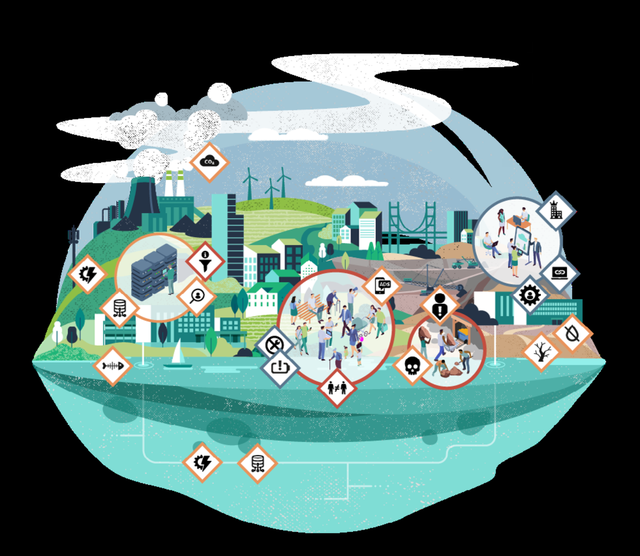
https://betterimagesofai.org /
https://creativecommons.org/licenses/by/4.0/
This is where the AILiFE+ (Artificial Intelligence Literacy for Inclusion, Futures and Employment) research project, supported by a Research Ireland New Foundation grant, comes in. The project is led by me, Dr Stefanie Havelka. What makes it unique is that I am part of a group of disabled people in Ireland, as I have an acquired disability and live with Primary Lateral Sclerosis, a rare motor neuron disease. As such, I understand what it is like to live with and without a disability. Our project uses a community-based participatory research approach, including disabled people as co-designers, co-investigators, knowledge holders, and equal partners. An interdisciplinary research team from the School of Information and Communication Studies at UCD, along with our project partner, Independent Living Movement Ireland, a Disabled Persons’ Organisation (DPO), supports me in our study of disabled people’s viewpoints and agency at every stage. We aim to ensure that disabled people’s perspectives, priorities, and needs shape accessible, community-focused resources that build workforce skills through AI literacy. Working alongside disabled people, we will create an AI literacy framework, hands-on workshops, and rights-based educational materials for both in-person and online learning.
This summer, we ran three focus groups with disabled people in Ireland. At the start of each session, we asked:
What comes to mind first when you hear “Artificial Intelligence (AI)”?
In what ways, if any, do you interact with AI on a typical day?
The focus groups explored people’s general views about AI, how AI is used at work, and what training or education is needed to prepare for employment. After the group sessions, participants could also join individual interviews. While we are still in the data collection and data analysis phase of the project, some preliminary results are:
- Most participants emphasised the importance of humans as unique knowledge creators and did not want to be replaced by an AI tool or system. As a marginalised community, they fear being replaced by AI, and the fear of robotics being used as a replacement for personal careers has also been voiced.
- AI is an umbrella term for many different technologies. Participants want to better understand what AI is and when it is used without their knowledge, so they can decide when to use it and when not to.
- Education and knowledge sharing among peers on how to become AI literate as a disabled person seems to be a preferred way to connect people with different disabilities and to reduce the creation of AI literacy education that would benefit only one group of disabled people.
We will present additional findings at the hybrid AILiFE+ National Symposium, to be held on 13 January 2027 at the UCD campus in Dublin, Ireland. We hope you will join us online or in person.
For a full list of references, please see here.

Author
Dr. Stefanie Havelka is an Assistant Professor at the School of Information and Communication Studies at University College Dublin, where she brings a dynamic, interdisciplinary perspective to the evolving field of library and information science. Before joining UCD, she served as Web and Mobile Services Librarian and Assistant Professor at Lehman College, City University of New York, and as Information Technology Manager at the Goethe-Institut New York, USA.
Her research sits at the intersection of human-computer interaction and the everyday realities of digital life, with a particular focus on privacy and security in ubiquitous computing environments. She is also deeply engaged in advancing digital literacies, especially in the rapidly shifting terrain of AI. A passionate advocate for equity, diversity, accessibility, and inclusion, Dr. Havelka’s work pushes the boundaries of library and information Science by critically examining the impact of AI on higher education, society, and democracy, and beyond.
She has published articles on AI and higher education, AI literacy, mobile privacy and behavior, and Universal Design for Learning.